The pieces fit individually, but their lengths and proportions do not agree.
QWD / MOBILE READING EDITION
Five Rules
of Quiet Style
A practical guide to making everyday clothes look better—and knowing what is worth buying next.
Start reading ↓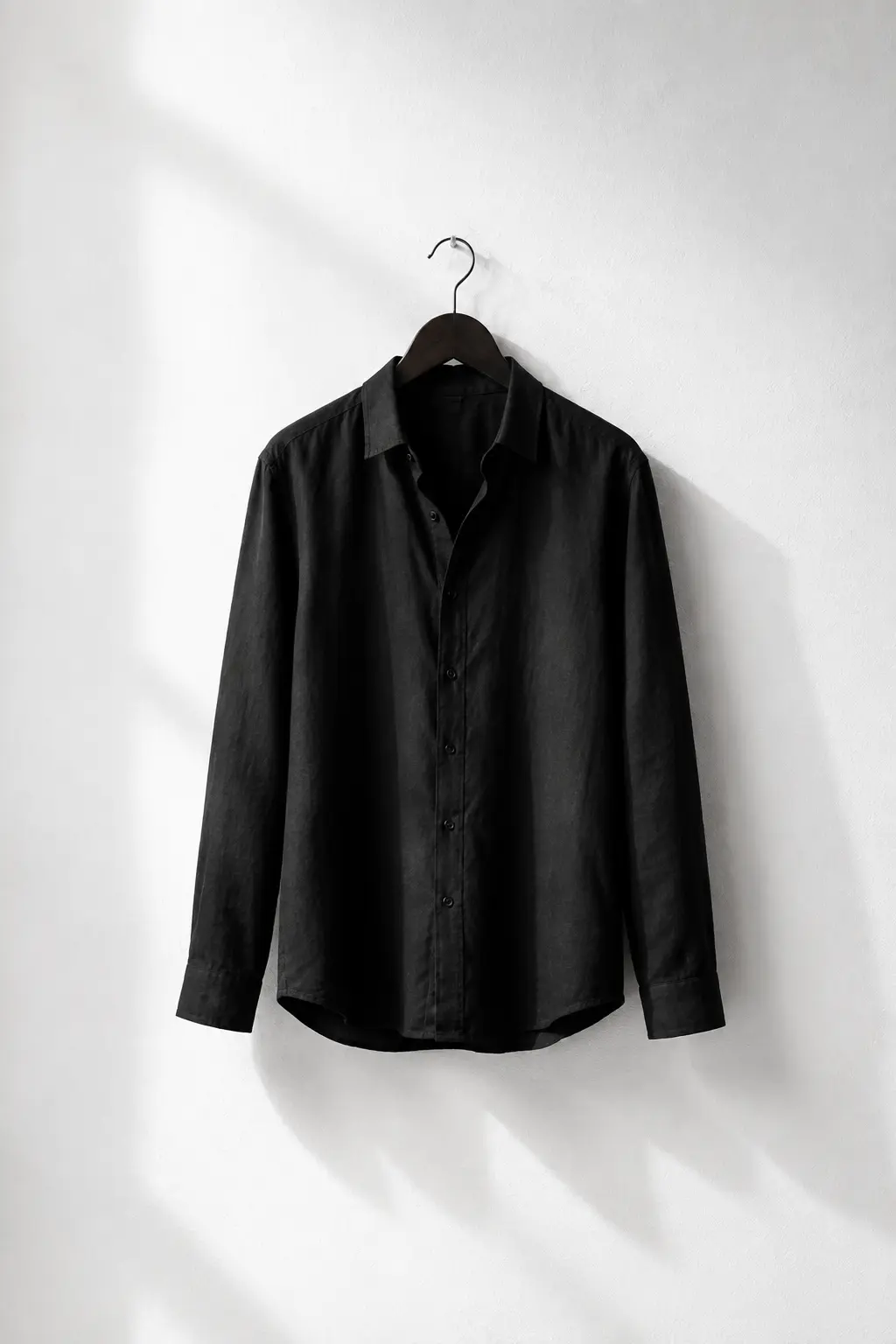
START HERE
Why good clothes can still make a bad outfit
Most outfits look wrong for ordinary reasons: a shoulder collapses, trousers bunch over the shoes, every colour fights for attention, or one worn detail makes everything else look tired.
There is no clear light, dark or focal point.
Every fabric is smooth and flat, so the outfit has no depth.
Pilling, dusty shoes or a tired collar drag down good pieces.
The newest item has no useful relationship with what you own.
The good news: most of these problems can be fixed without replacing the wardrobe.
FIT / WHAT TO NOTICE
Look at the whole line before the small details
Fit is not the same as tightness. A good fit gives the garment the shape it was designed to have and lets you move without pulling or collapse.
Collar + shoulder
The collar sits against the neck and the shoulder seam ends cleanly. If this area is wrong, the rest rarely settles.
Chest + waist
Fabric should skim rather than grip. Pulling at buttons or deep folds at the sides usually means the balance is wrong.
Sleeve
A shirt cuff should reach the wrist bone. A jacket sleeve normally allows a little shirt cuff to show.
Hem
The hems of the shirt, jacket and trousers should look deliberate together.
Movement
Sit, reach and walk. A garment that only works while standing still does not fit your life.
ALTER OR REPLACE
Try different trousers before changing the whole outfit.
A slightly higher rise and a little more room through the thigh can make existing shirts, knits and jackets feel current again. Fuller is not the same as baggy; it simply lets the cloth fall cleanly.
COLOUR / BUILD COMBINATIONS
You do not need to live in navy and grey
A useful wardrobe needs reliable colours, but it should also include colours you genuinely enjoy. Make them work together instead of asking every piece to be the main event.
Dark anchors
True blackInk navyDark indigo
Light + familiar
Optical whitePale blueSoft grey
Colour with character
OliveOxbloodRustForest
Vary the lightness
Navy is easier with pale blue than a similar mid-blue because the difference is clear.
Soften the colour
Olive, oxblood and rust combine easily because they are less saturated.
Control the amount
A strong colour is often easier in a knit, scarf, sock or shirt under a jacket.
SIX COMBINATIONS TO COPY
Black / white / indigo
Black overshirt, white T-shirt, dark indigo jeans and white leather sneakers.
Navy / pale blue / charcoal
Navy knit, pale-blue Oxford, charcoal trousers and brown loafers.
Olive / navy / white
Olive overshirt, navy polo, pale trousers and brown suede shoes.
Oxblood / charcoal / blue
Oxblood knit, pale-blue shirt, charcoal trousers and dark-brown shoes.
Rust / indigo / white
Rust overshirt, white T-shirt, indigo jeans and brown footwear.
Forest / black / white
Forest knit polo, black trousers and white sneakers or black loafers.
TEXTURE / WHY SIMPLE CLOTHES LOOK RICHER
If an outfit feels flat, the answer may not be another colour
Texture creates contrast without shouting. It is what makes a navy knit feel different from a navy jacket, even when the colour is almost identical.
Oxford cloth
A visible weave and enough body to feel relaxed without looking untidy.
Fine merino
Smooth and useful under jackets. It adds depth without bulk.
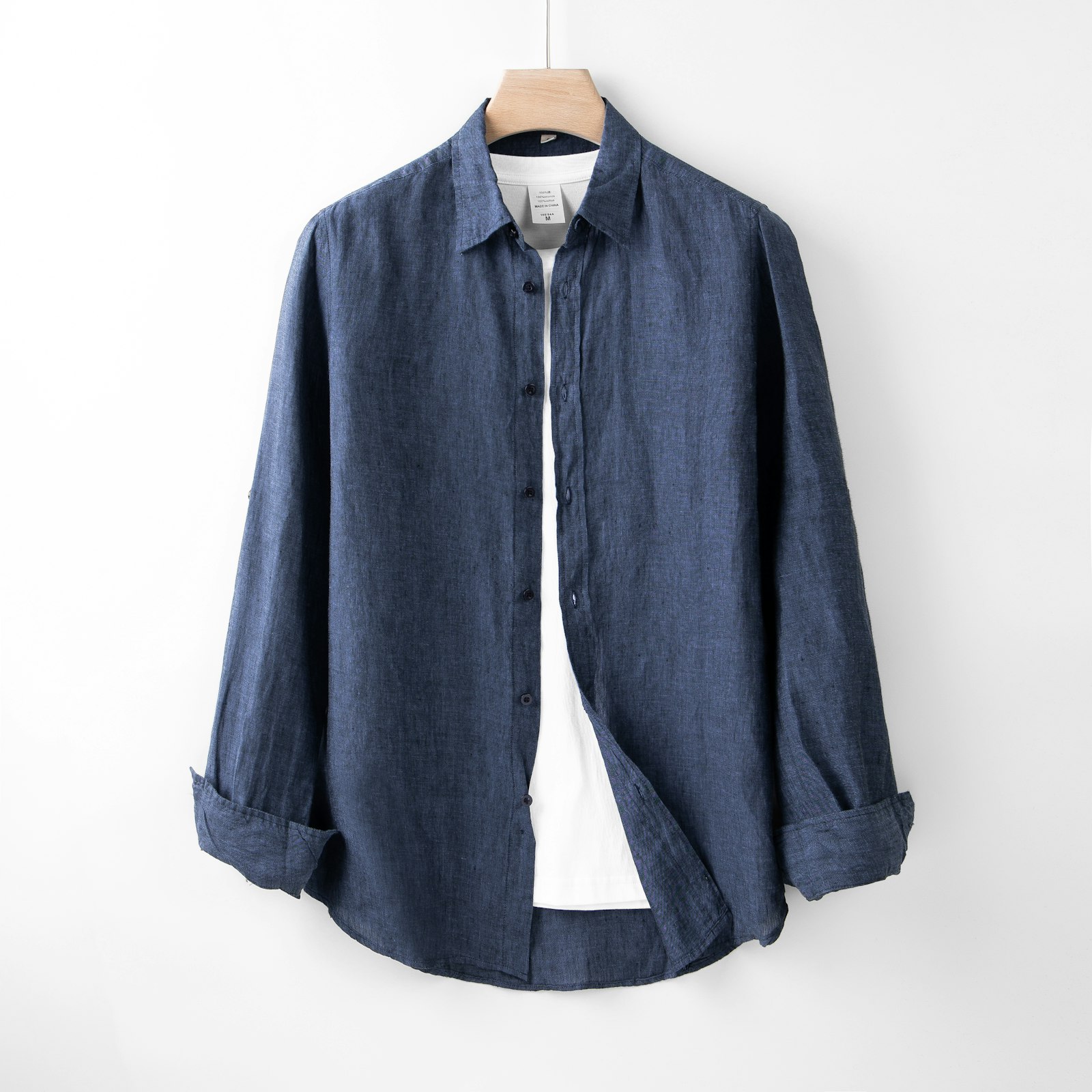
Linen
Dry texture, movement and natural creasing. Let it look relaxed.
Suede
A rich, matte surface that makes casual shoes and jackets feel considered.
Dark denim
The twill and fading add interest while the deep colour keeps combinations easy.
Brushed wool
A softer surface that gives tailoring warmth and makes plain colour feel less formal.
CONDITION / CARE WITHOUT OBSESSION
The small details quietly pull an outfit down
Good clothes do not need to look new. They do need to look cared for. Natural wear can add character; neglect rarely does.
After wearing
Empty pockets, air shirts and trousers, and brush visible dust from wool and shoes.
Before washing
Treat the mark first. Follow the care label and avoid washing the whole garment automatically.
When storing
Support jacket shoulders, fold knitwear and let leather footwear dry before its next wear.
When repairing
Resole, rebutton and mend small damage before it becomes a replacement decision.
Useful care is preventative, not precious. Keep the garment ready to wear—not preserved as a museum object.
PERSONAL STYLE / NOTICE WHAT REPEATS
Your personal style is already in the outfits you wear most
Find three recent photos of outfits you felt good in. Put them side by side and notice what repeats. You do not need to score your style or give it a clever name.
Straight or fuller trousers? A shorter jacket? An open shirt over a T-shirt?
One polished piece with something relaxed, or a consistently clean casual look?
Which dark colour anchors most outfits? Which lighter colour appears near your face?
Loafers, sneakers, boots or Derbies often reveal the formality you actually enjoy.
A FORMULA MIGHT BE THIS SIMPLEOpen-collar shirt + straight trousers + soft jacket + loafers.
That is a starting point, not a uniform. Keep the relationship between pieces and change one part at a time.
WHAT TO WEAR
Six useful outfits for real days
These are formulas, not shopping lists. Substitute the pieces you own while keeping the balance of colour, texture and formality.
City weekend
Black linen shirt / white T-shirt / dark indigo jeans / clean white sneakers
Relaxed summer
Pale-blue linen shirt / stone cotton trousers / brown suede loafers
Easy dinner
Knitted polo / pleated dark trousers / loafers or minimal sneakers
Modern office
Unstructured navy jacket / pale-blue shirt / charcoal trousers / brown loafers
Smart casual
Olive overshirt / fine navy knit / grey trousers / clean leather sneakers
Travel
Navy overshirt / merino T-shirt / drawstring trousers / leather sneakers
KEEP THIS SECTION
When an outfit feels off, stop at the first thing that is true
Fix the first real problem. Do not keep editing an outfit that already works.
Fit+
The collar or shoulder collapses, fabric pulls, lengths look mismatched or movement feels restricted.
Change the size, proportion or wrong piece before touching the details.Colour+
Everything is the same darkness, several colours compete or there is no focal point.
Create a clear light-and-dark relationship and reduce the strongest colour.Texture+
The outfit uses solid colours but still feels flat.
Change one surface: Oxford, linen, knit, suede, denim or brushed wool.Condition+
Pilling, dust, a tired collar, grey laces or a damaged hem attract the eye.
Brush, steam, polish, repair or swap the neglected piece.Personal style+
The outfit is technically fine but does not feel like you.
Return to a silhouette, shoe or level of formality you know you enjoy.Buying+
A new garment only works in an imagined outfit or depends on more purchases.
Leave it. A useful new piece should already work with clothes you own.CONTINUE ON QWD
Keep going. Choose what you need next.
You do not need to read everything. Pick the question closest to the decision in front of you.
Prefer paper? Download the printable PDF ↓