In this article+
01
Identify the finish first
This guide concerns ordinary smooth leather, such as many calf-leather loafers and lace-ups. Check the maker’s care advice before applying a product. A shiny surface might be patent or coated leather, and a boot may have an oiled or waxed finish. Those differences matter. QWD would rather you pause to identify the material than buy a general-purpose kit and use every product on every shoe. If you are unsure, ask the maker or a knowledgeable repairer.
02
Keep the regular routine small
Crockett & Jones recommends removing loose dust and dirt before applying care products, with a separate brush for cleaning. Let damp shoes dry naturally away from heaters. Use suitable wooden shoe trees to help retain their shape, and a shoehorn when putting them on. These simple actions make more sense as regular habits than covering a dirty shoe in polish. Follow the shoe maker’s guidance if the material or construction needs a different approach. (Crockett & Jones — Calf Shoe Care)
03
AT A GLANCE
Choose the next step by the problem
General guidance for ordinary smooth leather; the maker’s advice takes priority.
| What you notice | Next step | Avoid |
|---|---|---|
| Loose dust | Gentle cleaning with a suitable brush | Polishing over dirt |
| Damp shoes | Natural drying; suitable shape support | Direct heat |
| Dull smooth calf | Small amount of compatible cream or polish | Thick layers of product |
| Unknown finish or stain | Ask the maker or a specialist | Mixing household remedies |
| Worn heel or loose sole | Ask a repairer for an assessment | Expecting polish to repair damage |
04
Understand cream and wax
For smooth calf leather, Crockett & Jones describes cream as useful for regular care and colour refresh, with wax adding polish. Apply suitable products sparingly and allow them to settle before brushing and buffing. Check colour compatibility and test a discreet area first. More product is not automatically better. A light everyday finish is enough for most casual loafers; you do not need a mirror shine to make a cared-for shoe look good. (Crockett & Jones — Calf Shoe Care)
05
Put together a kit you can understand
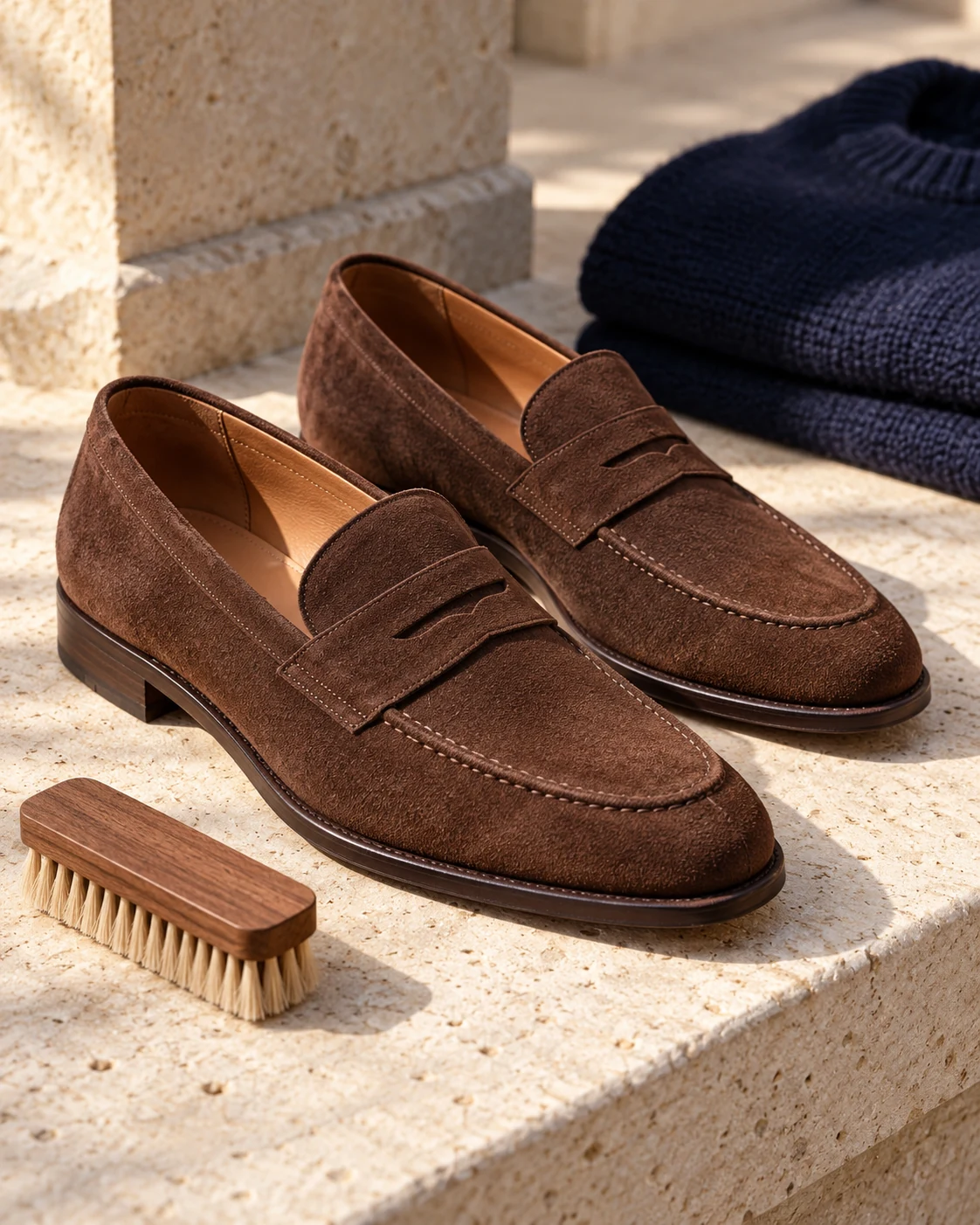
Start with the actual shoes on the table and write down their finish and colour. Buy only the tools and products their makers recommend. Label brushes if you have black and brown shoes, and keep suede tools separate. This is QWD’s practical way to avoid confusion: a small, clearly organised kit is easier to use than a large collection of near-identical tins. Keep instructions with unfamiliar products until you know the routine.
06
Look below the polished upper
Turn the shoes over and look at heels, sole edges, loose stitching and the inside lining. If you see uneven heel wear, separation or a damaged lining, ask a repairer what is feasible and what it will cost. Cosmetic care cannot fix a structural problem. QWD would compare repair cost with the value of keeping a pair that already fits well, rather than assume either replacement or repair is always the smarter choice.
07
Stop before an easy job becomes a repair
If a cleaner lifts colour, spreads a stain or changes the finish, stop and seek advice. Do not keep adding different products to the same patch. Tell the repairer what you have already used. For a routine touch-up before dinner, leave yourself enough time for any product to dry as directed. If there is no time, a gentle dusting may be the sensible job for now; save unfamiliar treatments for when you can assess them properly.
SOURCES & FURTHER READINGThe references behind this guide+
QWD applies these references as a practical menswear baseline. Garment design, body proportions and intended styling can justify a different choice.