In this article+
- 01Read the invitation before choosing the outfit
- 02Use the named dress code before QWD's fallback.
- 03A suit is the easiest answer for most weddings
- 04Use colour to look considered, not competitive
- 05For a relaxed wedding, make the separates agree
- 06Choose shoes that can support the whole day
- 07Let accessories finish the outfit quietly
- 08Do the final check the day before
01
Read the invitation before choosing the outfit
The dress code is the first clue, but it is not the only one. A hotel ballroom at night usually asks for more polish than a vineyard lunch or a beach ceremony. Look at the venue, start time and season, then decide whether the outfit should sit closer to formal tailoring or relaxed occasion wear. If the invitation says black tie, wear a dinner suit or tuxedo rather than trying to reinterpret it. If it says cocktail, a dark suit is dependable. For smart casual, separates may be appropriate, but clean tailoring and proper shoes still matter.
02
START WITH THE INVITATION
Use the named dress code before QWD's fallback.
The hosts' wording always takes priority. Where an invitation is unclear, these are QWD's conservative editorial starting points rather than universal rules.
| Invitation | Safest starting point | Shoes | Avoid |
|---|---|---|---|
| Black tie | Dinner suit · formal shirt · bow tie | Polished black formal shoes | Business suits and casual shoes |
| Black-tie optional or formal | Dark suit · restrained shirt and tie | Black or dark-brown leather | Relaxed separates unless invited |
| Cocktail or semi-formal | Navy, charcoal or mid-grey suit | Derbies, loafers or restrained Oxfords | Office styling and distressed finishes |
| Smart or dressy casual | Refined separates with a jacket | Loafers, Derbies or polished boots | Assuming denim or sneakers are welcome |
03
A suit is the easiest answer for most weddings
A navy, charcoal or mid-grey suit gives you enough ceremony without drawing attention away from the couple. Choose a jacket that sits cleanly at the shoulder, trousers with a controlled break and cloth that suits the weather. A subtle texture or soft construction can feel more relaxed than a sharp business suit. Avoid anything that looks pulled straight from the office: a heavy corporate stripe, stiff padded shoulders and a very formal tie can make the outfit feel like work rather than celebration.
04
Use colour to look considered, not competitive
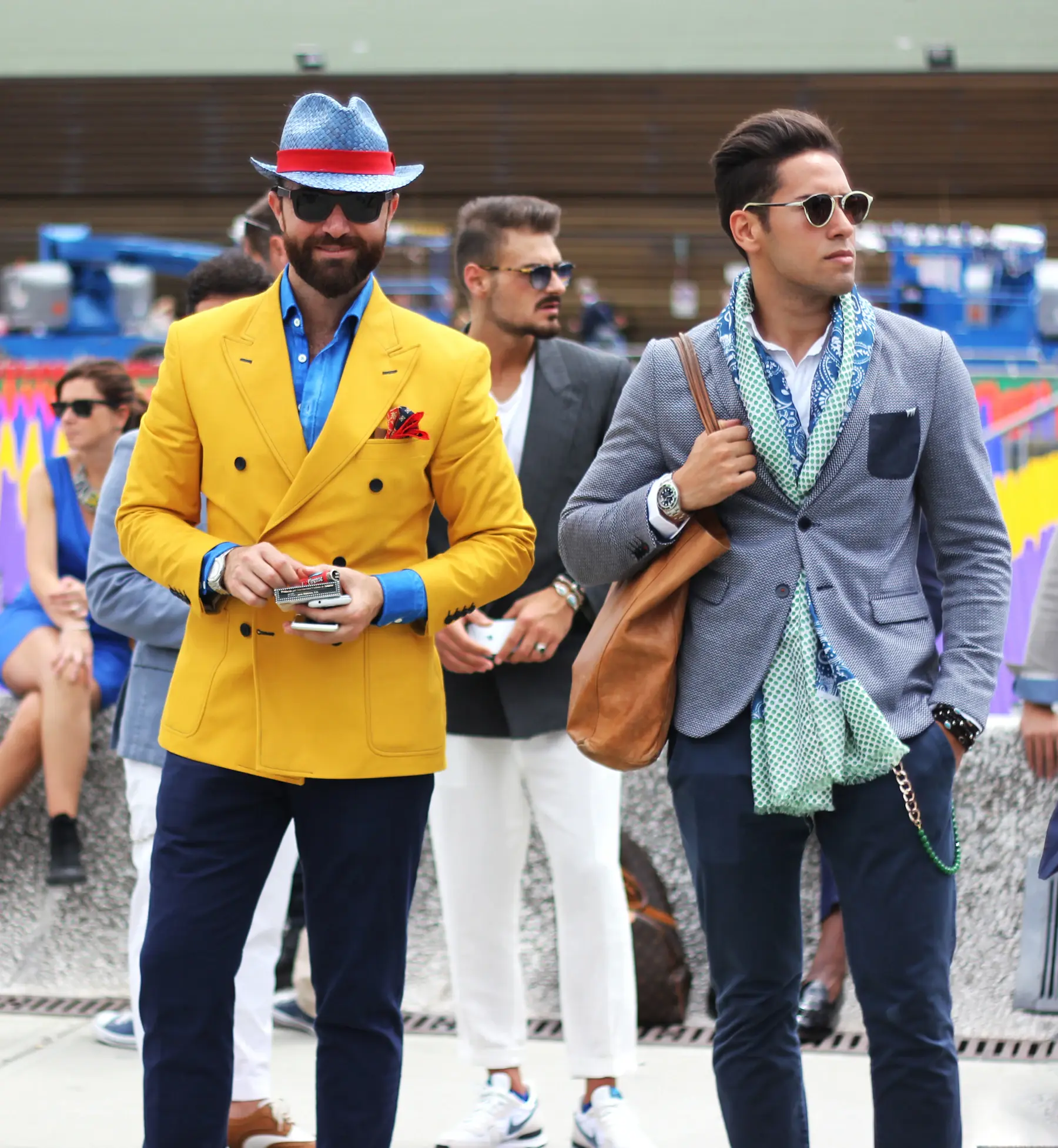
White and pale blue shirts remain useful because they create a clean frame for the face and work with almost every suit. Soft pink, fine stripes or muted colour can add personality when the dress code allows it. Keep very pale cream or all-white tailoring for another occasion unless the couple has specifically requested it. One richer note—a burgundy tie, tobacco suede, a green pocket square or a patterned shirt—usually has more impact than several competing colours.
05
For a relaxed wedding, make the separates agree
An unstructured navy blazer with grey or stone tailored trousers can work for a garden, daytime or smart-casual wedding. The key is that the pieces share a similar level of refinement. A smooth business jacket over heavily washed jeans will look accidental, while a textured blazer, pressed trousers and loafers feel intentional. Dark, clean denim may be acceptable only when the invitation and venue are genuinely informal. When in doubt, trousers rather than jeans show that you understood the occasion.
06
Choose shoes that can support the whole day
Dark-brown or black Derbies, loafers and restrained Oxfords cover most dress codes. Suede works particularly well with softer tailoring and daytime colour, while polished black leather suits darker evening clothes. Wear the shoes before the event if they are new, and choose a shape you can stand and dance in. White sneakers should be reserved for clearly relaxed celebrations; even then, they need to be immaculate and the rest of the outfit should carry enough structure.
07
Let accessories finish the outfit quietly
A tie is useful for formal, cocktail and many evening weddings, but not compulsory at every relaxed ceremony. If you skip it, the shirt collar must sit well beneath the jacket. A pocket square can add life, but it does not need to match the tie exactly. Keep watches, jewellery and fragrance controlled, and avoid novelty accessories that turn the outfit into a talking point. The best wedding style looks celebratory while leaving room for the people and the day to remain the focus.
08
Do the final check the day before
Try on the complete outfit, including belt, socks and outerwear. Sit down, raise your arms and check the jacket from the back as well as the front. Steam the clothes, clean the shoes and make sure hems and sleeves finish cleanly. Then check the forecast and the journey between locations. A useful wedding outfit should survive the ceremony, photographs, dinner and the trip home without requiring constant adjustment.
SOURCES & FURTHER READINGThe references behind this guide+
- Emily Post Institute — Attire guide and dress codes
- QWD guide — How a men's blazer should fit
- QWD guide — What to wear to a smart-casual dinner
- How QWD develops editorial recommendations
- QWD editorial policy and evidence standard
QWD applies these references as a practical menswear baseline. Garment design, body proportions and intended styling can justify a different choice.