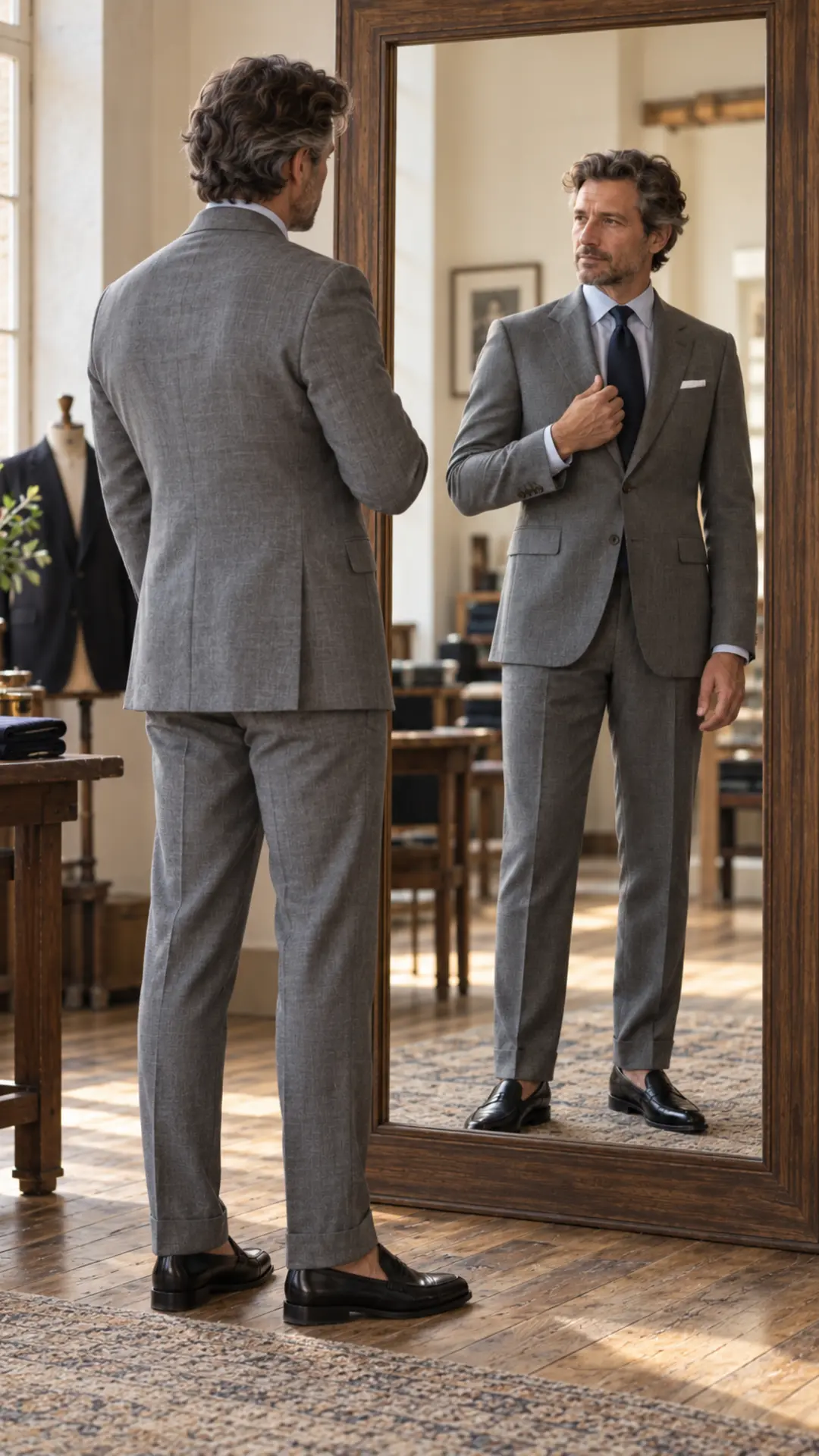
In this article+
- 01Alter a good garment for a specific reason
- 02Start at the easy edges. Protect the structural areas.
- 03Start with the low-risk wins
- 04Protect the jacket shoulder and upper chest
- 05Know what trousers can and cannot give
- 06Treat shirts and knitwear differently
- 07Give the tailor one clear outcome
- 08Use the total-cost test
01
Alter a good garment for a specific reason
An alteration is worthwhile when the cloth, construction and hard-to-change fit already work, and one defined adjustment will unlock regular wear. It is not a rescue plan for an impulsive purchase. Put on the complete outfit, identify the precise interruption and ask whether fixing it would create at least three useful combinations. If the answer is vague, pause before spending again.
02
TAILOR OR LEAVE IT?
Start at the easy edges. Protect the structural areas.
Every garment and construction method differs. Ask the tailor to inspect the actual seam allowance, lining, hardware and pattern before treating this as a quote.
| Area | Usually | Why | Decision |
|---|---|---|---|
| Trouser hem | Straightforward | Works from an existing edge | Worth considering |
| Waist or simple sleeve | Possible within limits | Depends on allowance and details | Get a garment-specific quote |
| Shirt or jacket body | Modest reduction possible | Side and back seams may allow shaping | Keep balance and movement |
| Shoulder, rise or armhole | Complex and unpredictable | Changes the garment’s structure | Usually choose another cut |
03
Start with the low-risk wins
Trouser length, a modest waistband adjustment, simple shirt-sleeve shortening and some plain jacket sleeves are common jobs because they work at an existing edge or seam. They can transform how a garment meets the shoe, wrist or waist. Complexity still varies: cuffs, zips, working buttonholes, linings and patterns can raise the price or limit what is possible.
04
Protect the jacket shoulder and upper chest
A jacket hangs from its shoulders. If they are too narrow, too wide or shaped for a different posture, changing them can require rebuilding the sleeve head and disturbing the chest and collar. Small collar or back adjustments may be possible, but they are diagnostic jobs for an experienced tailor. Do not buy a poor shoulder because the salesperson promises that everything can be altered.
05
Know what trousers can and cannot give
Hemming is usually straightforward, and many trousers allow a modest change at the waist. Seat and thigh adjustments depend on the seam allowance; tapering below the knee is easier than creating room that does not exist. Rise and crotch shape are fundamental to the pattern and rarely become simple after purchase. Fit the waistband position, seat and upper thigh before accepting the leg.
06
Treat shirts and knitwear differently
A woven shirt can often be shortened at the sleeve, reduced at the side seam or shaped with darts, but moving the shoulder and armhole is more involved. Knitwear needs specialist equipment and knowledge because cut yarn can unravel and rib structures must be rebuilt. Before altering either, wash or clean it according to the care label if normal care may change its dimensions.
07
Give the tailor one clear outcome
Bring the shoes, shirt, belt or layer that changes the fit. Explain the result you want—such as a clean trouser line with these loafers—rather than prescribing an arbitrary number. Ask what will be opened, whether original details can be retained and whether the change is reversible. With a new tailor, begin with a simple garment and inspect the work before entrusting an expensive piece.
08
Use the total-cost test
Add the purchase price, alteration quote and realistic care cost, then compare that total with a garment that already fits the difficult areas. Sentimental, vintage or unusually high-quality pieces can justify complex work. An ordinary new garment usually cannot. The intelligent decision is sometimes to return it, wait for another cut or wear the piece differently rather than force a transformation.
SOURCES & FURTHER READINGThe references behind this guide+
- Put This On — A basic guide on alterations
- Put This On — How much can my clothes be altered?
- Put This On — A tailoring directory
- QWD guide — Better sizing through garment measurements
QWD applies these references as a practical menswear baseline. Garment design, body proportions and intended styling can justify a different choice.