In this article+
01
Make the difference visible
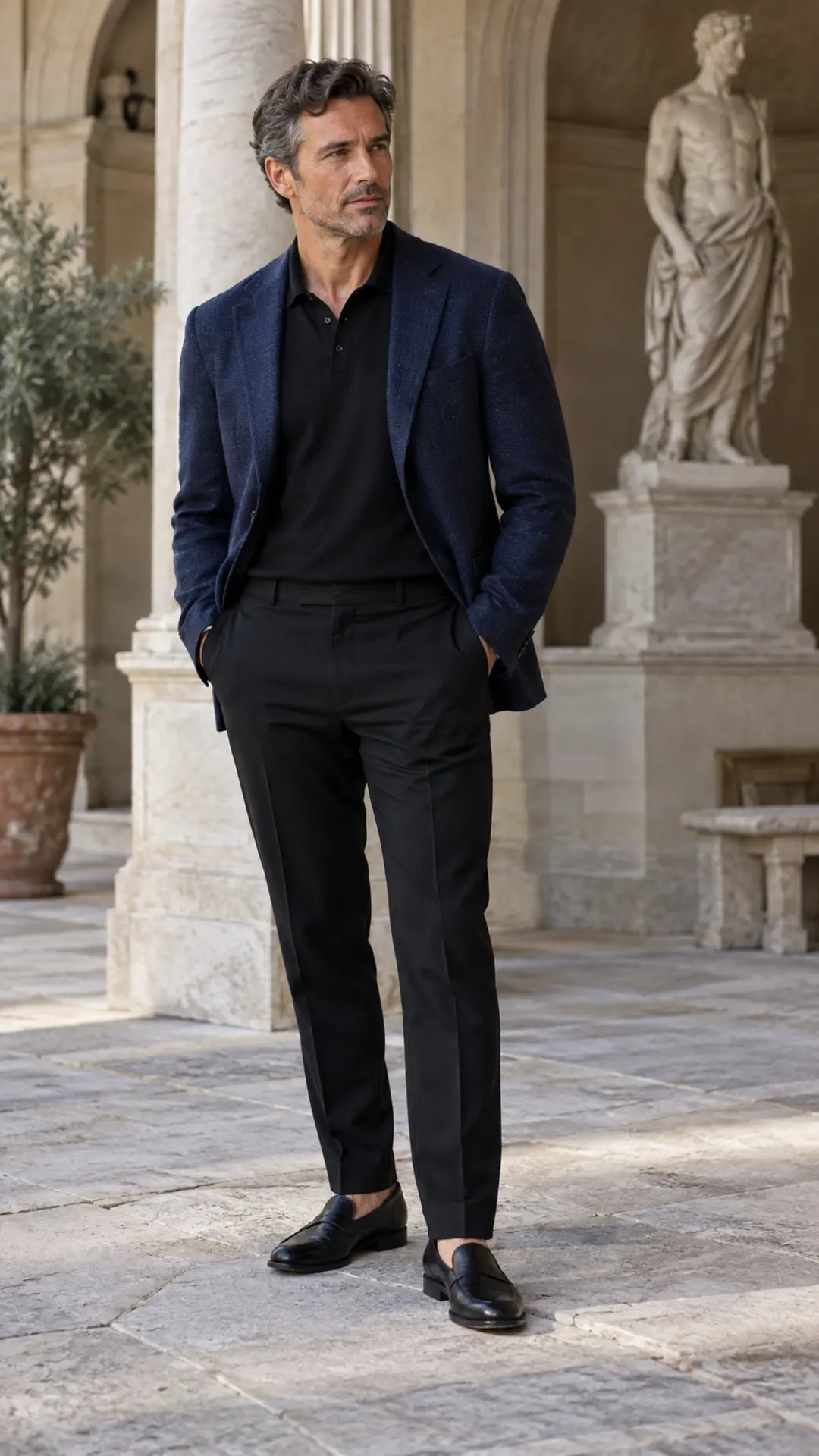
Black and navy fail only when the viewer cannot tell whether the near-match was intended. Put the garments together in daylight. The navy should still read as blue and the black should remain neutral rather than faded brown or green. If both collapse into the same dark tone, introduce a lighter layer or change one fabric so the boundary becomes clear.
02
BLACK + NAVY, FOUR WAYS
Begin with one clear anchor.
These combinations use proportion, surface and a small amount of light to keep the two dark colours distinct.
| Anchor | Second dark | Separator | Finish |
|---|---|---|---|
| Navy blazer | Black trousers | Pale-blue shirt | Black loafer |
| Navy coat | Black knit and trousers | Skin at the collar | Black boot |
| Black overshirt | Navy trouser | White T-shirt | Black sneaker |
| Black jacket | Dark navy denim | Grey knit | Black Derby |
03
Choose one colour as the anchor
Build most of the outfit around either black or navy, then use the second colour once or twice. A navy coat over black trousers is easy because the large outer layer leads. A black knit over navy trousers reverses the hierarchy. Splitting the outfit into equal blocks can work, but a clear dominant colour makes the first attempt calmer.
04
Use texture to stop dark colours merging
Matte black denim, brushed navy wool, crisp cotton and polished leather reflect light differently. That difference creates separation without requiring bright colour. Pair a black cotton tee with a navy textured jacket, or black wool trousers with a navy knit. Avoid stacking several smooth dark synthetics; under artificial light they can resemble an accidental almost-match.
05
Add one clear separator when needed
Skin at an open collar, a white or ecru T-shirt, a pale-blue shirt or a narrow grey layer can separate black from navy. The light note does not need to dominate. Its job is to make the two dark fields legible and lift the face. A belt or bright accessory is less effective because it interrupts the outfit rather than clarifying the layers.
06
Keep the shoe connected to the trouser
Black shoes are the simplest finish with black trousers and work naturally beneath navy tailoring. With navy trousers, black loafers, Derbies or clean boots create a sharper line than a contrasting tan shoe. If the outfit is casual, a black sneaker can disappear quietly. Match the shoe’s volume and formality to the trouser before worrying about the old colour rule.
07
Use the combination at work or after dark
For work, try a navy blazer, pale shirt, black trousers and black leather shoes; keep the jacket and trouser textures distinct so they read as separates. After dark, a black knit or tee beneath a navy jacket feels modern and controlled. Avoid adding several other dark colours. The strength comes from the narrow two-colour decision.
08
Check fading, lint and artificial light
Black reveals pale lint and faded seams; navy can turn brighter or more purple under cool lighting. Brush the garments, compare them near a window and photograph the outfit under the light where you will wear it. If one piece looks tired rather than intentionally different, condition or replace that garment—not the entire black-and-navy idea.
SOURCES & FURTHER READINGThe references behind this guide+
- GQ — Black and navy: still worth wearing together
- Permanent Style — Wearing black
- MR PORTER — How to wear tailoring this season
- QWD guide — Texture before colour
QWD applies these references as a practical menswear baseline. Garment design, body proportions and intended styling can justify a different choice.