In this article+
01
Read the surface, not just the shade
Two navy garments can look completely different when one is brushed and the other is smooth. Texture changes the way light reaches the eye, so it can separate layers even when the colour remains constant.
02
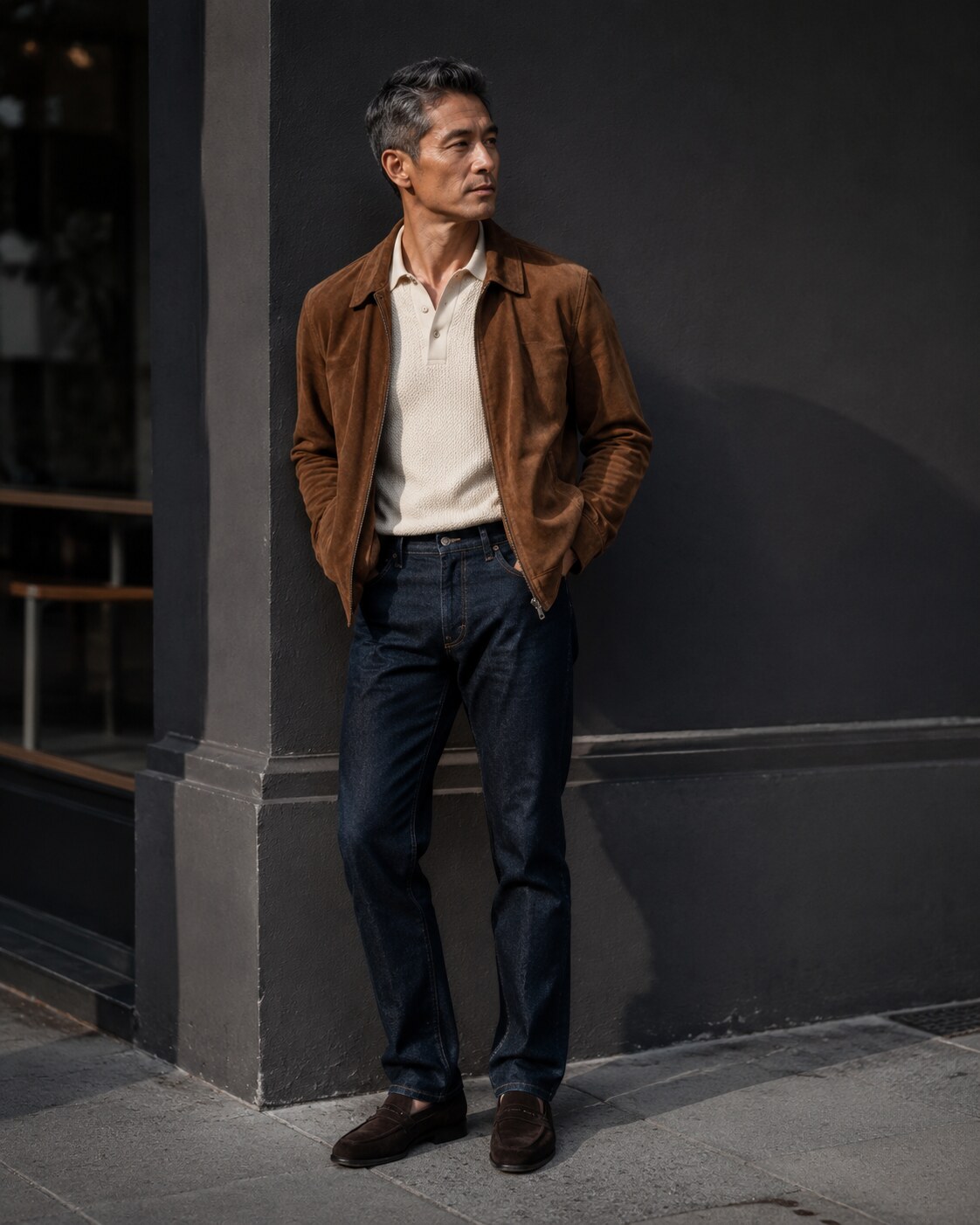
Use one soft surface
Flannel, brushed wool, suede and moleskin soften reflections. One soft surface gives the outfit depth; several heavy brushed fabrics together can look dense and make movement feel bulky.
03
Add one clean surface
Cotton jersey, poplin and fine merino create a quieter middle layer. Their smoother finish gives the eye a pause between a textured jacket and trouser.
04
Let rib and twill catch shadow
Worsted wool, denim and twill create fine directional shadows. That structure is especially useful in trousers because it supports a clean vertical line without needing a louder colour.
05
Use the three-surface test
Before adding a new shade, identify the surface of the top, layer and trouser. If all three are equally smooth or equally fuzzy, change one fabric. The outfit should gain depth without losing its quietness.