In this article+
- 01The overshirt is the bridge, not the headline
- 02Keep the constant genuinely constant
- 03Weekend: white tee, charcoal trousers, white sneakers
- 04Dinner: knitted polo, mid-grey trousers, suede loafers
- 05Travel: black merino tee, dark denim, leather sneakers
- 06Change a controlled set of signals
- 07Use the three-outfit test before buying
- 08Buy less by assigning the layer a clear job
01
The overshirt is the bridge, not the headline
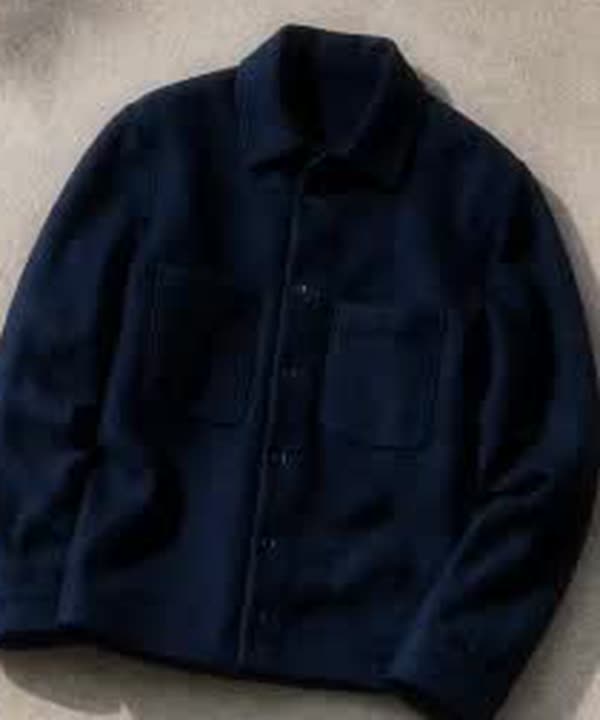
A useful overshirt sits between a shirt and a jacket. Its collar and pockets add enough structure to finish a simple base, while soft construction keeps it relaxed. Navy works because it is quiet beside white, grey, black and denim. The point is not to create three costumes. It is to let one dependable layer change context through the pieces around it.
02
Keep the constant genuinely constant
Use the same navy overshirt across all three outfits. It should close comfortably over the thickest intended base and sit cleanly at the shoulder. Most overshirts finish around the upper-to-mid fly. Short bomber-like cuts may stop higher; longer workshirt cuts can reach the lower hip, provided the hem does not hide the trouser rise or bunch above the seat. Matte cloth and discreet hardware keep it compatible.
03
Weekend: white tee, charcoal trousers, white sneakers
The white tee gives clear separation from navy, while charcoal trousers keep the outfit more considered than ordinary denim without becoming formal. White leather sneakers make the final signal relaxed. Use a substantial tee with a firm neck, leave the overshirt open and keep the trouser hem clean over the low shoe. Texture and proportion carry the outfit; no logo is needed.
04
Dinner: knitted polo, mid-grey trousers, suede loafers
A knitted polo adds a collar and a finer surface beneath the overshirt. Mid-grey trousers create tonal depth without trying to match the navy, while dark-brown suede loafers raise the formality softly. Keep the trouser drape controlled and the shoe visible. The overshirt remains useful because the base has become smarter; it does not need to imitate a blazer.
05
Travel: black merino tee, dark denim, leather sneakers
A fine black merino tee regulates temperature and keeps the palette quiet. Dark straight denim provides durability and a clear change in texture, while low-profile leather sneakers handle walking without pulling the outfit toward sportswear. The overshirt carries useful pockets and can be removed easily. Every piece should still work when the temperature or setting changes.
06
Change a controlled set of signals
The three outfits feel distinct because the base texture, lower-half formality and shoe change together while the overshirt remains constant. Weekend is clean and relaxed. Dinner adds collar, drape and suede. Travel adds performance, denim and practical footwear. Keeping one layer fixed makes the system easy to see and reproduce with the clothes you already own.
07
Use the three-outfit test before buying
Name three complete outfits from your existing wardrobe, including the exact trouser and shoe. Check them in daylight and sit, walk and reach in each one. If the overshirt needs a new tee, different trousers and another shoe before it works, the real cost is much higher than the ticket price. A strong layer connects pieces you already own and reduces the number of decisions they create.
08
Buy less by assigning the layer a clear job
One good overshirt can cover mild-weather outerwear, a relaxed indoor layer and a travel jacket. It does not have to replace tailoring or a coat. That boundary is what makes it useful. Choose the smallest system that covers real life, repeat the combinations that work and replace the layer only when fit, condition or function stops earning its place.
SOURCES & FURTHER READINGThe references behind this guide+
QWD applies these references as a practical menswear baseline. Garment design, body proportions and intended styling can justify a different choice.