In this article+
- 01Understand the job of the overshirt
- 02How should an overshirt fit?
- 03Which overshirt works for the outfit?
- 04The open-over-a-T-shirt formula
- 05Button it when you want a cleaner shape
- 06Choose colour for maximum use
- 07Balance the fabric and the trouser
- 08Avoid the accidental uniform
- 09Can an overshirt replace a blazer?
- 10How long should an overshirt be with wider trousers?
- 11Do you need an overshirt in warm weather?
01
Understand the job of the overshirt
An overshirt sits between a shirt and a lightweight jacket. It should add colour, texture and a little structure without feeling as formal as a blazer or as technical as outerwear. Some are soft and shirt-like; others use heavier wool, twill or suede and behave as jackets. Decide which job you need before judging the fit. A light overshirt can sit beneath a coat, while a substantial version may be the outer layer for much of the year.
02
How should an overshirt fit?
Try the overshirt over the thickest T-shirt, polo or knit you expect to wear with it. The shoulder can be natural or slightly dropped, but the chest should close without pulling and the sleeves should not bind when you reach forward. Avoid sizing so large that the collar collapses and the back balloons unless you want a deliberately oversized silhouette. The hem usually looks best around the upper-to-mid fly, long enough to layer but clearly shorter than a coat.
03
CHOOSE THE JOB FIRST
Which overshirt works for the outfit?
QWD's styling recommendations, not wear-test findings: start with the layer and climate, then choose the cloth and trouser that keep the proportions coherent.
| Overshirt | Best use | Pair with | Watch |
|---|---|---|---|
| Light cotton or linen | Warm-weather layer | Tee · light chinos · tailored shorts | Transparency and a collapsing collar |
| Twill or moleskin | Everyday bridge layer | Oxford · denim · straight chinos | A back or hem that balloons |
| Wool or corduroy | Cool-weather outer layer | Fine knit · flannel · fuller trousers | Bulk through the armhole |
| Suede or structured cloth | Sharper evening layer | Knit polo · tailored trousers · loafers | Too much visual weight with slim trousers |
04
The open-over-a-T-shirt formula
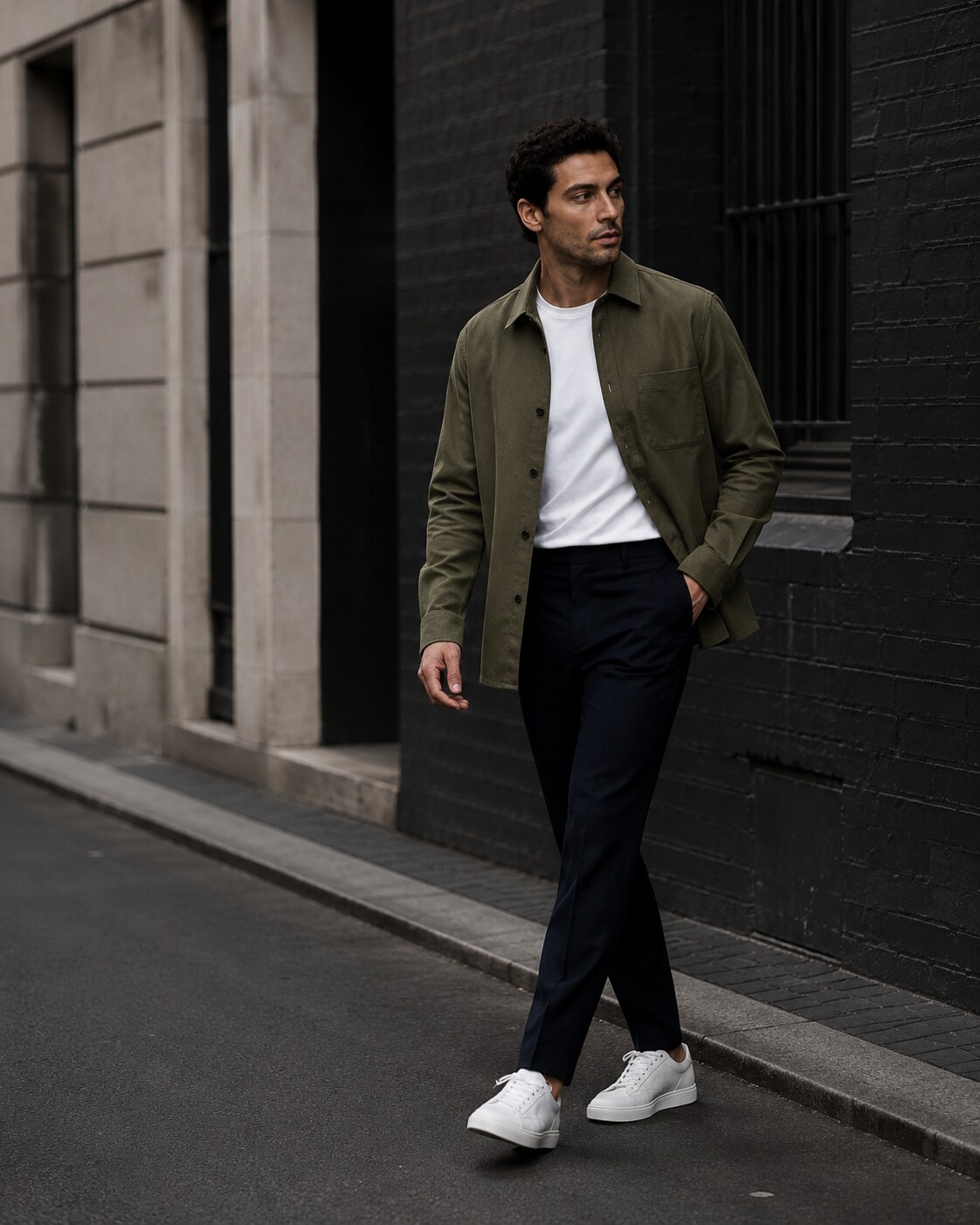
A substantial white, grey or ecru tee beneath an olive, navy, tobacco or charcoal overshirt is the easiest combination. Keep the tee neckline firm and the hem no longer than the overshirt unless a visible layer is intentional. Add straight jeans, chinos or relaxed tailored trousers, then finish with minimal sneakers, loafers or boots according to the fabric. Opening the overshirt creates a vertical line, which can make a simple outfit feel more composed without becoming dressy. (See the full Layer Edit outfit)
05
Button it when you want a cleaner shape
A buttoned overshirt can replace a casual shirt, particularly when the cloth is not too bulky. Wear a fine crewneck tee, vest or lightweight roll neck beneath it and leave one or two buttons open at the collar. The result works with tailored cotton trousers, dark denim and cleaner shoes. Avoid stuffing a heavy knit under a narrow overshirt; pulling at the placket and crowded sleeves remove the ease that makes this layer useful.
06
Choose colour for maximum use
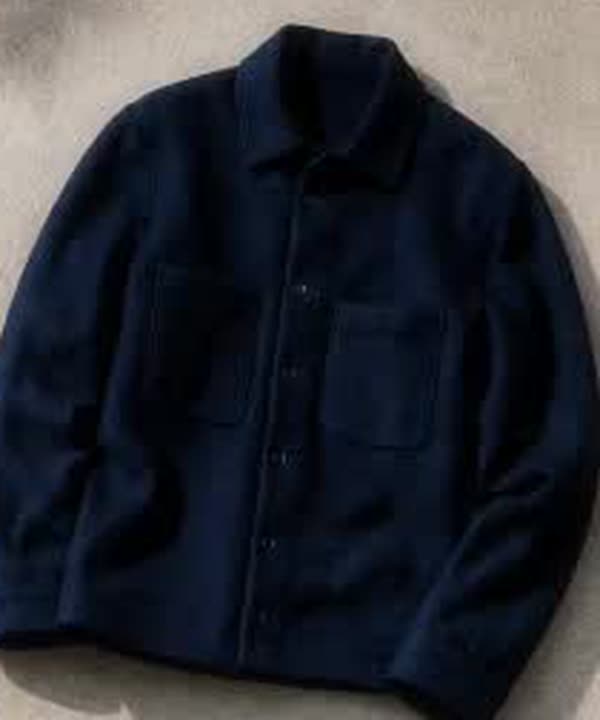
Navy is understated but needs contrast from the trousers or underlayer. Olive works easily with white, ecru, navy, pale blue, charcoal and denim. Tobacco and chocolate add warmth to navy and grey trousers, while charcoal supports monochrome outfits without requiring every piece to be black. A patterned overshirt can provide the main visual interest, but keep the layers beneath it quiet. Before buying, name three trousers and two tops it will work with. (Seven outfits with olive trousers)
07
Balance the fabric and the trouser
Heavy wool, corduroy and suede overshirts have visual weight, so they look natural with denim, substantial chinos, flannel or wider trousers. Fine cotton and linen versions work with lighter chinos, tailored shorts and warm-weather trousers. Very slim trousers beneath a bulky overshirt can make the top half appear disproportionately large. A straight or gently relaxed leg usually creates a calmer relationship and feels more current without being trend-dependent.
08
Avoid the accidental uniform
An olive overshirt with olive cargo trousers, or a blue denim overshirt with almost-matching jeans, can look like workwear costume when texture and tone are too similar. Separate close colours with a clear underlayer or choose trousers in another neutral. Also watch pocket volume: large chest pockets, cargo pockets and technical shoes together create a lot of visual information. Let the overshirt be the practical detail and keep at least one other part of the outfit clean.
09
Can an overshirt replace a blazer?
For a relaxed dinner or everyday smart casual, a clean-lined overshirt can provide enough structure. It is not a substitute when the invitation or workplace requires a tailored jacket. Choose matte cloth, restrained pockets and a collar that holds its shape, then use trousers and leather shoes to keep the outfit polished. Start with the setting rather than treating every overshirt as equally smart. (Dress-code reference: Emily Post distinguishes dressy casual from formal attire) (Check the smart-casual setting)
10
How long should an overshirt be with wider trousers?
QWD's starting point is a boxier layer ending around the upper hip with a fuller trouser, so the trousers remain visible as a deliberate shape. A longer overshirt creates a looser, more elongated look; try it open over a tucked tee if the outfit feels heavy. Do not size down solely to shorten the hem if that makes the chest or sleeves pull. Choose the cut for the silhouette you want, then check movement.
11
Do you need an overshirt in warm weather?
No. If the tee or shirt already works with the trousers, leave the layer off. For a cool morning or an air-conditioned room, QWD would start with a lighter, unlined overshirt that can be carried easily. Judge the actual cloth and construction rather than assuming every cotton or linen garment feels the same. Keep the base outfit complete so removing the layer does not leave it feeling unfinished.
SOURCES & FURTHER READINGThe references behind this guide+
- QWD — One overshirt, three outfits
- QWD buying edit — Navy overshirts
- The QWD 12 — Overshirt
- How QWD chooses recommendations
QWD applies these references as a practical menswear baseline. Garment design, body proportions and intended styling can justify a different choice.