In this article+
- 01Think of smart casual as a spectrum
- 02Move smart casual one step at a time.
- 03The most reliable starting formula
- 04Choose trousers that hold a clean line
- 05Use the top to set the mood
- 06Add structure without wearing a suit
- 07Let the shoes make the final adjustment
- 08Read the room, then make one adjustment
01
Think of smart casual as a spectrum
Smart casual is not one fixed uniform. It sits between everyday casual clothing and tailoring, so the right answer changes with the room. A creative office, a first date and a restaurant birthday can all ask for smart casual while expecting slightly different levels of polish. The useful principle is balance: if the trousers are relaxed, sharpen the top or shoes; if the jacket is tailored, keep the shirt or trousers easy. One polished element can lift an outfit, while one relaxed element stops it feeling overdressed.
02
QWD EDITORIAL STARTING POINT
Move smart casual one step at a time.
These are QWD's practical starting points, not a universal dress-code standard. Read the invitation, venue and people in the room before making the final adjustment.
| Setting | Start with | Sharpen it | Relax it |
|---|---|---|---|
| Daytime or weekend | Chinos · Oxford · clean sneakers | Add an unstructured blazer | Swap the Oxford for a substantial tee |
| Dinner or drinks | Dark trousers · knit polo · loafers | Add richer texture or a jacket | Use dark clean jeans |
| Creative office | Chinos · Oxford · overshirt | Choose wool trousers or Derbies | Use permitted minimal sneakers |
| Unclear invitation | Trousers · collared top · leather shoes | Keep a jacket available | Remove the jacket after reading the room |
03
The most reliable starting formula
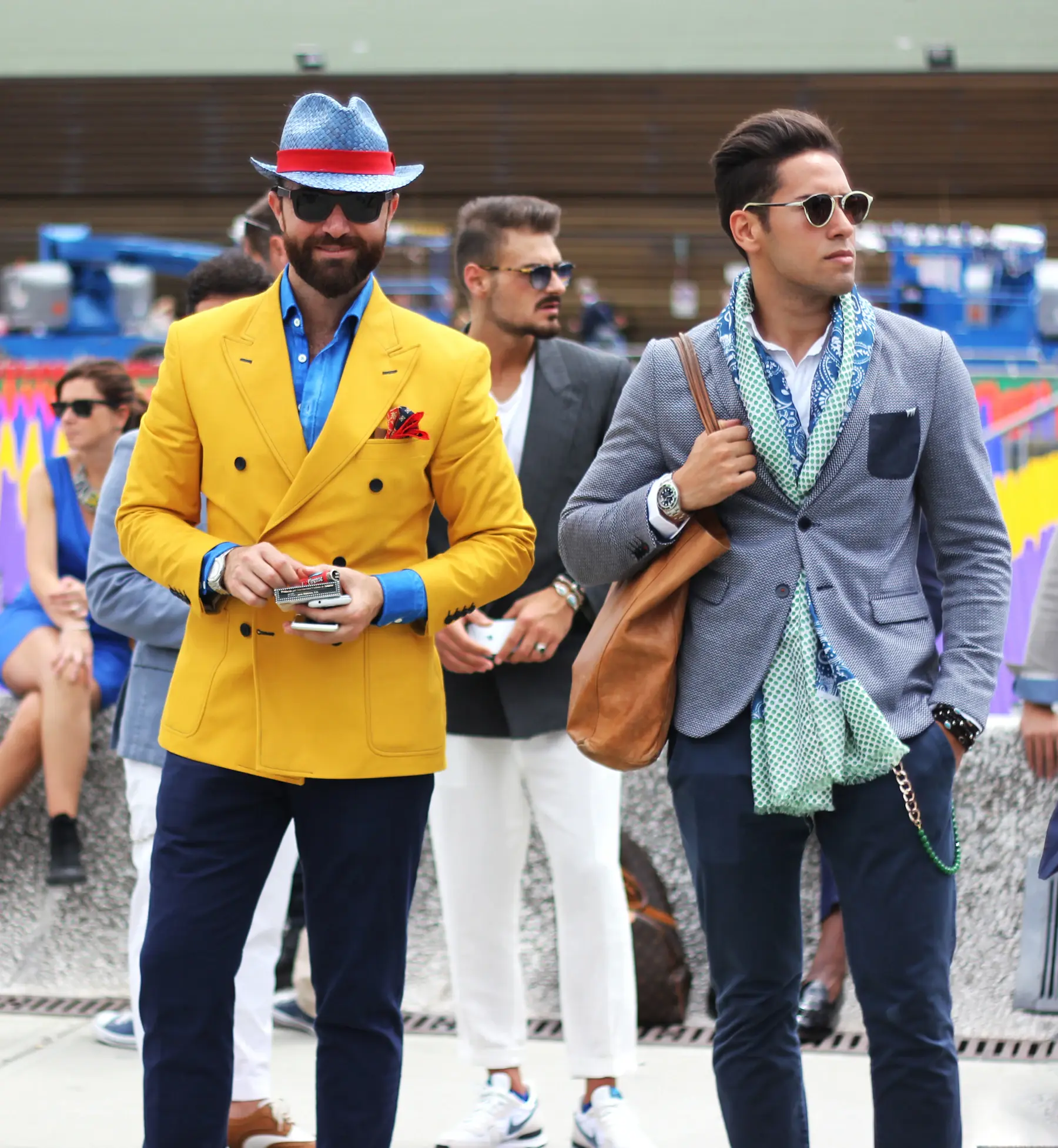
Begin with chinos or dark, clean jeans; add an Oxford shirt or knit polo; then choose an unstructured blazer, neat overshirt or fine knit according to the setting. Finish with loafers, suede Derbies, Chelsea boots or low-profile leather sneakers. This formula works because every piece sits near the middle of the formality scale. Nothing is so formal that it demands a suit, and nothing is so casual that the other pieces have to rescue it.
04
Choose trousers that hold a clean line
Chinos, tailored cotton trousers, wool trousers and dark straight jeans all work. Look for enough room through the seat and thigh, then a controlled straight or gently tapered leg. Heavy stacking at the ankle, distressed denim and technical sports details pull the outfit toward casual. A slightly fuller trouser can feel current and elegant when the waist and length remain controlled. Pressed fabric and clean hems often matter more than whether the cut is slim or relaxed.
05
Use the top to set the mood
An Oxford shirt is the safest bridge between relaxed and polished. A knit polo feels softer and more fashion-aware; a substantial T-shirt can work when the rest of the outfit has structure. Fine merino adds texture without bulk. Keep collars flat, necklines firm and fabric opaque. Tucking the shirt generally raises the formality, while leaving a properly proportioned Oxford, polo or tee untucked makes the outfit easier. The hem should still look deliberate rather than simply long.
06
Add structure without wearing a suit
An unstructured blazer is useful because it gives the shoulder and torso a clean outline without the stiffness of business tailoring. An overshirt, chore jacket, suede jacket or restrained bomber moves the outfit toward casual while still looking considered. The layer should relate to the trousers: avoid a shiny formal suit jacket with washed casual chinos, and avoid heavily technical outerwear when the rest of the outfit is refined. Similar levels of texture make separate pieces feel as though they belong together.
07
Let the shoes make the final adjustment
Loafers and suede Derbies move smart casual toward polished; minimal leather sneakers make it younger and more relaxed; Chelsea or desert boots add weight in cooler weather. Whatever the style, condition is conspicuous. Clean the uppers, refresh white soles and avoid long trouser hems collapsing over the shoe. Match the shoe to the setting rather than following a rule about brown or black: dark brown is versatile, black can look sharp with grey or black trousers, and clean white sneakers work best when the rest of the outfit is restrained.
08
Read the room, then make one adjustment
When uncertain, arrive one step more polished than your everyday default. A jacket can be removed, a shirt collar can be opened and sleeves can be rolled; it is harder to recover from worn trainers, a stretched tee or distressed jeans. Check the venue, time and purpose. Evening usually tolerates darker colour and richer texture, while daytime feels natural in pale blue, stone, olive and softer cloth. Smart casual succeeds when you look comfortable in the room—not as though you are obeying a costume instruction.
SOURCES & FURTHER READINGThe references behind this guide+
- Emily Post Institute — Attire guide and dress codes
- QWD guide — What to wear to a smart-casual dinner
- QWD guide — Business casual for men
- How QWD develops editorial recommendations
QWD applies these references as a practical menswear baseline. Garment design, body proportions and intended styling can justify a different choice.