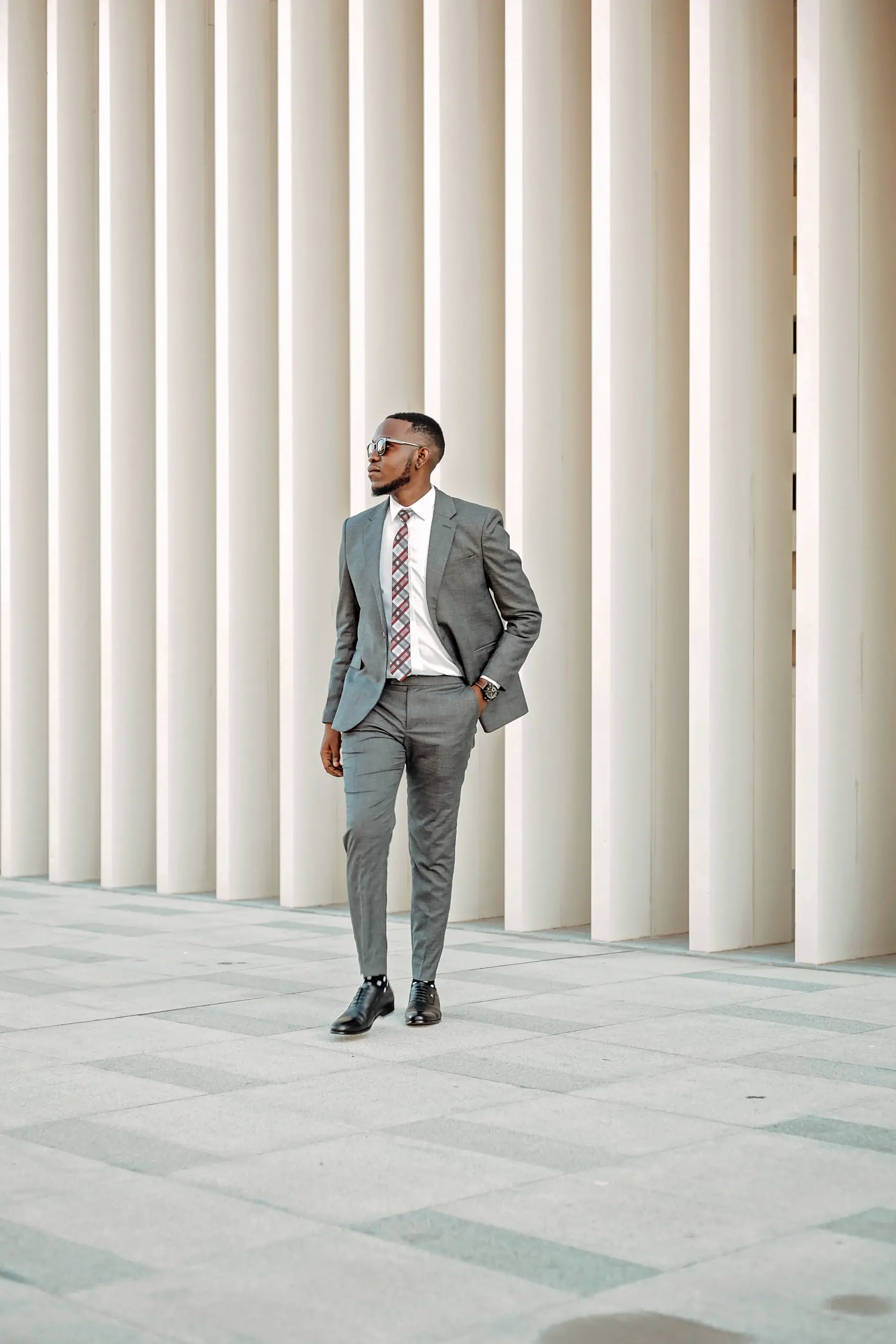
In this article+
- 01Business casual begins with the workplace
- 02Let the workplace set the lower limit.
- 03Use trousers as the professional anchor
- 04Choose shirts that work with and without a jacket
- 05Add structure without wearing a suit
- 06Let footwear set the final level
- 07Create a small weekly rotation
- 08Use three formulas by formality
01
Business casual begins with the workplace
The phrase covers a conservative financial office, a creative studio and a technology company, so there is no single uniform. Observe what respected colleagues wear in meetings, on ordinary days and when clients visit. Begin slightly more polished than the apparent minimum, then adjust after you understand the room. Business casual differs from general smart casual because professional credibility remains part of the job: distressed finishes, clubwear and very relaxed sports clothing rarely belong even when the office feels informal.
02
QWD EDITORIAL STARTING POINT
Let the workplace set the lower limit.
Business casual is not a universal uniform. Confirm the employer's dress code, safety requirements and client expectations; then use these QWD starting formulas to adjust one level at a time.
| Workplace signal | Trousers | Top or layer | Shoes | Upgrade |
|---|---|---|---|---|
| Conservative | Wool trousers | Dress shirt · unstructured blazer | Leather Derbies or loafers | Add a tie if the room requires it |
| Standard | Wool trousers or clean chinos | Oxford · fine knit or blazer | Loafers or Derbies | Keep a jacket available |
| Creative | Clean chinos or permitted dark denim | Oxford, knit polo or overshirt | Loafers or permitted minimal sneakers | Use trousers and a jacket for clients |
| Client-facing day | The smarter approved trouser | Collared shirt · jacket | Maintained leather shoes | Follow the client's level when known |
03
Use trousers as the professional anchor
Tailored wool trousers, clean chinos and refined cotton trousers are the most useful bases. Navy, charcoal, mid-grey, stone and olive combine easily with office shirts and knitwear. Look for a stable waistband, flat pockets, enough room through the seat and thigh and a controlled hem. Dark clean jeans may work in some offices, especially on quieter days, but they should be permitted by the culture rather than smuggled into an otherwise formal outfit.
04
Choose shirts that work with and without a jacket
White and pale-blue Oxford or dress shirts remain dependable because they frame the face and work across trousers. Fine stripes and muted colour add variety without becoming the entire message. The collar should sit cleanly, buttons should not pull and the shirt should remain controlled when tucked. A knit polo can replace the shirt in relaxed offices, provided the neckline is firm and the cloth has enough structure. Keep casual prints and short sleeves for workplaces where they are clearly normal.
05
Add structure without wearing a suit
An unstructured blazer helps for presentations, client meetings and days when authority matters, but it should not look like an orphaned business-suit jacket. Choose matte texture, soft shoulders and colours that separate clearly from the trousers. Fine merino crews, cardigans, overshirts and restrained chore jackets can serve as middle layers in less formal offices. The layer needs to look credible when seated and removed; avoid building an outfit that depends on the jacket staying closed all day.
06
Let footwear set the final level
Leather loafers and Derbies cover most business-casual offices. Suede softens the formality, Chelsea boots add weight in cooler weather and clean low-profile leather sneakers may work where the culture allows. Running shoes, heavily branded trainers and distressed footwear pull attention away from the professional signals above. Keep every option maintained and check the trouser hem with it. Shoes can make chinos and an Oxford look intentional or reduce the same outfit to an ordinary weekend combination.
07
Create a small weekly rotation
You do not need five unrelated office identities. Two trousers, three tops, two layers and two shoes can create a useful rotation when the colours connect. For example, grey trousers and navy chinos can share white and blue shirts, a charcoal knit and navy blazer, then shift between brown loafers and clean leather sneakers. Repetition reads as consistency when fit and condition are strong. It also makes laundry, shopping and early mornings easier to manage.
08
Use three formulas by formality
For a conservative office: mid-grey trousers, pale-blue shirt, navy unstructured blazer and dark-brown Derbies. For a modern office: navy chinos, white Oxford, charcoal merino crew and loafers. For a relaxed workplace: olive chinos, knit polo, navy overshirt and minimal leather sneakers. Keep a jacket and smarter shoe available for important meetings. The best business-casual wardrobe lets you move one step up or down without rebuilding the entire outfit.
SOURCES & FURTHER READINGThe references behind this guide+
- Fair Work Ombudsman — Get ready for work
- Emily Post Institute — Attire guide and dress codes
- QWD guide — Smart casual for men
- QWD guide — How a men's blazer should fit
- How QWD develops editorial recommendations
QWD applies these references as a practical menswear baseline. Garment design, body proportions and intended styling can justify a different choice.