In this article+
01
What is a chore jacket?
A chore jacket is a simple workwear-style jacket, usually with a button front and visible outside pockets. Traditional French versions often have little internal structure. Put This On’s guide explains their appeal as practical spring outerwear. Modern versions range from soft cotton to heavier wool, so the name is only a starting point. For a first purchase, decide whether you want a light layer for a T-shirt or something substantial enough to cover knitwear. (Put This On — The French Chore Coat (3 April 2017))
02
Choose it instead of another overshirt
The categories overlap. A chore jacket often has more pronounced pockets and the feel of an outer layer, while an overshirt may look closer to a substantial shirt. There is no need to own both if they do the same job. QWD would compare the actual pieces: which feels better with your clothes, holds what you carry and closes comfortably? Buy the useful difference, such as a lighter fabric or better layering room, rather than the extra category name.
03
AT A GLANCE
Choose the jacket for its main use
QWD starting points; compare the actual weight and construction.
| Main use | Try | Wear with |
|---|---|---|
| Everyday spring layer | Unlined navy cotton | White tee and stone chinos |
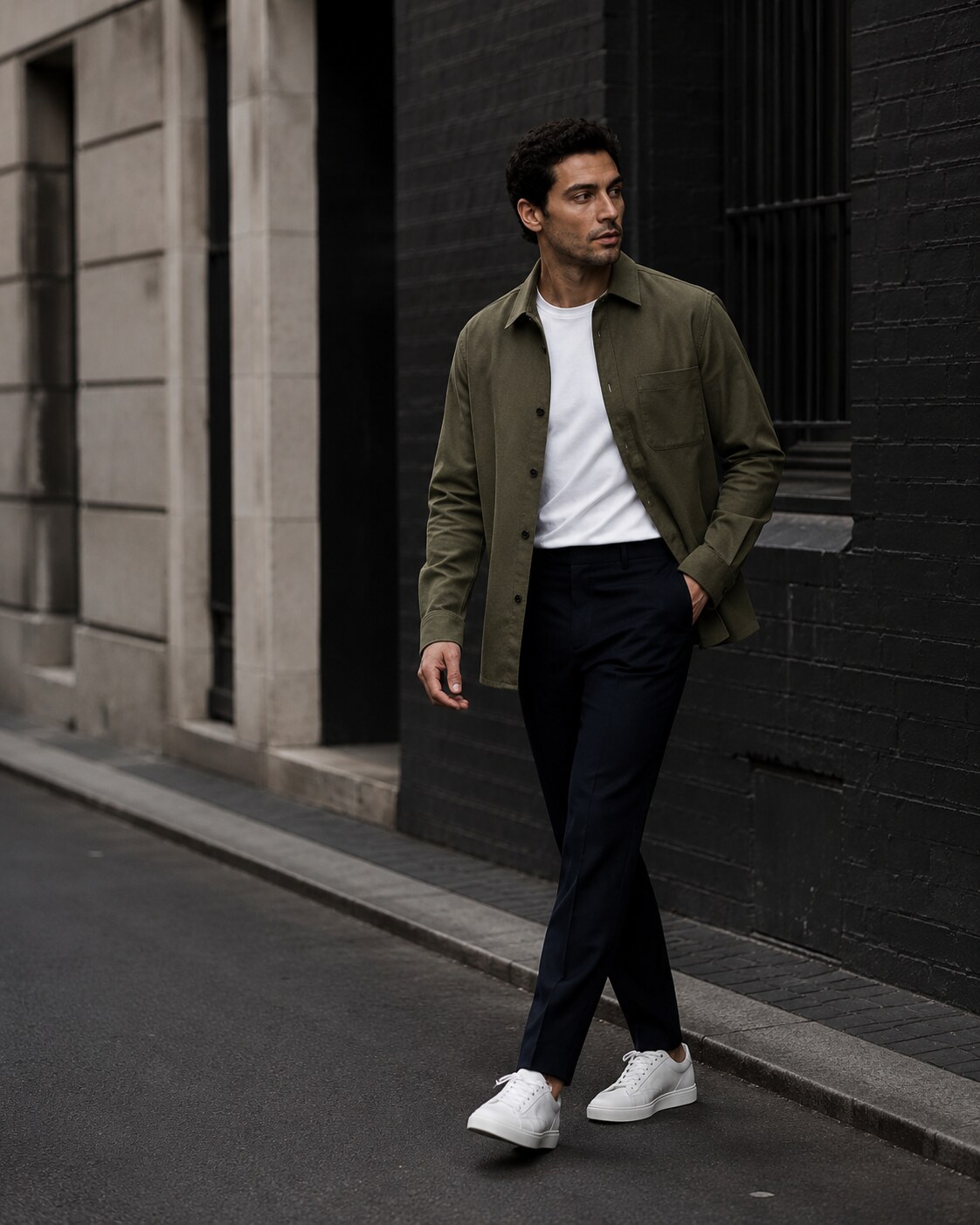
| Casual colour | Olive cotton | Blue shirt and dark jeans |
| Lighter weekend outfit | Ecru cotton or linen blend | Navy polo and grey trousers |
| Cooler weather | More substantial cloth | Fine knit and straight jeans |
04
Check the jacket over real layers
Wear your usual tee or jumper to the fitting room. Reach forward, put your hands in the pockets and fasten the jacket. Look for comfortable upper arms and a front that does not pull when closed. Then look at the length with your normal trousers. A boxier jacket may be intentionally roomy; going down a size can spoil the sleeves without solving the length. Compare another cut if the proportions feel wrong.
05
Let colour do one useful job
Navy can replace a casual dark jacket and works well with cream trousers. Olive adds colour to white tees and dark denim. Ecru feels fresh over navy but asks you to be comfortable with visible marks. Start with the shade that works with two existing pairs of trousers. For QWD, a chore jacket should make ordinary outfits more appealing on the way out the door, not demand a separate set of rugged clothes to accompany it.
06
Try it with smarter trousers
An olive cotton jacket over a pale-blue shirt and charcoal trousers can work for a relaxed office. Keep the shirt soft and the shoes somewhere between casual and formal, such as a suede Derby. The jacket will not stand in for a suit where one is expected. For weekends, change to a tee and jeans. These QWD suggestions use the jacket as a link between familiar clothes rather than an attempt to recreate historical workwear.
07
Decide what the pockets really need to hold
Try your phone and keys before deciding that more pockets are better. Heavy items can pull a light jacket out of shape. Check whether the pocket openings are comfortable and whether you need a secure fastening. Read the care label too: a washable cotton jacket and a dry-clean-only blend bring different practical demands. If you already have a layer that does all of this, enjoy styling it again before adding another.
SOURCES & FURTHER READINGThe references behind this guide+
- Put This On — The French Chore Coat (3 April 2017)
- Put This On — The Springboard Wardrobe (21 July 2021)
QWD applies these references as a practical menswear baseline. Garment design, body proportions and intended styling can justify a different choice.