
In this article+
01
Check the dress code before the styling
A successful visual combination can still be wrong for the occasion. Suit-and-sneaker outfits suit creative offices, modern restaurants, travel and informal weddings with permissive guidance. They are poor choices for black tie, conservative interviews, solemn services and formal ceremonies. If the invitation names a dress code, respect it before experimenting.
02
QWD SUIT-AND-SNEAKER TEST
All four signals need to agree.
This matrix records QWD styling judgment. It cannot override a workplace, host or ceremony’s explicit dress requirement.
| Signal | Works | Does not work | Question |
|---|---|---|---|
| Occasion | Creative office · relaxed dinner · travel | Black tie · solemn or conservative formal | Is casual interpretation welcome? |
| Suit | Soft · matte · lightly structured | Glossy · padded · ceremonial | Does the suit already feel relaxed? |
| Sneaker | Low-profile · leather · quiet | Technical · oversized · distressed | Can it sit beneath tailoring? |
| Trouser | Little or no break | Pooling over a low shoe | Does the hem clear the sneaker? |
03Choose a suit with softness+
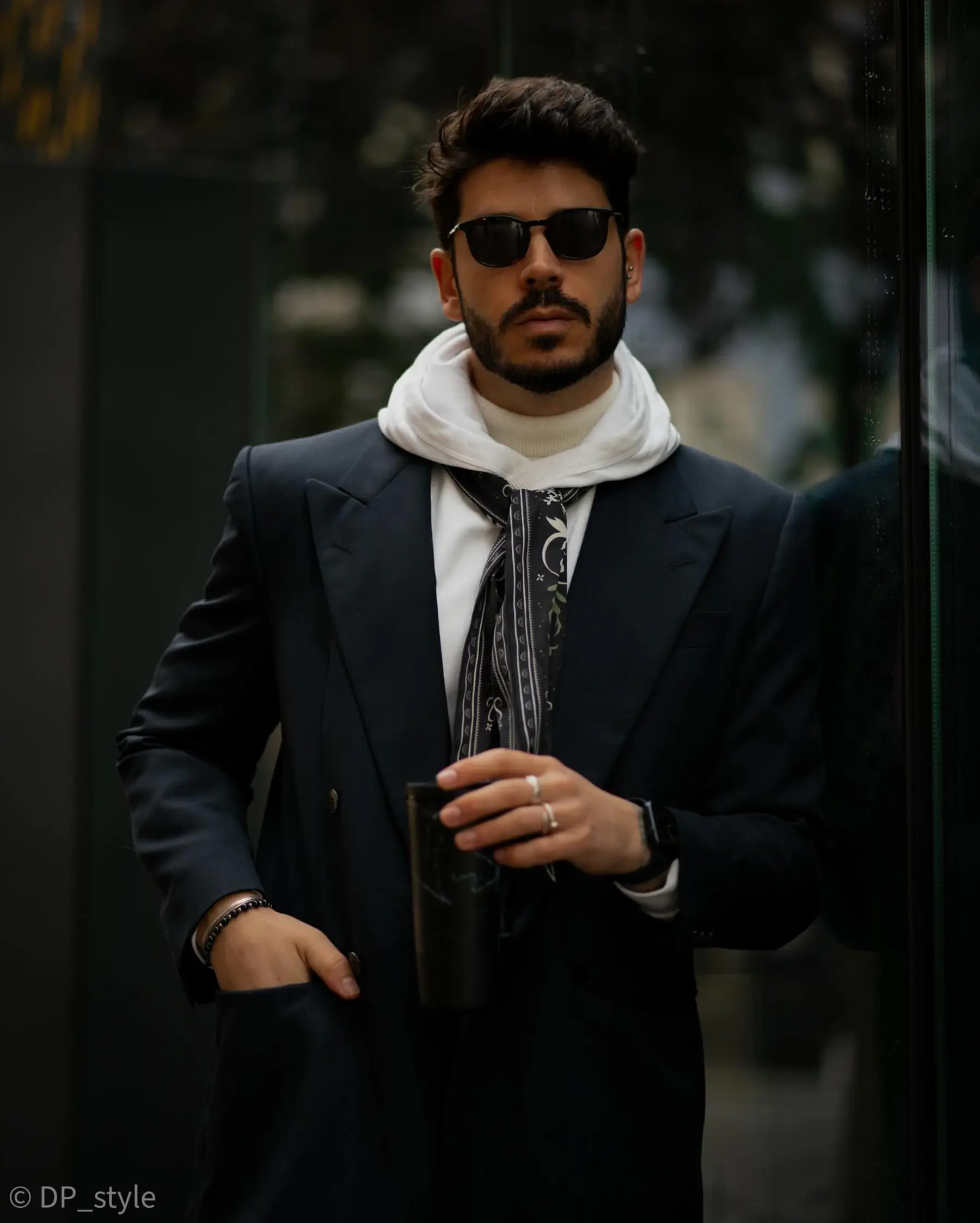
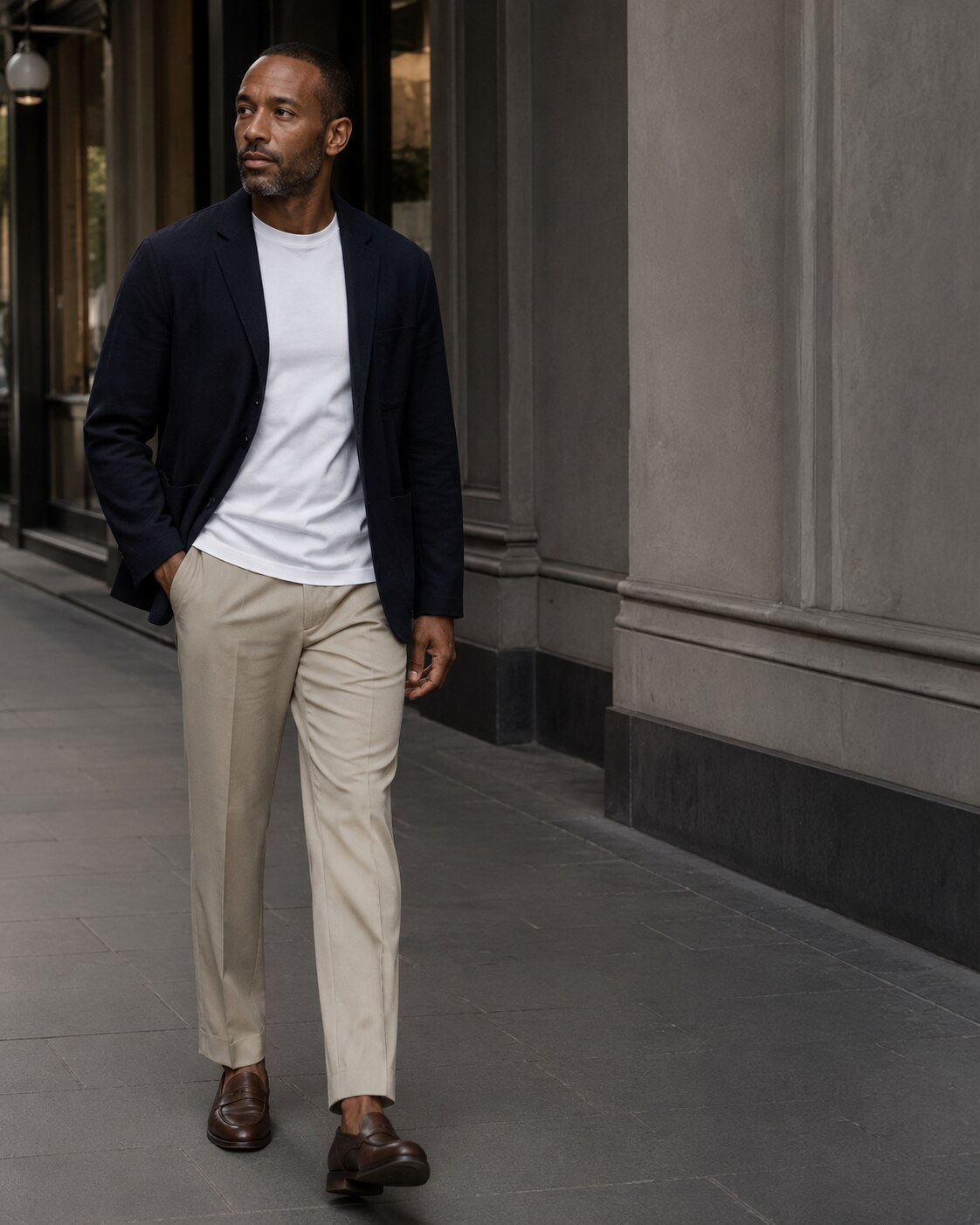
Unstructured shoulders, matte cloth, patch pockets and a slightly relaxed silhouette help a suit communicate ease. A heavily padded, glossy or sharply corporate suit expects a more formal shoe. Navy, mid-grey, olive, tobacco and subtle texture adapt well. The jacket and trouser should still fit properly; casual does not mean collapsed.
04Keep the sneaker low and quiet+
A simple leather court sneaker in white, off-white, navy or dark brown is the dependable starting point. Limit contrast panels, technical mesh, oversized soles and visible branding. The sneaker should look intentionally clean enough to sit under tailoring. Running shoes create a different, more directional outfit and rarely serve as the safe answer.
05Control the trouser length+
Sneakers expose excess length quickly because the upper is low and the sole is flat. Aim for little or no break, with an opening wide enough to fall cleanly rather than catch on the heel. Cropped trousers can work, but the ankle exposure should suit the season and setting. Test the exact suit and sneaker together before altering anything.
06Use the right layer underneath+
A white or ecru T-shirt, fine knit polo, open-collar shirt or neat Oxford can connect the suit to the sneaker. A stiff spread-collar shirt and formal tie pull the top half back towards business dress. If you need the tie, you probably need the leather shoe as well. Keep the underlayer opaque, structured enough and in excellent condition.
07Colour should create one continuous idea+
White or off-white sneakers work with navy, grey, olive and tobacco suits; dark sneakers can create a quieter line with navy or charcoal. Repeat the sneaker’s lightness in the shirt or knit so the shoe does not look isolated. Avoid pristine bright-white shoes under a severe black suit unless the contrast is consciously fashion-led.
08Know when a loafer is the better bridge+
If sneakers feel too casual but Oxfords feel too formal, a suede or dark leather loafer often solves the problem. It keeps the low, easy profile while retaining a traditional material and shape. This is especially useful for cocktail events, weddings and dinners where the host has not invited a distinctly casual interpretation.
SOURCES & FURTHER READINGThe references behind this guide+
- Ape to Gentleman — How to wear a suit with sneakers
- GQ — Why some suit-and-sneaker combinations clash
- QWD guide — How to wear white sneakers
- QWD guide — How should a men’s blazer fit?
QWD applies these references as a practical menswear baseline. Garment design, body proportions and intended styling can justify a different choice.