In this article+
- 01Start at the waist, not the label
- 02Separate what must fit now from what wear may change.
- 03The rise decides where the jeans belong
- 04Give the seat and thigh enough room to move
- 05Choose the leg shape after the top block fits
- 06Length should look chosen
- 07Understand what stretch will—and will not—fix
- 08Use a complete fitting-room test
01
Start at the waist, not the label
Jean sizing varies significantly between brands and even between washes in the same cut. Judge the waistband on your body: it should stay in place without a belt, allow you to sit comfortably and avoid a large gap at the back. A waistband that feels merely snug in the fitting room may become uncomfortable after a meal, while one that already slips is unlikely to become more secure. Ignore the number long enough to compare at least two nearby sizes.
02
FIT BEFORE FADE
Separate what must fit now from what wear may change.
Denim construction affects break-in and recovery, but no fibre mix guarantees a future fit. These are QWD fitting-room signals; QWD has not wear-tested the pair in your hands.
| Area | Must fit now | Wear may change | Usually alterable |
|---|---|---|---|
| Waist and rise | Stable seated and standing | Small softening, depending on cloth | A modest waistband adjustment |
| Seat and thigh | Movement without strain | Some moulding; not extra pattern room | Limited and construction-dependent |
| Leg line | Intentional straight, tapered or full shape | Drape may soften | Modest tapering |
| Hem | Works with the intended shoe | Creasing develops with wear | Shortening |
03
The rise decides where the jeans belong
The rise is the distance from the crotch to the waistband, and it changes the entire proportion of the outfit. A mid-rise is the most adaptable because it sits near the natural waist without feeling conspicuous. A higher rise can lengthen the leg and work well with tucked shirts or shorter jackets. A very low rise lengthens the torso and can create pulling through the front. Choose the rise that stays in place when you sit and lets the top half of the outfit meet the jeans cleanly.
04
Give the seat and thigh enough room to move
The back pockets should sit flat and the fabric should follow the seat without deep folds or strain lines. At the thigh, you should be able to walk, climb stairs and sit without the denim cutting in. Horizontal whiskers at the crotch and pockets pulling open usually signal tightness, not a flattering fit. Extra room is not the same as bagginess: the fabric can skim the leg while preserving a clear shape.
05
Choose the leg shape after the top block fits
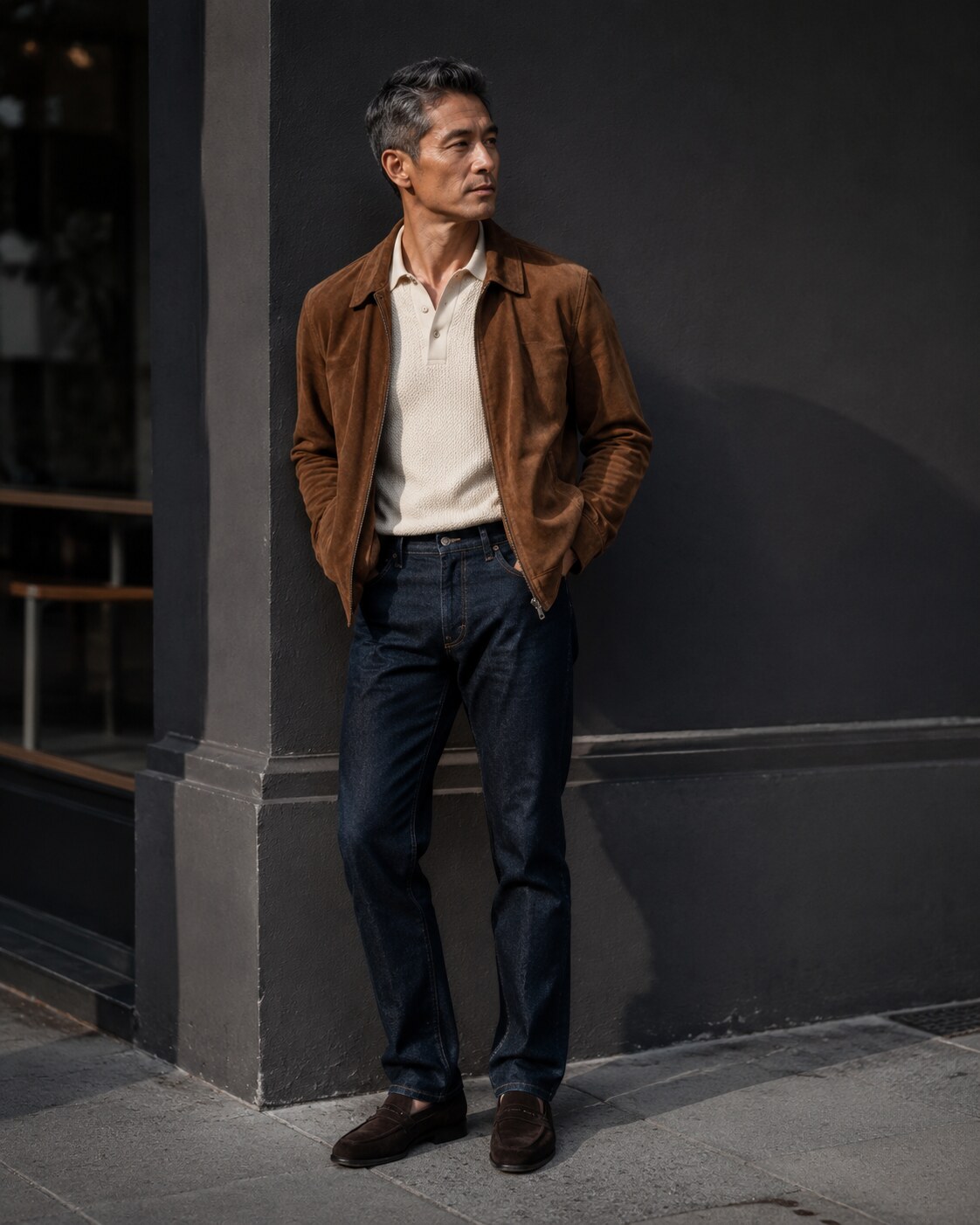
Straight jeans are the most versatile starting point because they create a continuous line from thigh to hem. A relaxed straight cut adds ease and can make knitwear, overshirts and broader jackets feel current. A gentle taper reduces fabric below the knee without gripping the calf. Very skinny denim can exaggerate the size of the torso and shoes, while an extremely wide leg needs enough length and a deliberate top half to look intentional. The right shape balances your proportions and the clothes you actually wear.
06
Length should look chosen
A full-length straight jean can touch the shoe with one soft break. A cropped or ankle-length pair should finish clearly above the shoe rather than hovering at an uncertain point. Heavy stacking makes the lower leg look busy and often shortens the silhouette, especially with slimmer footwear. Try jeans with the sneakers, boots or loafers you expect to wear most. If the waist, rise and thigh are right, shortening the hem is a straightforward alteration.
07
Understand what stretch will—and will not—fix
Rigid denim softens and shapes with wear, but it will not rescue a waistband, rise or thigh that is fundamentally too small. Stretch denim offers immediate comfort and recovery, although too much elasticity can make the fabric look thin or lose structure. Check the fibre label and move in the jeans for several minutes. If the cloth bags at the knees before you have left the fitting room, it may struggle to hold a clean line over time.
08
Use a complete fitting-room test
Wear the jeans with a familiar top and the shoes you brought them to support. Look from the front, side and back, then sit, bend and put a phone or wallet in the pockets. Check whether the waistband stays put, the pockets remain flat and the hem behaves with the shoe. The best pair is not necessarily the most fashionable cut on the rail; it is the one that gives your existing shirts, knitwear and jackets a stronger base.
SOURCES & FURTHER READINGThe references behind this guide+
- Levi's — Men's jeans fit guide
- New Mexico State University — Fitting pants
- CottonWorks — Denim basics
- QWD Fit Lab — Measurement method and limits
- How QWD develops editorial recommendations
QWD applies these references as a practical menswear baseline. Garment design, body proportions and intended styling can justify a different choice.