In this article+
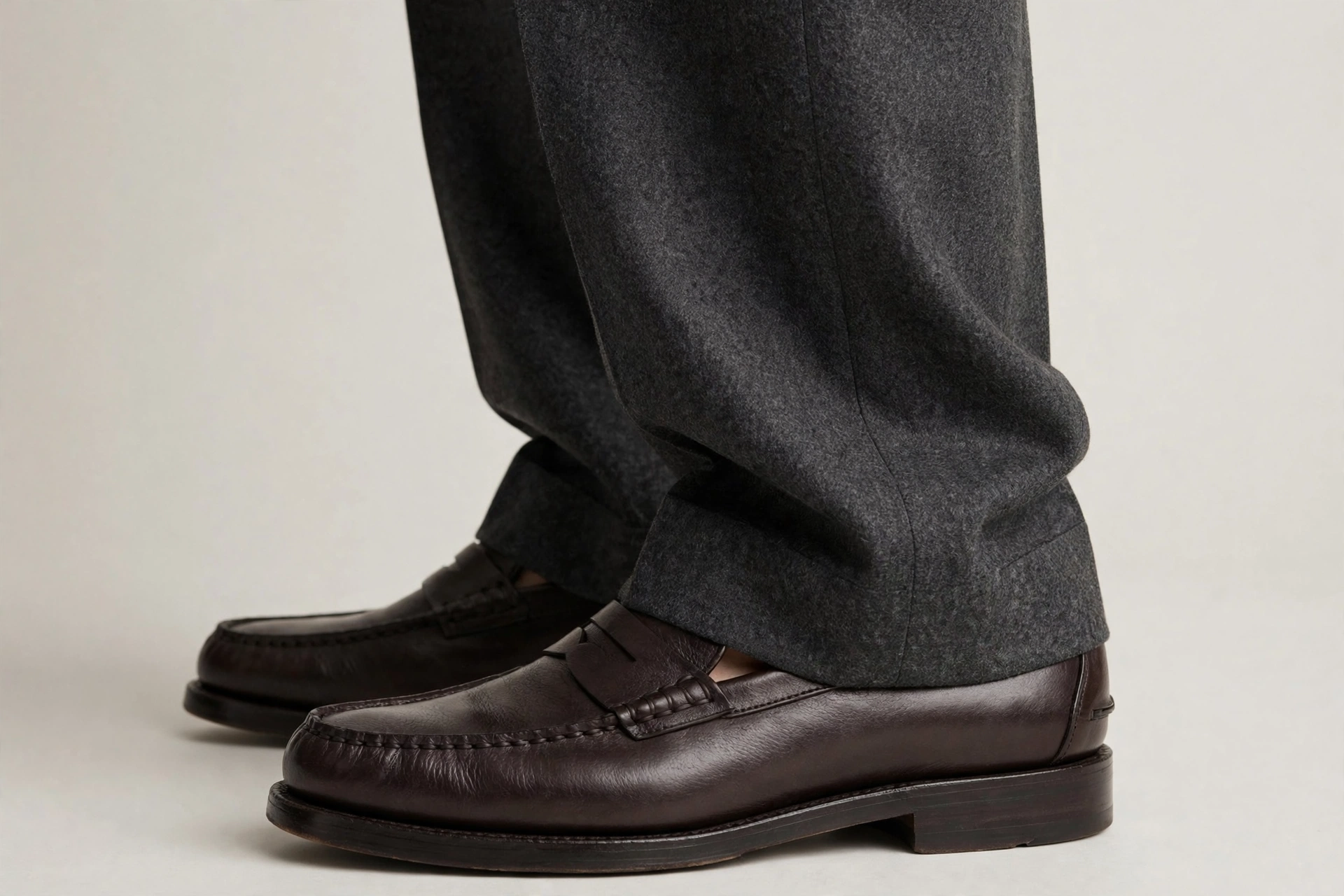
REAL PHOTOGRAPH / VISIBLE DETAIL
What the picture can—and cannot—tell you.

Follow the visible seams
You can see how the upper panels meet and how much sole is visible. That helps you inspect the design and ask better questions. A side photograph does not establish hidden sole attachment, leather grade or repairability.
Real photographic context, not a QWD wear test. Read the product specification and inspect the actual garment before drawing a quality conclusion.
01
Begin with both shoes on your feet
Try both shoes with the socks you intend to wear and walk on a permitted clean surface. Notice pressure at the toes, instep and widest part of the foot, plus how securely the heel stays in place. QWD would not buy pain on the promise that the leather will eventually transform. A different size or shoe shape may solve more than a higher price. (Loafer fit and heel slip)
02
CHOOSE FOR THE JOB
The useful decision.
QWD editorial guidance informed by the sources below; not a product wear test.
| Your priority | Start here | Check before deciding |
|---|---|---|
| Everyday comfort | Try both shoes with normal socks | Pressure and heel security |
| Longer ownership | Ask about model-specific repair | Upper and lining condition |
| Walking and weather | Choose an appropriate sole | Grip and care |
| Quality check | Inspect inside and underneath | Do not infer construction from decoration |
03
Look beyond the polished surface
Inspect both uppers in ordinary light. Look for damage, peeling finishes, unexpected colour differences and areas that appear crushed before wear. Natural variation is not automatically a defect. Ask the maker what leather and finish are used: a photograph or the word leather cannot establish the grade, tanning method or future lifespan. Do not scratch or aggressively bend a shop pair as a test.
04
Check the parts you do not see while standing
Look inside for rough joins, damaged lining and exposed hard edges. Compare the two shoes’ stitching and heel finish. Look around the sole attachment for obvious separation or uneven workmanship. These are useful screening observations, not a substitute for technical inspection. Decorative stitching alone should not be treated as proof of the underlying construction.
05
Ask what the construction lets you do
Crockett & Jones describes how it refurbishes its Goodyear-welted shoes, including soles and heels while retaining the upper and insole. That is an example of a maker-supported repair path, not a guarantee for every welted shoe. Ask the seller about the exact model, which parts are replaceable and who can do the work. Other constructions deserve the same practical questions. (Maker example: Crockett & Jones repairs)
06
Choose a sole for your normal day
Think about the surfaces, weather and walking you actually encounter. Ask about grip and care rather than assuming a leather sole is inherently superior to rubber. QWD would choose a sole that suits the job and feels stable underfoot. If you plan to add protection or alter the sole, ask the maker or repairer how that affects the particular shoe before committing.
07
Price the ownership, not the badge
A useful comparison includes purchase cost, realistic care and any quoted repairs. Do not use a promised lifetime or a guessed repair price to justify the purchase. A well-fitting pair with a clear repair route may deserve more; a rarely worn pair does not become value because its construction sounds impressive. Keep the return conditions in mind before wearing it outside. (Care for smooth leather shoes)
SOURCES & FURTHER READINGThe references behind this guide+
QWD applies these references as a practical menswear baseline. Garment design, body proportions and intended styling can justify a different choice.