In this article+
01
Start with contrast, not complication
Navy is dark, cool and visually steady, so it benefits from a top that separates clearly from the trousers. White, pale blue, ecru and light grey are the easiest choices because the eye can read the top and bottom as distinct shapes. This matters more than finding a supposedly perfect colour match. Keep the first outfit simple, then add interest through a suede shoe, textured knit or jacket rather than introducing several competing colours.
02
White and ecru are the cleanest options
A white Oxford shirt with navy chinos is reliable for work, dinner and travel. A substantial white T-shirt makes the same trousers more casual, especially with clean leather sneakers or a chore jacket. Ecru softens the contrast and brings warmth, which is useful when bright white feels too stark against your complexion or the rest of the outfit. Make sure pale tops are opaque and in good condition; marks, yellowing and stretched necklines become more visible beside dark trousers.
03
Pale blue creates a tonal menswear classic
Pale blue and navy share the same colour family but remain far enough apart to create definition. Use an Oxford or linen shirt, then add brown suede shoes, white sneakers or a grey knit. The combination becomes flat only when every blue is similarly dark and smooth. Vary the value and texture: pale Oxford cloth above, matte cotton below and perhaps a tobacco suede shoe. A medium-blue denim shirt can also work if it is visibly lighter or more textured than the chinos.
04
Grey, olive and brown add quieter depth
Light or mid-grey knitwear looks particularly clean with navy chinos because both colours are restrained without appearing matched. Olive overshirts and jackets introduce colour while behaving like a neutral. Tobacco, camel and chocolate work through warmth and contrast; use them in suede, knitwear or outerwear rather than trying to distribute the colour everywhere. Burgundy can be effective as a single rich accent in a knit, sock or shoe, provided the rest of the outfit remains simple.
05
Be careful with navy on navy
A navy top can work, but it needs deliberate separation. Choose a knit polo, textured overshirt or sweater that is clearly lighter, darker or more tactile than the chinos. Two almost-matching navies in smooth fabrics can look like a failed suit. A white T-shirt beneath a navy overshirt creates a useful visual break, as can a brown belt or shoe. If the shades are difficult to distinguish in ordinary indoor light, change one of them.
06
Choose shoes by occasion
White or off-white leather sneakers make navy chinos casual and modern. Dark-brown suede loafers or Derbies are the easiest smart-casual choice. Chocolate Chelsea boots add weight in cooler weather, while black leather shoes can work with a grey, black or monochrome top. Avoid highly polished formal Oxfords unless the trousers and shirt are equally sharp. The trouser hem should finish cleanly so the shoe remains visible rather than buried under excess fabric.
07
Three outfits to use immediately
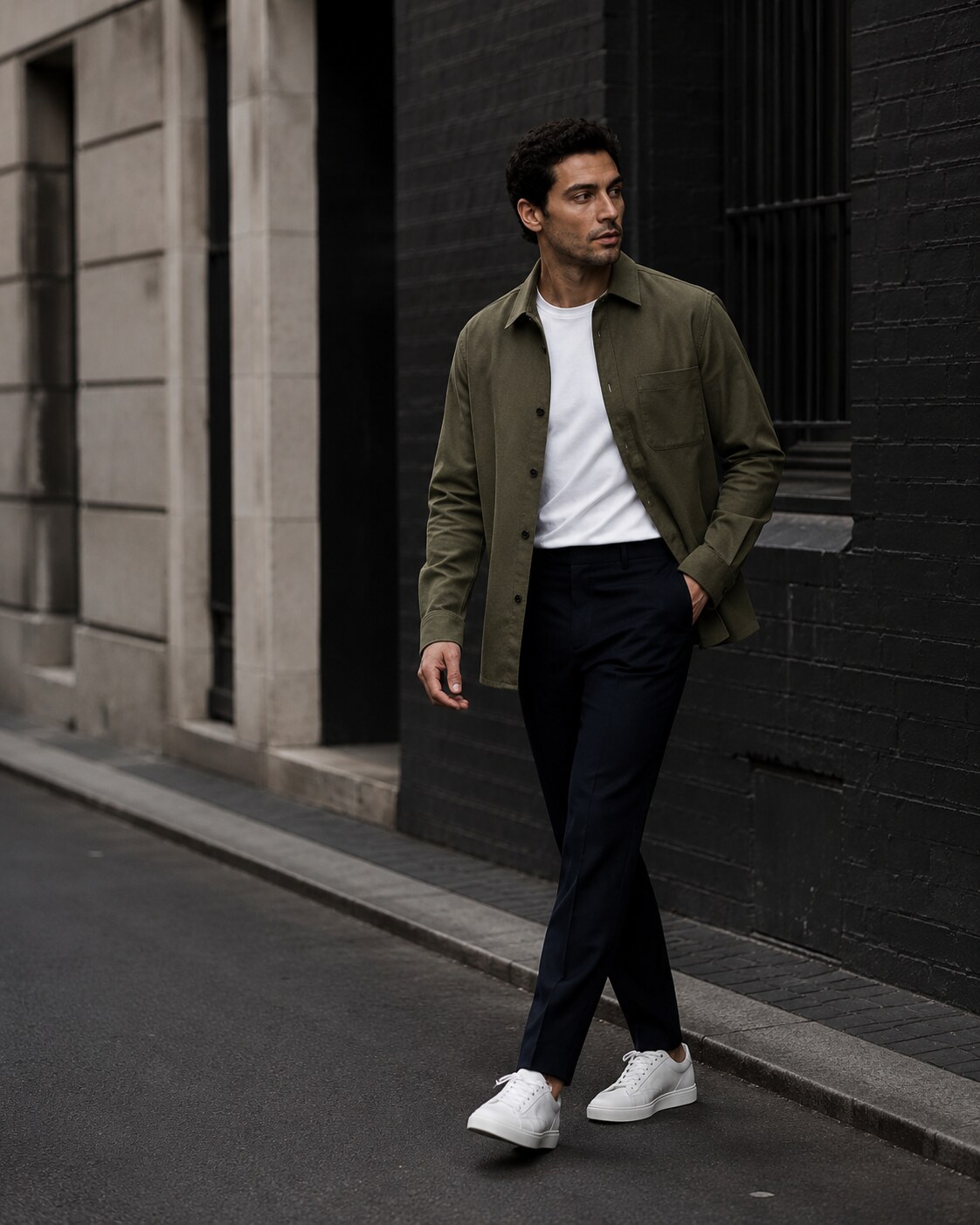
For an easy weekend: navy chinos, a substantial white tee, olive overshirt and white sneakers. For smart casual: navy chinos, pale-blue Oxford, brown suede loafers and an unstructured grey jacket. For a cooler evening: navy chinos, light-grey merino crewneck, white shirt collar and dark-brown boots. Each outfit uses the same dark base but changes texture and formality, which is why navy chinos can earn a useful place in a compact wardrobe.