In this article+
- 01Start with the waist and rise
- 02Fit the structure before refining the hem.
- 03Read the seat from the back
- 04Give the thigh enough room
- 05Choose the leg shape in relation to the outfit
- 06Make the break look deliberate
- 07Know what is worth altering
- 08Use the full fitting-room test
- 09What QWD's first long-term trouser record adds
01
Start with the waist and rise
The waistband should stay in place without relying on a tightly fastened belt and remain comfortable when you sit. The rise determines where that waistband belongs and changes the apparent length of both torso and leg. Mid-rise trousers are the easiest starting point; a higher rise can lengthen the leg and work well with tucked shirts, while a very low rise often creates pulling and exposes too much shirt below a shorter jacket. Judge the position on your body, not the size printed inside.
02
THE TOP-BLOCK TEST
Fit the structure before refining the hem.
Body measurements establish reference points, not a universal silhouette. These are QWD fitting-room signals; an alteration professional must inspect the garment before confirming a change.
| Area | Useful pass | Warning | Usually alterable |
|---|---|---|---|
| Waist and rise | Stable without digging in | Sliding, strain or crotch drag | A modest waist change |
| Seat and thigh | Clean line with movement room | Pocket flare or horizontal strain | Limited; pattern-dependent |
| Leg | Chosen shape releases after movement | Calf grip or uncontrolled volume | Modest tapering |
| Hem | Deliberate break with the intended shoe | Stacking or an exposed short back hem | Shortening and some lengthening |
03Read the seat from the back+
The fabric should follow the seat without gripping or collapsing into deep folds. Horizontal strain, distorted pockets and the seam pulling into the body usually mean the top block is too small. Large scoops of loose cloth beneath the seat suggest too much room or the wrong shape. Ask for a rear photograph if the fitting-room mirrors are limited. Tailors can make modest waist and seat adjustments, but a fundamentally incompatible rise and crotch shape are rarely worth forcing.
04Give the thigh enough room+
Walk, sit, climb a step and place a phone in the pocket. The pocket opening should remain flat and the cloth should not catch across the upper thigh. Enough room creates a cleaner line because the fabric can hang rather than being pulled sideways. This does not require a wide trouser. A straight or tapered leg can still skim the body, but the reduction should begin gradually below a comfortable thigh rather than squeezing the largest part of the leg.
05Choose the leg shape in relation to the outfit+
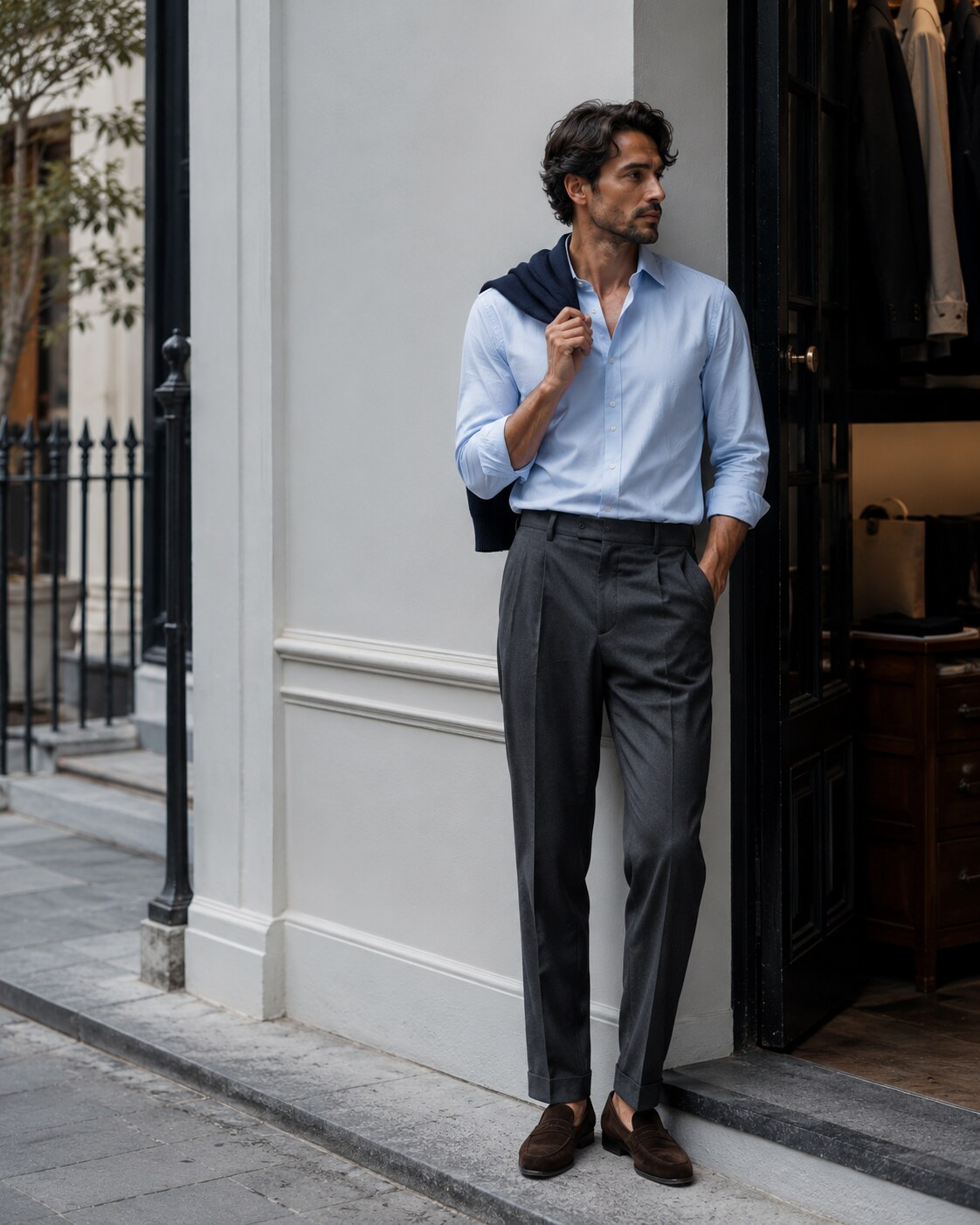
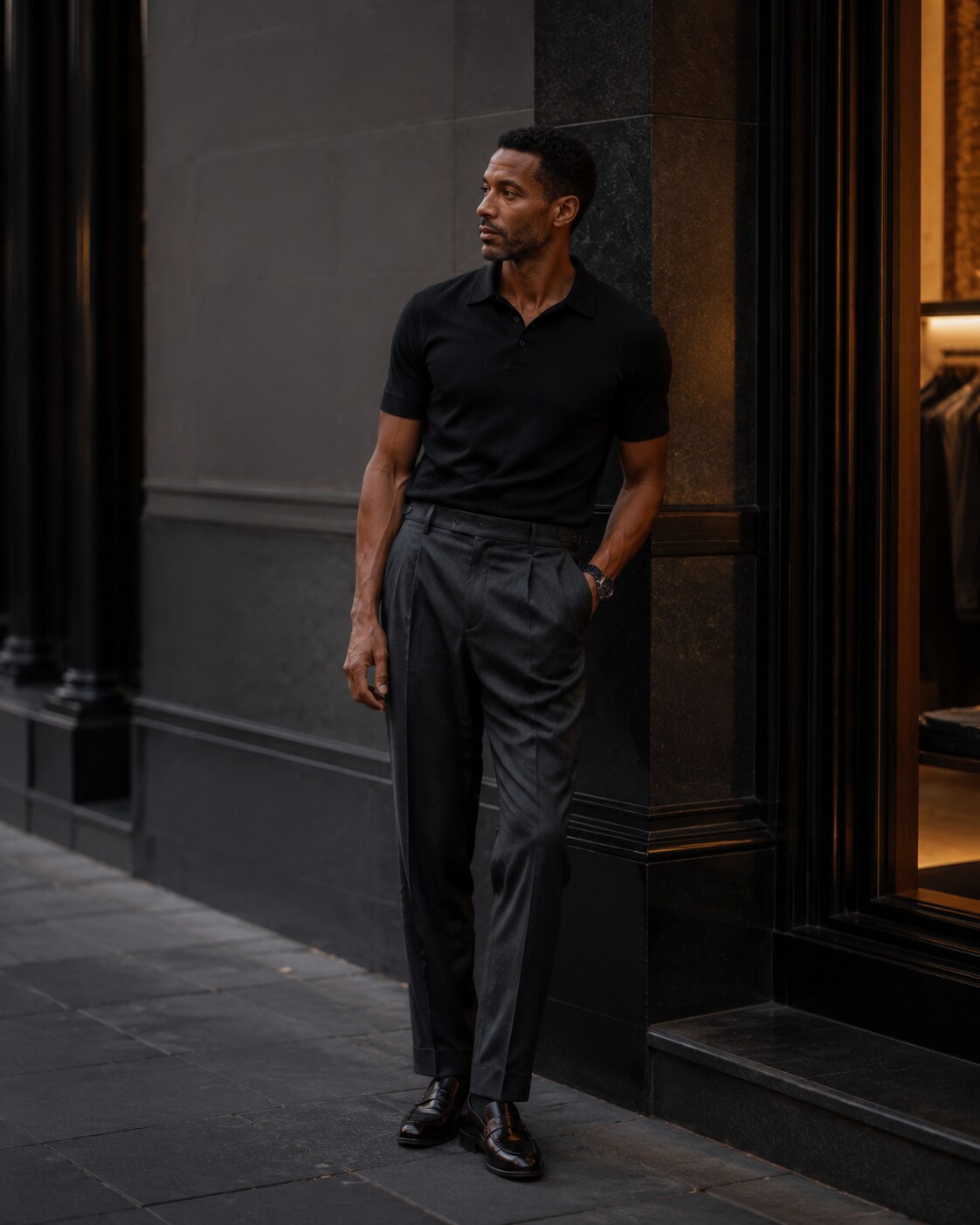
Straight trousers are versatile because they continue the line of the thigh to the shoe. A relaxed leg suits textured cloth, knitwear and broader jackets; a gentle taper can sharpen a smaller frame or low-profile shoe. Very narrow hems can exaggerate the torso and shoe, while extremely wide legs need enough length and structure above to feel intentional. Repeat a similar degree of ease through the outfit so the trousers do not look disconnected from the top half.
06Make the break look deliberate+
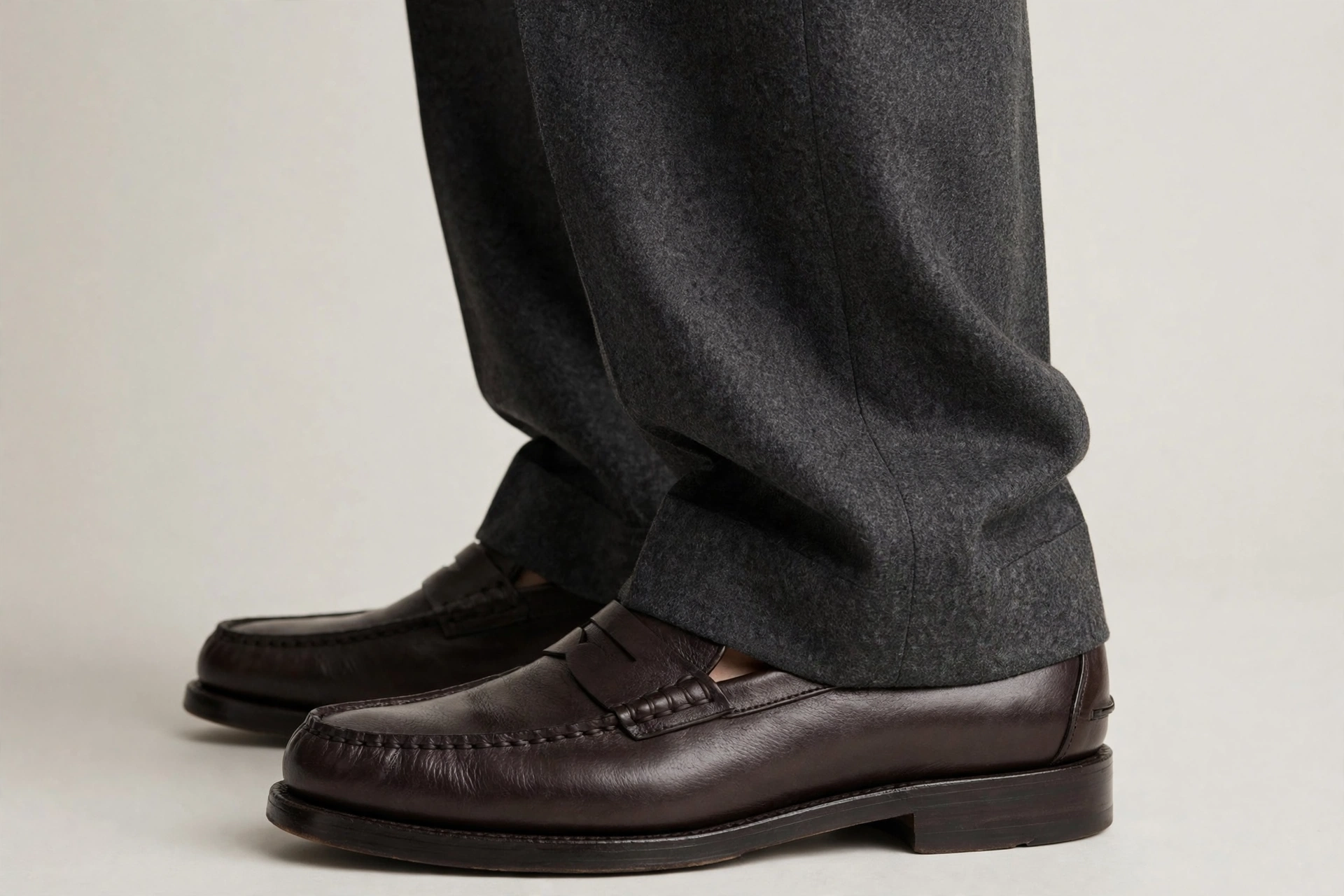
No break means the hem meets the shoe cleanly; a slight break creates one soft fold; a full break adds more cloth and visual weight. Most everyday trousers look controlled with no break or one slight break. Wider legs can carry a little more length, while narrow openings become untidy quickly when fabric stacks. Try the trousers with the shoes you will wear most. Hemming is straightforward once the waist, rise, seat and thigh are right.
07Know what is worth altering+
Length, a modest waist adjustment and limited tapering are routine. Seat balance, pocket flare, a very tight thigh and an unsuitable rise are harder or uneconomical. Before buying trousers that need work, ask for the alteration price and confirm there is enough seam allowance. The strongest starting fit is comfortable at the waist and thigh, clean through the seat and close to the intended leg shape. Tailoring should refine good trousers, not rebuild the pattern.
08Use the full fitting-room test+
Wear a familiar shirt and the shoe type the trousers need to support. Check front, side and back; tuck and untuck the shirt; sit for several minutes; and look again at the waistband and pockets. Then name three real outfits from your wardrobe. A technically good fit is only useful when the colour, cloth and formality connect with what you already own. The best trousers improve the silhouette of everything above them and disappear into regular use.
09What QWD's first long-term trouser record adds+
QWD's published H&M charcoal-trouser field note records a size 33 bought in Melbourne in February 2026 and worn about 25 times for work. The wearer reports a very comfortable fit, substantial flex and no fit problem so far. That is useful evidence for repeat-wear comfort and the versatility of charcoal; it does not prove that the unconfirmed model will fit another body, and its exact fabric composition, garment measurements and wash performance are still unrecorded. This distinction is why QWD publishes the observation and its limits together in the Fit Index.
SOURCES & FURTHER READINGThe references behind this guide+
- ISO 8559-1:2017 — Anthropometric definitions for body measurement
- New Mexico State University — Fitting pants
- QWD Fit Lab — Measurement method and limits
- QWD Fit Index — Published H&M charcoal-trouser field note
- QWD evidence guide — Why shoe volume changes trouser drape
QWD applies these references as a practical menswear baseline. Garment design, body proportions and intended styling can justify a different choice.