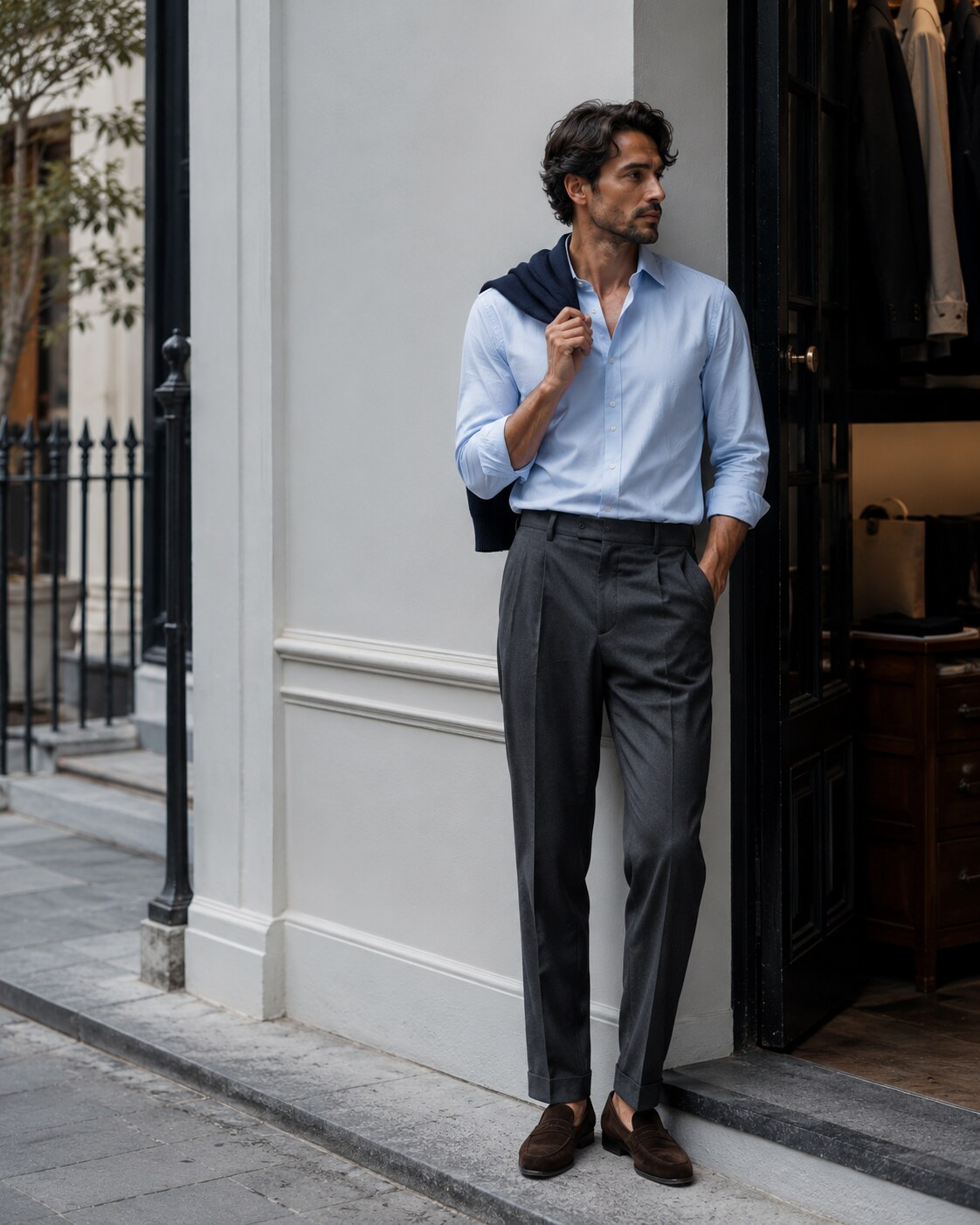
In this article+
- 01The collar should close without negotiation
- 02Use the collar and shoulder to choose the cut.
- 03Place the shoulders before judging the body
- 04Look for ease through the chest
- 05Shape the waist without clinging
- 06Check sleeve length while moving
- 07Match cloth and collar to the job
- 08Do the jacket and sitting tests
01
The collar should close without negotiation
Button the collar even if you usually wear it open. You should be able to turn your head and place one or two fingers inside without pressure or a large gap. The collar points should sit flat and the band should not lift away from the neck. A collar that is too tight cannot be fixed by opening another button in formal settings, while one that is too large makes ties sit poorly and leaves the neckline looking disconnected beneath a jacket.
02
FIT THE FRAME FIRST
Use the collar and shoulder to choose the cut.
Body and garment measurements are different. These are QWD fitting-room signals, not a claim that one cut fits every body or that every alteration is economical.
| Area | Clean signal | Warning | Change cut or alter |
|---|---|---|---|
| Collar and shoulder | Comfortable collar; yoke near intended point | Gaping, pulling or a dropped accidental seam | Change size or cut first |
| Chest and waist | Placket lies flat with movement ease | Button strain or heavy billowing | Modest shaping may work |
| Sleeve and cuff | Cuff reaches the wrist and stays controlled | Retreats when reaching or buries the hand | Length may be alterable |
| Tucked or untucked hem | Length supports the intended job | Tail escapes or untucked hem hides the rise | Choose the correct shirt type |
03
Place the shoulders before judging the body
The yoke seam should finish close to the shoulder point rather than dropping far down the arm or pulling toward the neck. Reach forward and raise both arms. The shirt needs room across the upper back without the whole garment climbing dramatically. Shoulder width and armhole shape affect every other area and are difficult to alter well, so change size or cut before accepting a poor structure in exchange for a closer waist.
04
Look for ease through the chest
Button pulling, horizontal strain and a placket that buckles are signs the chest is too small. Large vertical folds beside the placket suggest excess volume. The shirt should follow the torso with enough room to breathe, sit and reach forward. A well-cut regular shirt can look cleaner than a tight slim fit because the cloth hangs properly. Judge the side and back as carefully as the mirror's flattering front view.
05
Shape the waist without clinging
The waist should narrow enough to avoid a large balloon of fabric when tucked, but it should not map the body or pull when seated. Darts and side seams can remove modest excess when the shoulders and chest fit. If the shirt is intended to be worn untucked, its hem and width must create a clear ending near mid-fly rather than covering most of the seat. A long curved tail belongs inside trousers; shortening it may change the balance of the whole shirt.
06
Check sleeve length while moving
With the cuff fastened, the sleeve should finish around the wrist bone and remain visible beneath a jacket by roughly one centimetre. Reach forward as though driving or typing; the cuff should not retreat far up the forearm. Excess sleeve length creates bunching, but a sleeve that is too short cannot be rescued by a larger cuff. Sleeve shortening is common when the placket, cuff and proportions allow it, though extreme adjustments can leave the button placement looking odd.
07
Match cloth and collar to the job
A smooth poplin and firmer collar feel more formal; Oxford cloth, chambray and brushed cotton are easier with chinos, denim and relaxed tailoring. The fit should support that role. A business shirt needs enough length to stay tucked, while a casual shirt can be shorter and softer. White and pale blue offer the broadest range, but opacity, collar condition and surface texture matter more than owning many colours. Choose the shirt for the outfits it must complete.
08
Do the jacket and sitting tests
Try the shirt beneath the jacket or knitwear you expect to wear. The collar should remain visible and controlled, the sleeve should not twist, and excess cloth should not collect heavily at the waist. Then sit for several minutes and check the buttons again. If the structure and movement work, name three trousers and two layers already in your wardrobe. A good shirt fit earns its value by making those existing combinations easier.
SOURCES & FURTHER READINGThe references behind this guide+
- ISO 8559-1:2017 — Anthropometric definitions for body measurement
- NIST — Body Dimensions for Apparel
- QWD Fit Lab — Measurement method and limits
- QWD evidence guide — The numbered-sizing trick
- How QWD develops editorial recommendations
QWD applies these references as a practical menswear baseline. Garment design, body proportions and intended styling can justify a different choice.