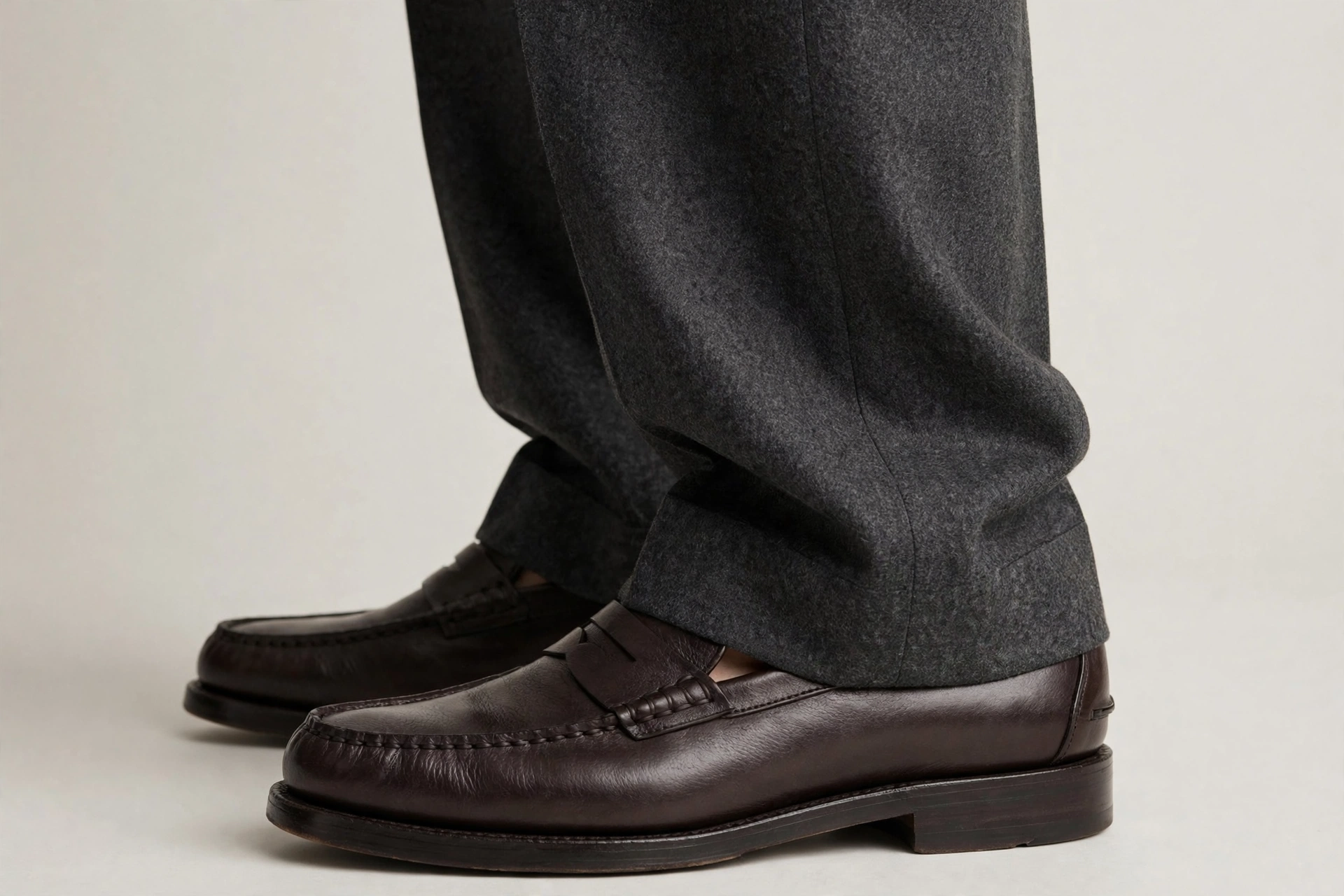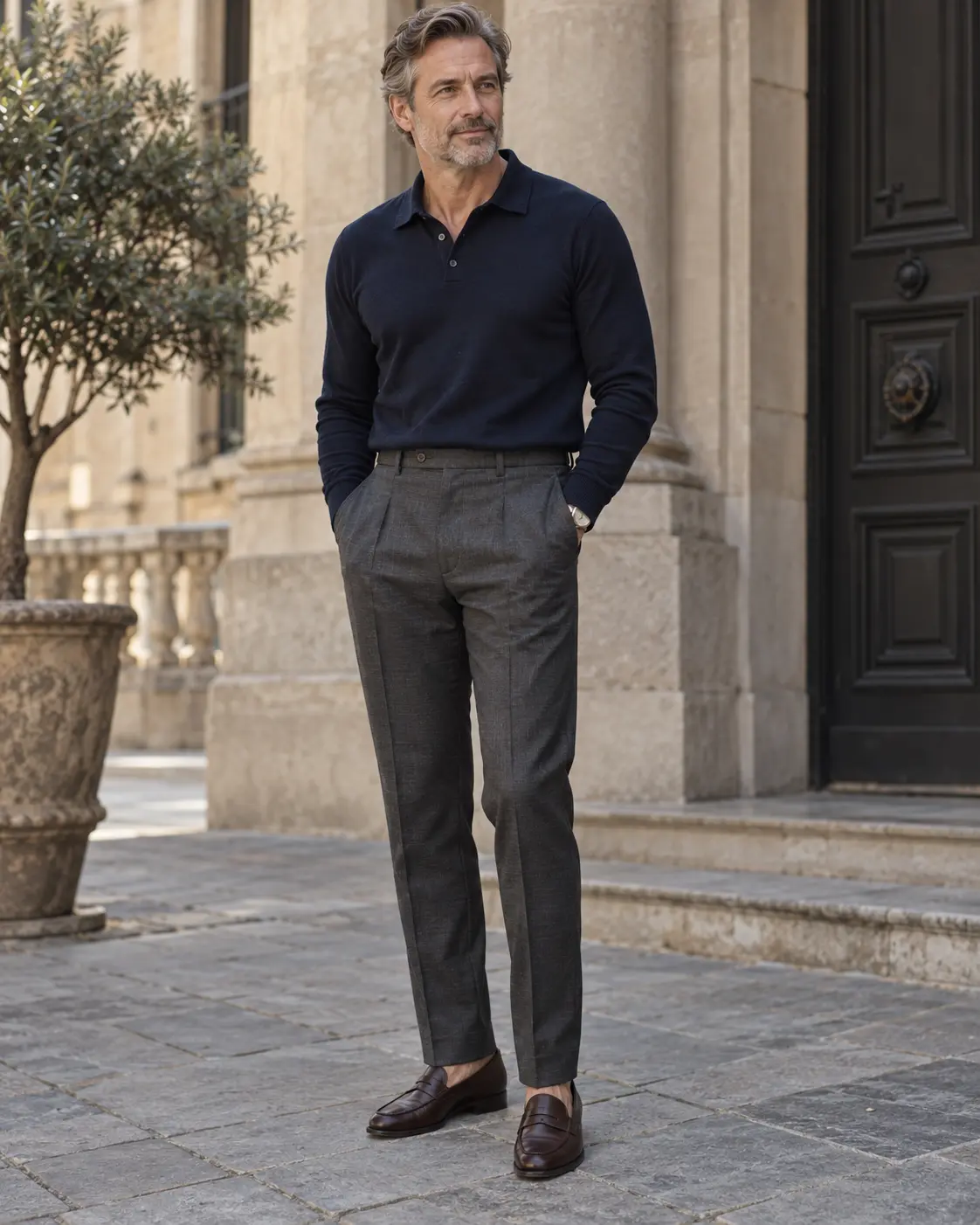
In this article+
- 01Start with the shoe and trouser opening
- 02Match the length to the opening, cloth and shoe.
- 03No break creates the cleanest line
- 04A slight break is the flexible everyday choice
- 05Fuller break needs width, drape and intention
- 06Use the rear hem as the practical limit
- 07Pin both legs, then move
- 08Know when one trouser needs one footwear family
LOOK CLOSER
One change. A cleaner hem.
Follow the cloth from the knee to the shoe. A small length adjustment can make the same trousers feel more deliberate.
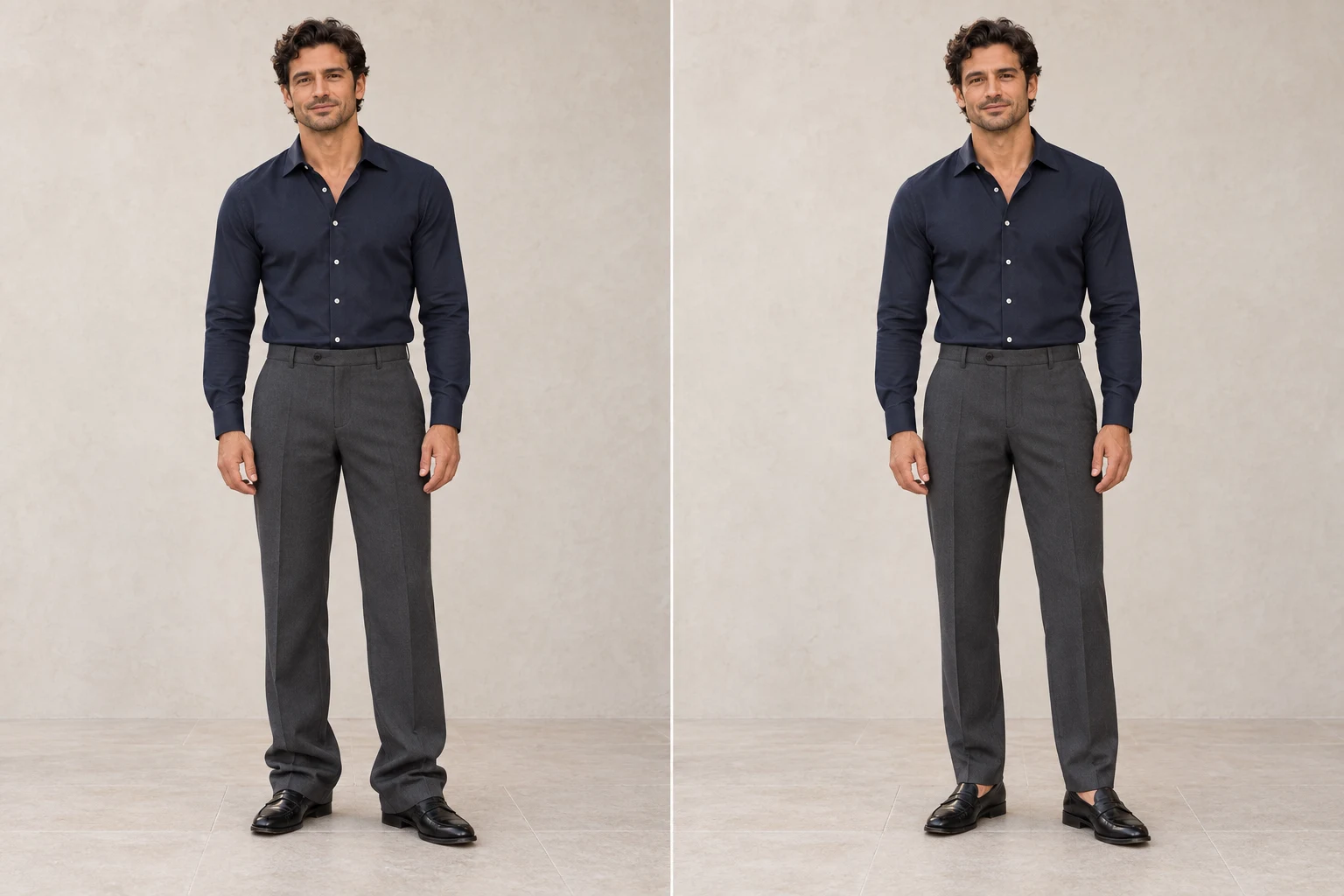
More cloth at the ankle
Several folds gather over the shoe. This can be intentional with roomy, fluid trousers; here it obscures the line.
A quieter break
Less cloth gathers at the front and more of the shoe is visible. Pin with your usual shoes, then walk and sit before committing.
Understand trouser alterations →AI styling illustrations. Compare the styling idea; these are not alteration results, exact products or wear tests.
01
Start with the shoe and trouser opening
Trouser length is a relationship, not an isolated measurement. Put on the shoe family you will wear most often and let the trouser settle at its intended waist position. A narrow opening meeting a low loafer needs less cloth than a broad flannel leg meeting a substantial Derby. If one pair must work with several shoes, fit it to the highest and lowest options before deciding whether one hem can serve both.
02
THE TROUSER-BREAK MATRIX
Match the length to the opening, cloth and shoe.
These are visual starting points, not fixed measurements. Waist position, posture and the trouser pattern change the final hem.
| Finish | Best starting point | Shoe relationship | Warning |
|---|---|---|---|
| No break | Crisp cloth; narrow or straight opening | Hem just meets a low-to-medium shoe | Accidental ankle exposure or a hem caught above the shoe |
| Slight break | Most everyday tailored trousers and chinos | One shallow front crease | Several folds stacking at the ankle |
| Fuller break | Broad opening and cloth with drape | Shoe has enough volume to support the cloth | Pooling, heel drag or a collapsed crease |
| Slanted hem | Traditional tailoring | Cleaner front with slightly more rear coverage | Assuming every ready-made trouser can be altered this way |
03
No break creates the cleanest line
With no break, the front hem reaches the shoe without forming a visible fold. This suits crisp tailoring, narrow-to-straight openings and shoes with a relatively low profile. It should not look cropped by accident: the sock should remain covered while you stand, and the rear hem should still reach low enough to make the line feel complete. Sit and walk before removing the final centimetre.
04
A slight break is the flexible everyday choice
A slight break creates one shallow crease where the trouser touches the shoe. It gives a little insurance for movement, works with many straight and gently tapered cuts and usually travels well between loafers, Derbies and restrained sneakers. The fold should release when you step; repeated horizontal ridges mean the trouser is stacking rather than breaking.
05
Fuller break needs width, drape and intention
A fuller trouser can carry more length because the broader opening falls around the shoe rather than perching on it. Soft flannel and fluid wool can make one controlled fold look elegant. Stiff cloth, a narrow hem or a small shoe may instead create untidy pooling. Extra break is not a shortcut to making trousers feel traditional; the entire silhouette must support it.
06
Use the rear hem as the practical limit
From behind, the hem should stay clear of the ground and avoid becoming trapped beneath the heel. A traditional slanted hem can sit slightly longer at the back while remaining cleaner at the front, although not every construction allows it. Check both legs on level ground: posture, leg length and a tilted waistband can make equal inseams hang differently.
07
Pin both legs, then move
Wear the correct shoes and waistband height. Ask for a temporary pin, photograph the front, side and rear, then walk, sit and climb a step. The cloth should return to a clean line. Do not approve a hem while standing unnaturally straight or pulling the trouser upward; the useful result is how it hangs during an ordinary day.
08
Know when one trouser needs one footwear family
A trouser hem set for a slim loafer may look short with a deep boot, while a boot-length hem may pool over a sneaker. If the openings and shoes are far apart in scale, assign the trouser to one footwear family rather than forcing a universal length. That small limitation usually produces more consistent outfits.
SOURCES & FURTHER READINGThe references behind this guide+
- Permanent Style — Trouser measurements, style and proportions
- Permanent Style — The rules and how to break them: trouser length
- Put This On — A bespoke tailor explains how trousers should fit
- QWD guide — How shoe volume changes trouser drape
QWD applies these references as a practical menswear baseline. Garment design, body proportions and intended styling can justify a different choice.