In this article+
01
Start at the shoulder
On a classic-fit T-shirt, the shoulder seam should sit close to the point where your shoulder begins to curve into the arm. If it pulls inward, the chest and armhole may be too tight; if it drops well down the upper arm, the tee will read as relaxed or oversized. Neither position is automatically wrong. The question is whether the rest of the proportions support it. A deliberately dropped shoulder needs a fuller body and sleeve, while an accidental one often looks like the wrong size.
02
FIT BY INTENDED SILHOUETTE
Check whether every proportion tells the same story.
Body dimensions help describe size; they do not prescribe one correct silhouette. These are QWD fitting-room signals for three deliberate T-shirt shapes.
| Intended look | Shoulder | Body | Length | Best use |
|---|---|---|---|---|
| Classic | Near the shoulder point | Skims with movement room | Around mid-fly | Layering and everyday outfits |
| Relaxed | Slightly dropped | Easy without ballooning | Controlled below the waistband | Straight or fuller trousers |
| Boxy heavyweight | Deliberately dropped | Broad with structural drape | Short enough to preserve leg line | A standalone casual top |
03
The neckline should frame, not fight, the face
A crew neck should lie flat against the body without cutting into the throat or standing away from it. Ribbing needs enough substance and recovery to hold its shape after wear. A stretched, rippled or excessively wide collar makes even good cotton look tired. V-necks should be restrained unless the outfit is intentionally relaxed; a deep V can date quickly and makes layering harder. Check the neckline from the side as well as the front, because collar lift is easy to miss in a fitting-room mirror.
04
Choose sleeve shape with intention
A conventional short sleeve usually finishes around mid-bicep, but current silhouettes also include longer, wider sleeves that approach the elbow. What matters is the relationship with the shoulder and body. A slim sleeve should not pinch or kick outward; a wider sleeve should hang with enough structure to look purposeful. If the sleeve is the only oversized part of an otherwise fitted tee, the proportions can feel unresolved. Roll once only when the fabric and hem remain neat.
05
The body should skim or drape
For a classic fit, the fabric should follow the torso with a small amount of air through the chest and waist. Horizontal pulling, a stretched print or fabric catching under the stomach indicate tightness. Large folds at the sides and a back that balloons suggest excess room. A relaxed or boxy T-shirt is a valid fashion choice, especially with fuller trousers, but it needs a firm neckline, controlled length and fabric with enough weight to fall cleanly rather than cling.
06
Length controls the whole silhouette
Around mid-fly is a useful starting point for an untucked tee. It should cover the waistband when you move but not extend so far that it shortens the visible leg. Raise both arms, sit and bend slightly; the hem should return close to position without exposing more than you are comfortable with. A cropped tee can work with higher-rise trousers, while a longline tee creates a more directional proportion. Judge length with the trousers you actually plan to wear.
07
Move before deciding
Reach forward, raise your arms and sit down. The neckline should stay composed, the armhole should not cut in and the body should not remain badly twisted. Then view the side and back. A front mirror can hide fabric pooling above the seat, a high back hem or a tee catching across the shoulder blades. If movement improves only when you size up but the length becomes excessive, you need another cut rather than another size.
08
Match the fit to the outfit
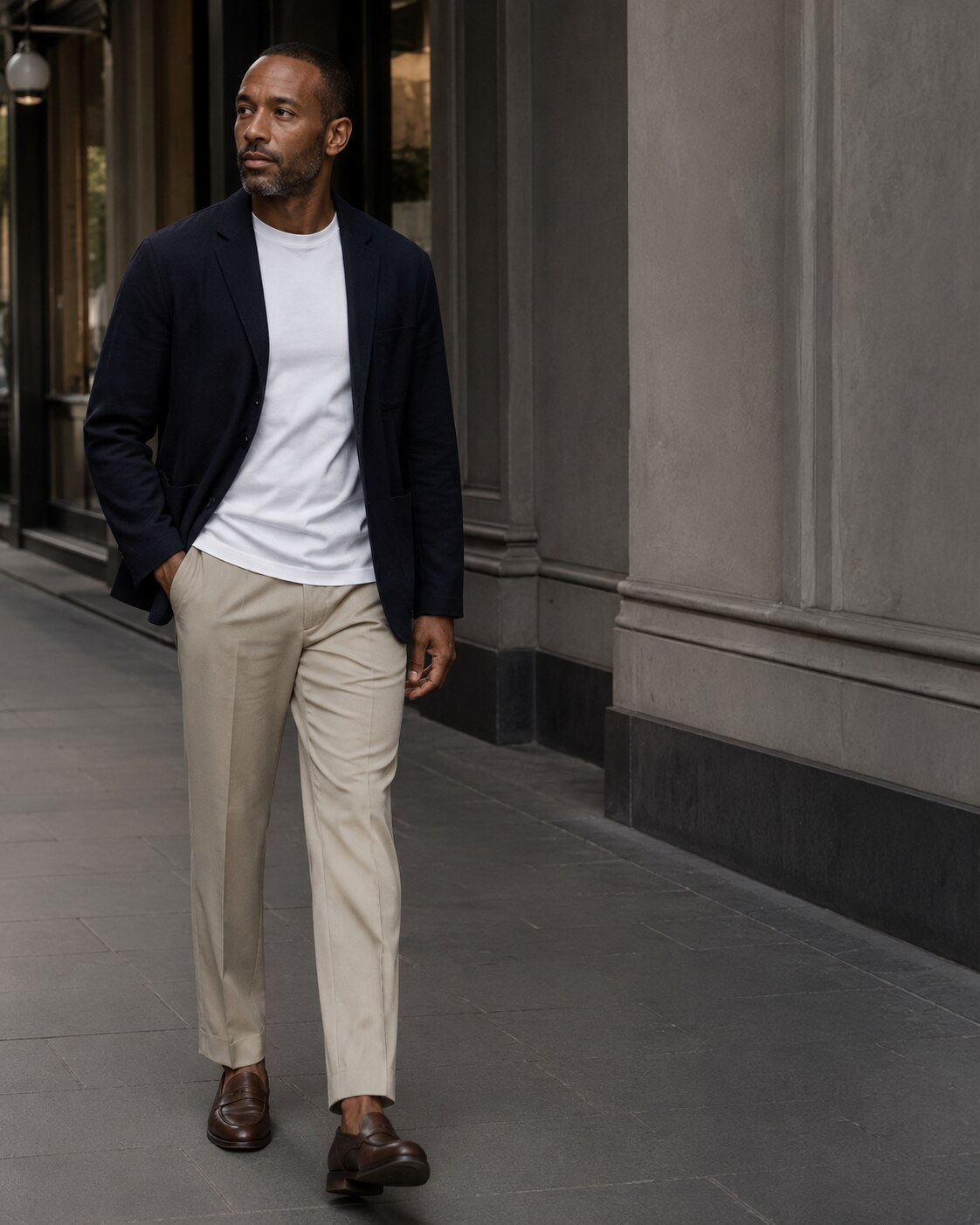
A neat, mid-weight tee sits easily beneath an overshirt or unstructured blazer. A boxier heavyweight tee works well with straight or fuller trousers and can carry an outfit without a layer. Very thin tees behave more like underlayers and reveal more of the body and waistband beneath. The best fit is not the one that disguises your shape or follows a universal rule; it is the one whose proportions look intentional with the rest of your clothes.
SOURCES & FURTHER READINGThe references behind this guide+
- ISO 8559-1:2017 — Anthropometric definitions for body measurement
- NIST — Body Dimensions for Apparel
- CottonWorks — Garment construction
- QWD Fit Lab — Measurement method and limits
- How QWD develops editorial recommendations
QWD applies these references as a practical menswear baseline. Garment design, body proportions and intended styling can justify a different choice.