In this article+
- 01Change the message of the whole outfit
- 02Relax every part by one considered step.
- 03Choose a suit that can relax
- 04Use a collar that stands on its own
- 05Try a fine knit when the shirt feels too corporate
- 06Let the shoe set the final level
- 07Keep accessories restrained
- 08Know when the tie is still the better choice
01
Change the message of the whole outfit
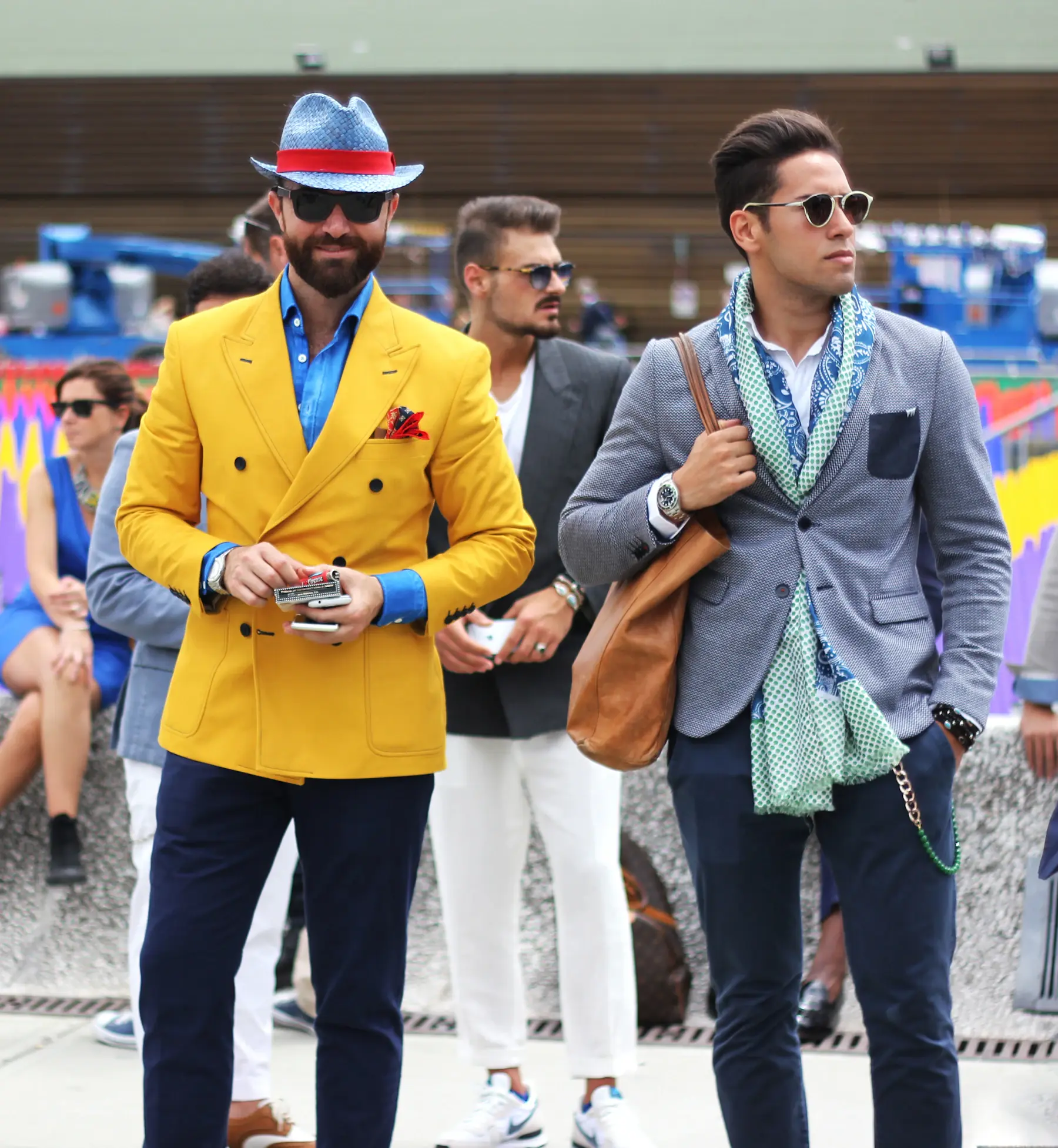
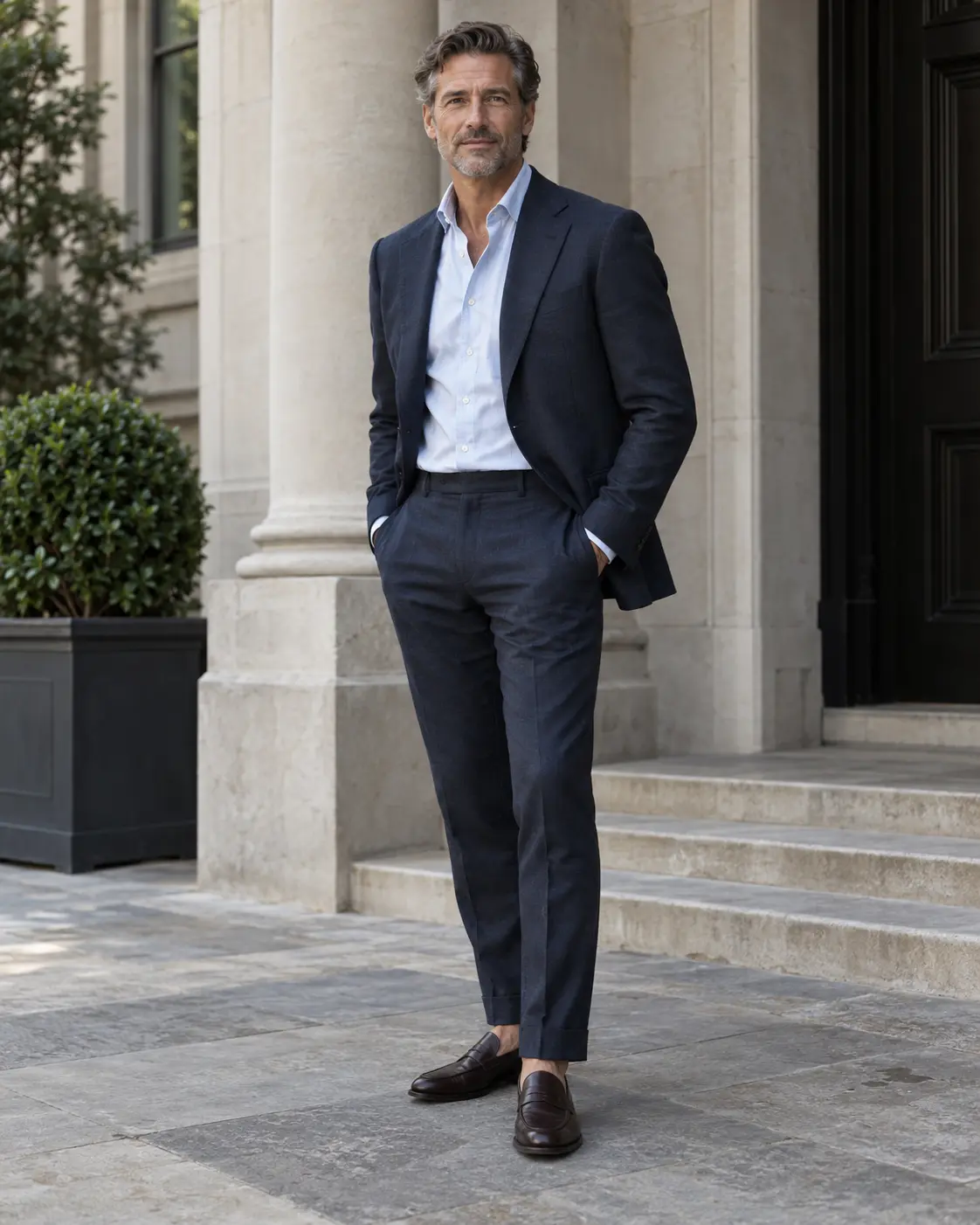
Removing a tie reduces formality, but the remaining pieces still need to agree. A rigid worsted business suit, spread collar built for a large knot and formal Oxford shoe may look unfinished without its tie. Softer shoulders, matte or textured cloth and a less severe shoe make the absence feel intentional rather than forgotten.
02
THE TIELESS-SUIT FORMULA
Relax every part by one considered step.
The successful outfit is coordinated. Do not ask one missing accessory to transform a highly formal suit on its own.
| Layer | Useful choice | Best setting | Warning |
|---|---|---|---|
| Open-collar shirt | Oxford or collar with enough stand | Dinner, creative work, smart casual event | Collapsed points or too many open buttons |
| Knitted polo | Fine gauge, clean collar, opaque body | Warm-weather work and dinner | Bulky placket or tight sleeve |
| Fine crewneck | Compact neckline and smooth layer | Relaxed evening and travel | Heavy knit distorting the jacket |
| Refined T-shirt | Substantial, opaque and close at the neck | Only with clearly casual tailoring | Thin cloth under formal worsted |
03
Choose a suit that can relax
Hopsack, high-twist wool, linen blends and other fabrics with visible surface tend to separate more easily from corporate uniform. Natural shoulders, moderate lapels and patch pockets can help, although no single feature is mandatory. The suit must still fit cleanly: relaxed construction is not an excuse for collapsing shoulders, excess trouser break or a gaping collar.
04
Use a collar that stands on its own
An Oxford button-down, one-piece collar or other collar with enough body can frame the face when open. The points should sit beneath the lapels rather than flying outside them, and the collar band should remain close to the neck. One open button is the safest start; two can work in a clearly relaxed setting if the undershirt remains invisible.
05
Try a fine knit when the shirt feels too corporate
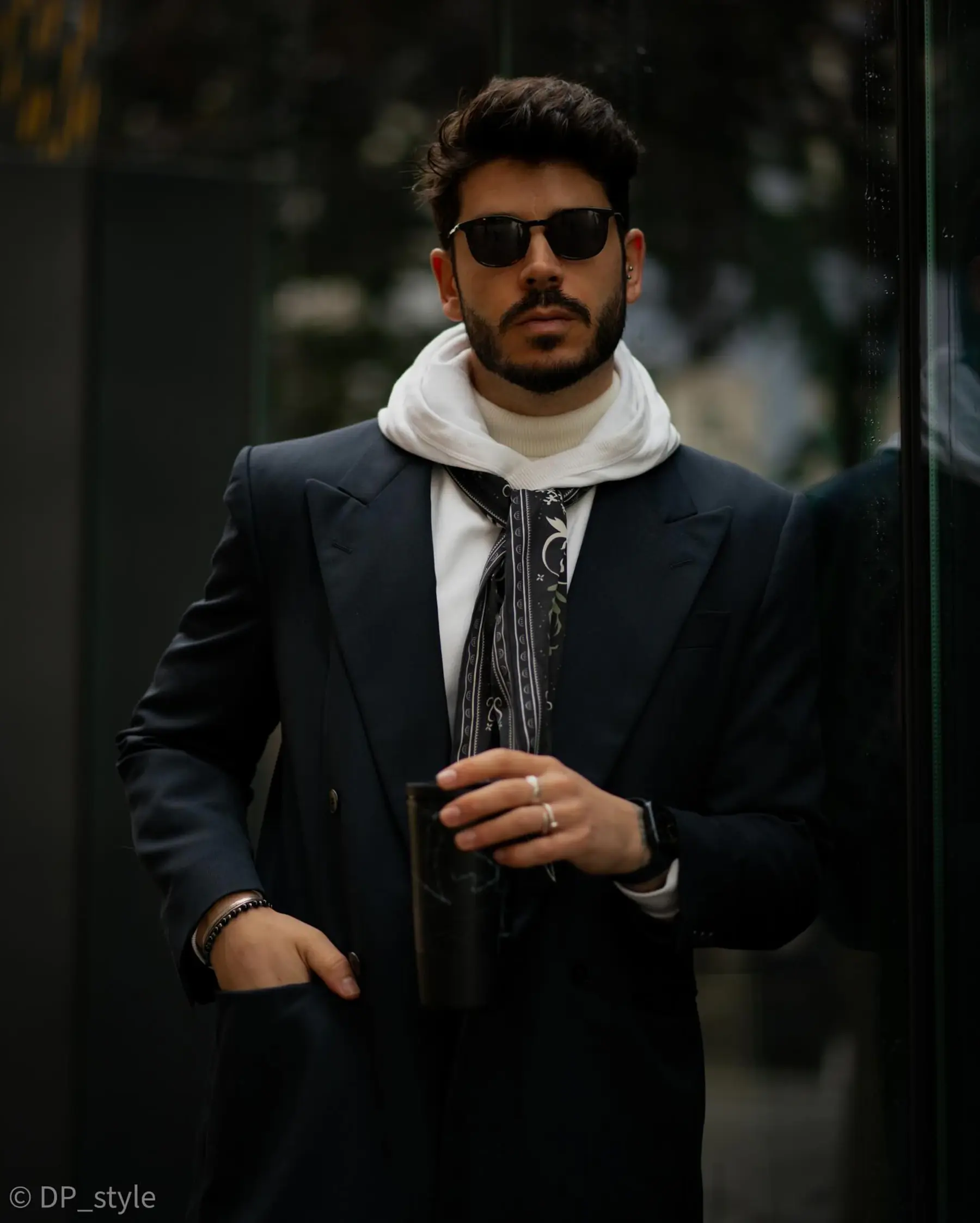
A knitted polo is the easiest bridge because its collar echoes the shirt while its texture lowers the formality. A fine crewneck or refined T-shirt can work with very casual tailoring, but the neckline, opacity and body fit must be immaculate. Avoid gym-weight stretch fabric, deep necklines and thin white cloth that reveals every layer beneath it.
06
Let the shoe set the final level
A polished loafer or soft Derby keeps the outfit elegant while making it less businesslike. Clean leather sneakers can work with an unstructured suit in genuinely casual settings, provided the trouser hem and shoe volume agree. Avoid a battered casual shoe beneath formal cloth; contrast is useful only when the pieces share a similar level of care.
07
Keep accessories restrained
Without a tie, more shirt front and neck are visible, so necklaces, pocket squares and watches attract extra attention. Choose one quiet point of interest rather than replacing the missing tie with several decorations. A belt may suit looped trousers, while side-adjusters maintain the cleanest line. Good grooming and a pressed collar become more visible too.
08
Know when the tie is still the better choice
Formal weddings, conservative business meetings, ceremonial events and any invitation that specifies formal dress may still call for a tie. Read the host, venue and purpose. When uncertain, carry a simple navy or dark textured tie; it is easier to remove it after reading the room than to invent one at the door.
SOURCES & FURTHER READINGThe references behind this guide+
- Permanent Style — The rules and how to break them: suits without ties
- Permanent Style — Casual suits with collared knits
- Permanent Style — The T-shirt under tailoring
- QWD guide — What is smart casual for men?
QWD applies these references as a practical menswear baseline. Garment design, body proportions and intended styling can justify a different choice.