In this article+
- 01What a pleat actually does
- 02Look at the front while standing and sitting
- 03Choose the feel before the pleat count
- 04Choose fabric for the outfits you want
- 05Give the waistband some breathing space
- 06Keep the rest of the outfit straightforward
- 07Pleats do not dictate your shoes
- 08When to leave a pair behind
01
What a pleat actually does
A pleat is a fold sewn into the front of the trousers near the waistband. It adds fabric that can open with movement. It is different from the pressed crease running down the leg, and different again from a turn-up at the hem. Pleats do not automatically mean very wide trousers: you can find them on tapered, straight and fuller cuts. QWD would treat them as a useful design choice, especially if you want a little more ease through the front without wearing a loose waistband. (Put This On — New options for full-rise, pleated trousers (10 February 2016))
02
Look at the front while standing and sitting
Stand naturally with your pockets empty. On a well-chosen pair, the pleats should not be forced wide open before you move. Sit down and notice whether the extra fabric gives you comfortable room, then stand and let it settle. Put This On highlights splayed pleats as a reason to try another pair. That is a fit check, not a rule about who can wear pleats. A different rise, seat or thigh shape may work better than simply increasing the waistband size. (Put This On — The Shy Pleat (15 February 2016))
03
AT A GLANCE
Choose the feel before the pleat count
Try the trousers with your usual shoes and one familiar top.
| Trouser | Easy pairing | Check before buying |
|---|---|---|
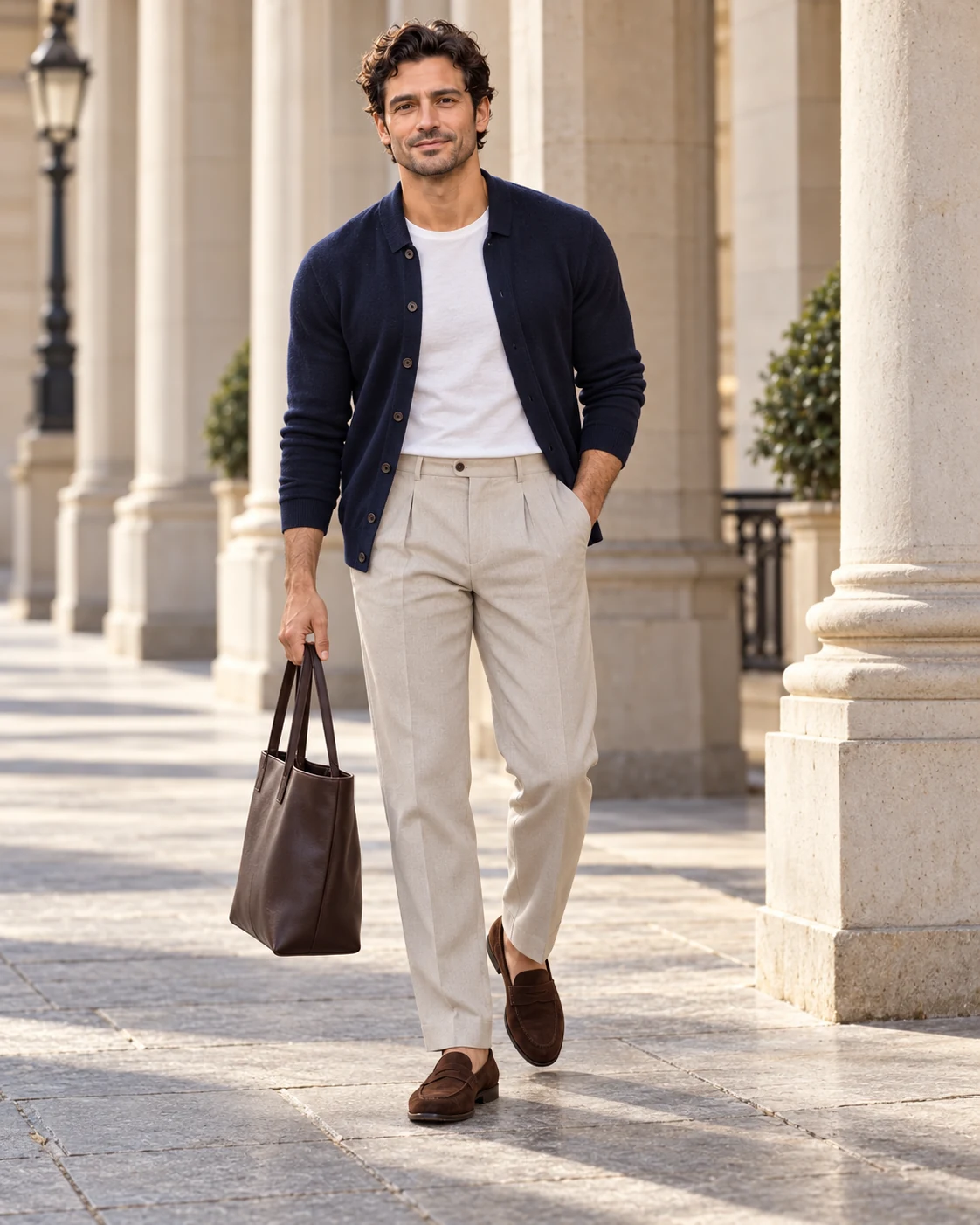
| Stone cotton, single pleat | Navy knit polo and suede loafers | Pleat settles after sitting |
| Charcoal wool, single or double pleat | Pale-blue shirt and leather shoes | Front lies cleanly without strain |
| Natural linen, fuller leg | White T-shirt and light cardigan | Fabric falls rather than balloons |
| Dark cotton, tapered leg | Oxford shirt and plain sneakers | Calf and hem do not catch |
04
Choose fabric for the outfits you want
Stone cotton feels casual enough for a T-shirt, while navy or charcoal wool can work with a jacket and shirt. Linen adds visible texture and a relaxed mood; it will also crease, so judge it as linen rather than expect a freshly pressed look all day. For your first pair, choose a familiar colour and a manageable amount of fullness. Trying a new colour, a much higher waist and a very wide leg at the same time makes it harder to tell whether the pleat is what you like.
05
Give the waistband some breathing space
A tucked Oxford shirt makes the front detail easy to see. A knit polo or crewneck can sit outside the trousers if its hem finishes close to the waistband rather than covering most of the front. Neither approach is compulsory. Try both and look at the whole outfit from a few steps away. With an open cardigan, a tucked T-shirt can keep the middle tidy while the outer layer stays relaxed. Avoid pulling a fine knit so tightly over the waistband that every fold and button shows through.
06
Keep the rest of the outfit straightforward
For work, try a pale-blue shirt, charcoal pleated trousers and dark-brown loafers. For a weekend lunch, use a navy knit polo with stone cotton trousers and suede shoes. For a casual evening, a white T-shirt, dark pleated trousers and a compact jacket can feel clean and current. These combinations are QWD suggestions, not a requirement to dress formally. One deliberate trouser detail is enough; the rest of the outfit can be clothes you already know how to wear.
07
Pleats do not dictate your shoes
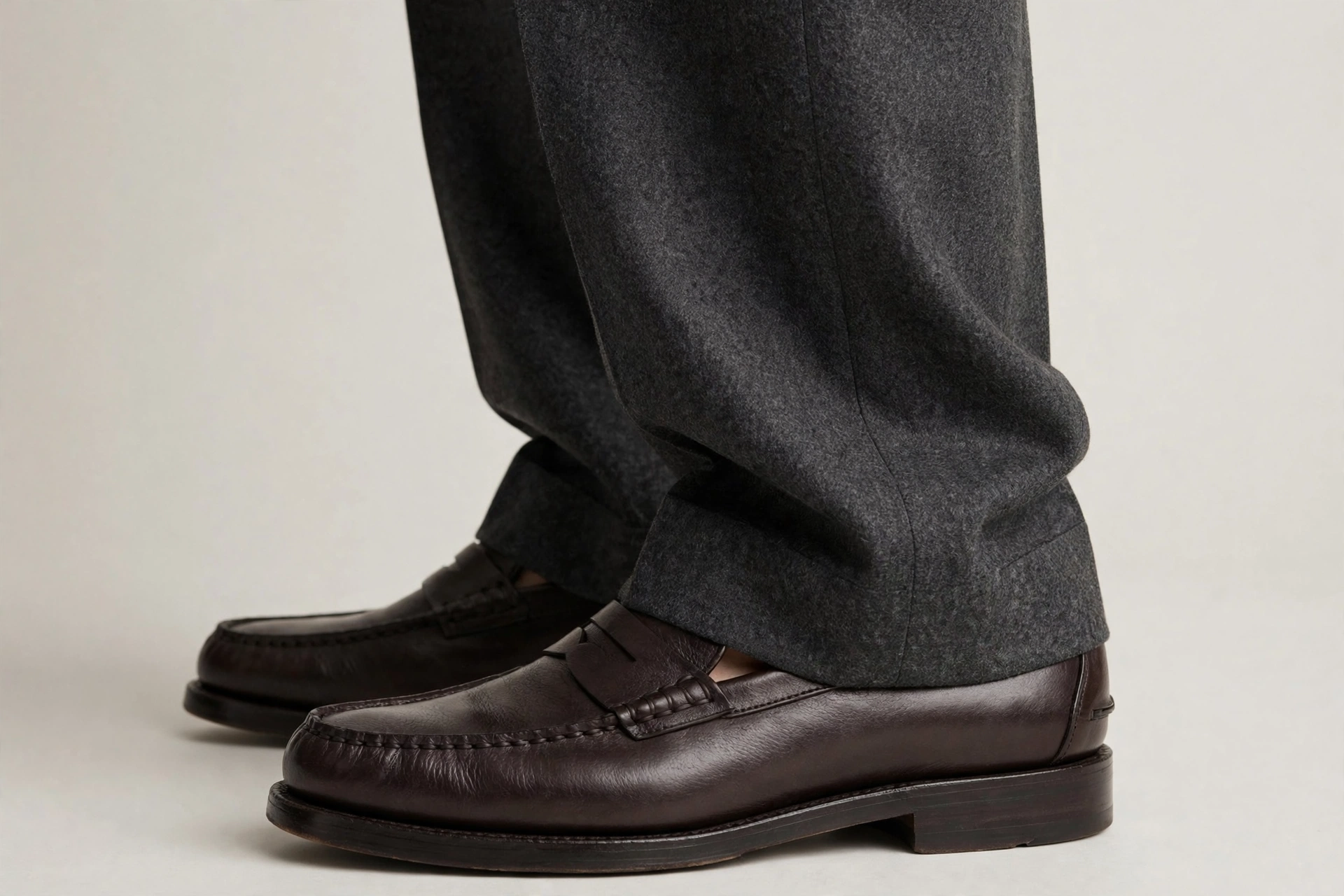
Match footwear to the fabric and the width near the ankle. Fine wool and a neat loafer make an easy smart combination. Cotton with a fuller leg can take a sturdier sneaker or Derby. Look at the hem after you have walked: fabric that catches on the shoe may need a different length or opening. Do not buy cuffs or an unusually short hem just because the trousers have pleats. Those are separate choices, best made with your actual shoes beside the tailor’s mirror.
08
When to leave a pair behind
Move on if the pockets flare, the waistband digs in, or the front forms a tight fan of folds when you stand. Equally, leave trousers that feel like excess fabric everywhere just because the label describes them as relaxed. A comfortable pair should look intentional before you add a jacket. If you like flat-front trousers better, keep wearing them. The value of pleats is another option for comfort and shape, not a reason to replace clothes that already work.
SOURCES & FURTHER READINGThe references behind this guide+
- Put This On — The Shy Pleat (15 February 2016)
- Put This On — New options for full-rise, pleated trousers (10 February 2016)
QWD applies these references as a practical menswear baseline. Garment design, body proportions and intended styling can justify a different choice.