In this article+
- 01Treat the label as a clue, not a measurement
- 02Fit the top block before judging the leg
- 03Slim should be close, not compressed
- 04Straight is the most adaptable starting point
- 05Wide needs deliberate volume
- 06Rise and length change how width is read
- 07Match the shoe to the opening, not the trend
- 08Choose for your wardrobe, not a body-type rule
- 09Slim, straight and wide at a glance
01
Treat the label as a clue, not a measurement
Slim, straight and wide are overlapping retail descriptions rather than a standard three-way taxonomy. One brand’s straight trouser can resemble another brand’s slim taper, and a wide trouser can also have a straight leg. The label tells you the intended family, not how the garment will sit on your body. Compare the rise, thigh, knee and hem measurements with a pair you own, then inspect the full line from the waistband to the shoe.
02
Fit the top block before judging the leg
Start at the waist, rise, seat and upper thigh. The waistband should stay in place without digging in, the front should lie cleanly and the pockets should not flare. Sit, walk and raise a knee. If the top block pulls or collapses, a different leg opening will not rescue it. Once that foundation works, step back from the mirror and decide how much line and volume you want below the thigh.
03
Slim should be close, not compressed
A good slim trouser follows the thigh and calf while allowing the cloth to release after you move. It usually narrows toward the hem, so excess length becomes visible quickly. Horizontal pulling, open pockets, a trapped calf or a hem caught high on the shoe are signs that the silhouette is being forced. Slim works best when you want a contained line and the tops and footwear are similarly controlled rather than oversized or visually heavy.
04
Straight is the most adaptable starting point
A straight trouser keeps a more consistent visual width from the thigh toward the hem, although many versions still taper slightly. That clarity makes it useful with Oxford shirts, knitwear, overshirts, casual jackets and tailoring, as well as sneakers, loafers, Derbies and boots. Straight is not automatically conservative or loose. Cloth, rise, crease and leg opening can make the same broad shape feel relaxed, work-ready or sharply tailored.
05
Wide needs deliberate volume
A wide or full trouser gives the leg visibly more room, but it may be straight, tapered or flared below the knee. The strongest versions use a secure rise and cloth with enough body or drape to fall cleanly rather than spreading from an unstable waistband. The volume should appear intentional from front, side and rear, and the hem should release after movement. A controlled top length and a shoe with enough presence help support the line, but wide trousers do not require an oversized outfit everywhere else.
06
Rise and length change how width is read
Do not infer the rise from the leg label: slim, straight and wide trousers can each be cut with a low, mid or high rise. A higher rise can lengthen the visible leg and give a fuller trouser a cleaner place to begin, while an unstable low rise may make volume collect around the hips. Length matters just as much: slim shapes usually tolerate little break, while a fuller opening can carry more length if the cloth and shoe support it. Judge the trouser at its intended waist position before pinning the hem.
07
Match the shoe to the opening, not the trend
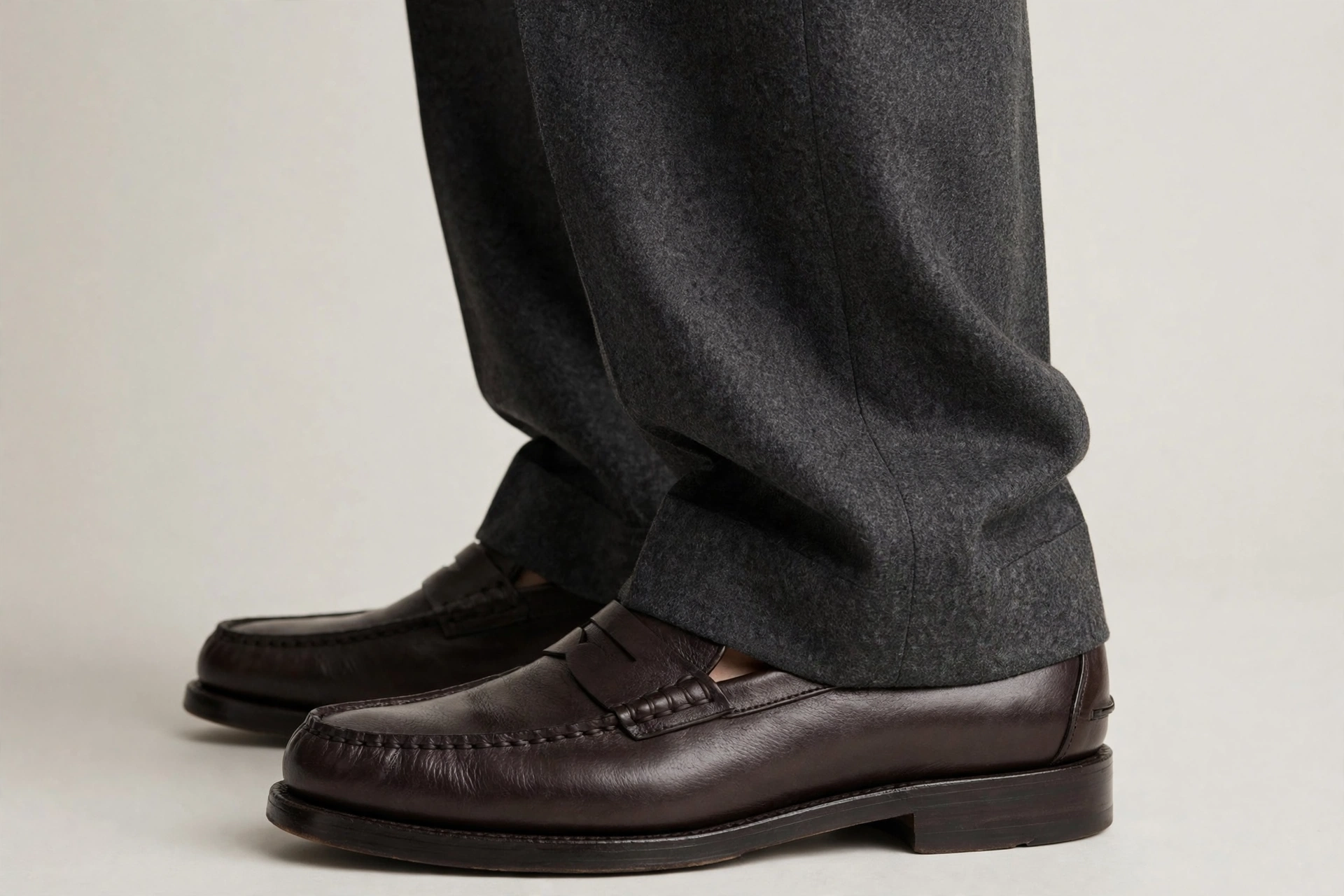
The important relationship is the scale and contact point between hem and shoe. A narrow, low shoe can look elegant with a slim or straight leg, but may disappear beneath a very broad opening. A deeper toe, stronger sole or wider welt gives fuller cloth more visual and physical support. Bring the lowest- and highest-volume shoes you plan to wear to the fitting room. If one hem cannot work with both, assign the trouser to one footwear family.
08
Choose for your wardrobe, not a body-type rule
Height, build and age do not dictate one permitted cut. Proportion is created by the rise, top length, jacket volume, cloth, hem and shoe as well as the leg label. Try one credible example of each shape in the same colour and similar fabric, photograph the front, side and rear, then walk and sit. Keep the option that gives you movement, a clean line and at least three outfits with clothes you already own.
09
SHAPE-BY-SHAPE COMPARISON
Slim, straight and wide at a glance
Use these as fitting-room signals rather than rigid definitions. Exact measurements vary by size, brand, fabric and intended design.
| Shape | What it should do | Pair it with | Useful starting point | Stop signs |
|---|---|---|---|---|
| Slim | Follow the thigh and calf with a narrow, controlled opening. | Fine knitwear, clean shirts, compact jackets and low- to mid-volume shoes. | You prefer a contained silhouette and the cloth still releases after movement. | Pocket flare, horizontal strain, calf grip or a hem that catches on the shoe. |
| Straight | Hold a more consistent leg line; upper-leg ease can still be slim, regular or wide. | Oxford shirts, knitwear, overshirts, tailoring and most everyday shoes. | You want one adaptable benchmark for work, weekends and travel. | A hidden aggressive taper, excess fabric at the seat or unnecessary break. |
| Wide | Create greater volume; the leg below the knee may be straight, tapered or flared. | A secure rise, controlled top length, cloth with drape and a shoe with presence. | You want movement, drape and a deliberate change in proportion. | An unstable rise, long top, collapsing cloth, disappearing shoe or dragging hem. |
SOURCES & FURTHER READINGThe references behind this guide+
- Levi’s — Men’s jeans fit guide
- Dockers — Men’s fit guide
- ISO 8559-3 — Size labelling based on body measurements
- New Mexico State University — Fitting pants
- QWD guide — How should men’s trousers fit?
- QWD guide — Why shoe volume changes trouser drape
QWD applies these references as a practical menswear baseline. Garment design, body proportions and intended styling can justify a different choice.