In this article+
FIVE COLLAR SHAPES
Start with the neckline.
Button-down
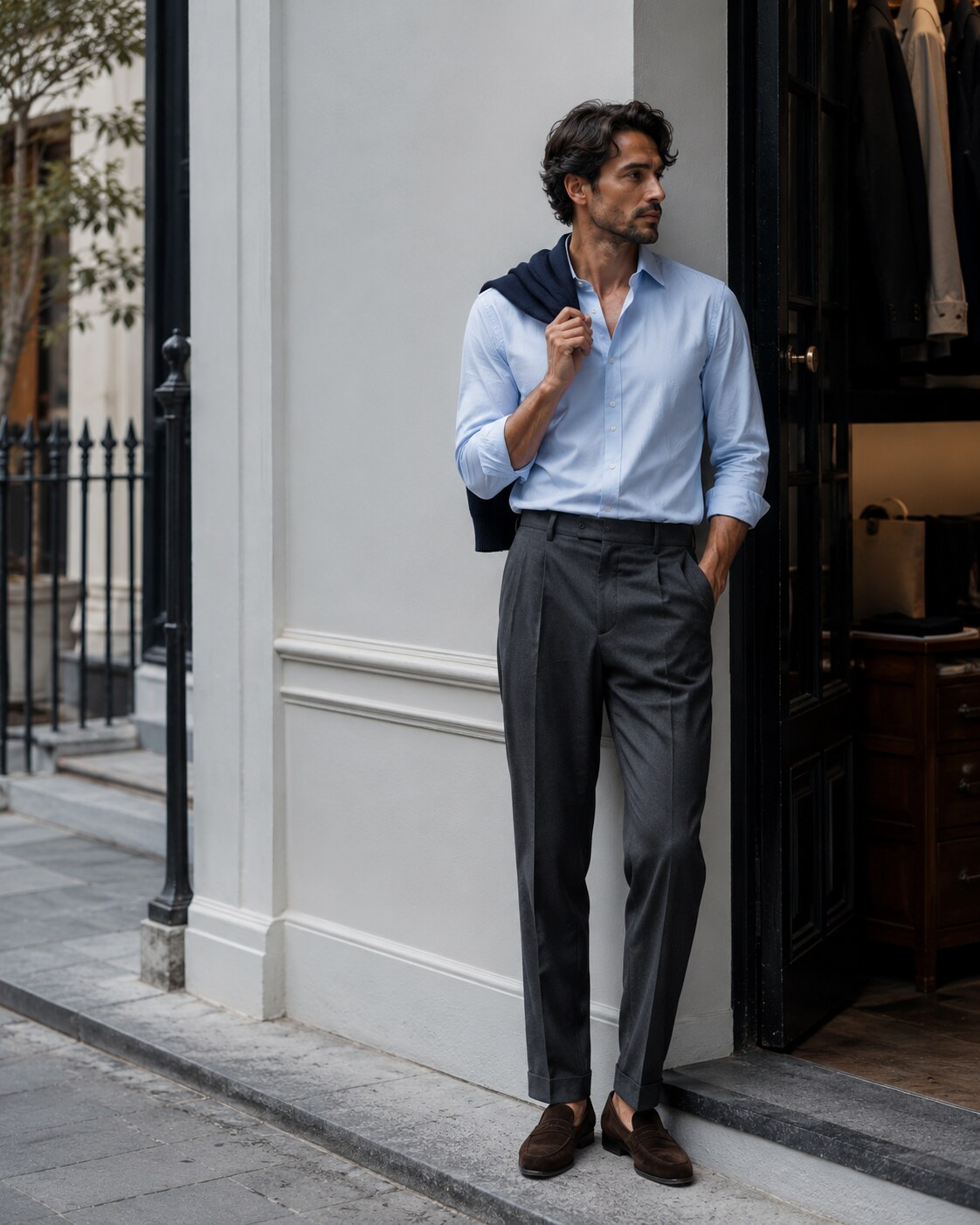
Small buttons secure the collar points. Try it open beneath a cardigan or soft jacket; a relaxed tie can also suit it.
Point
Closer points create a narrower opening. Check the collar with your usual tie knot and with the top button open.
Spread
Points sit farther apart. Useful with a tie or open under a jacket; the collar’s height and stiffness matter as well as its angle.
Band
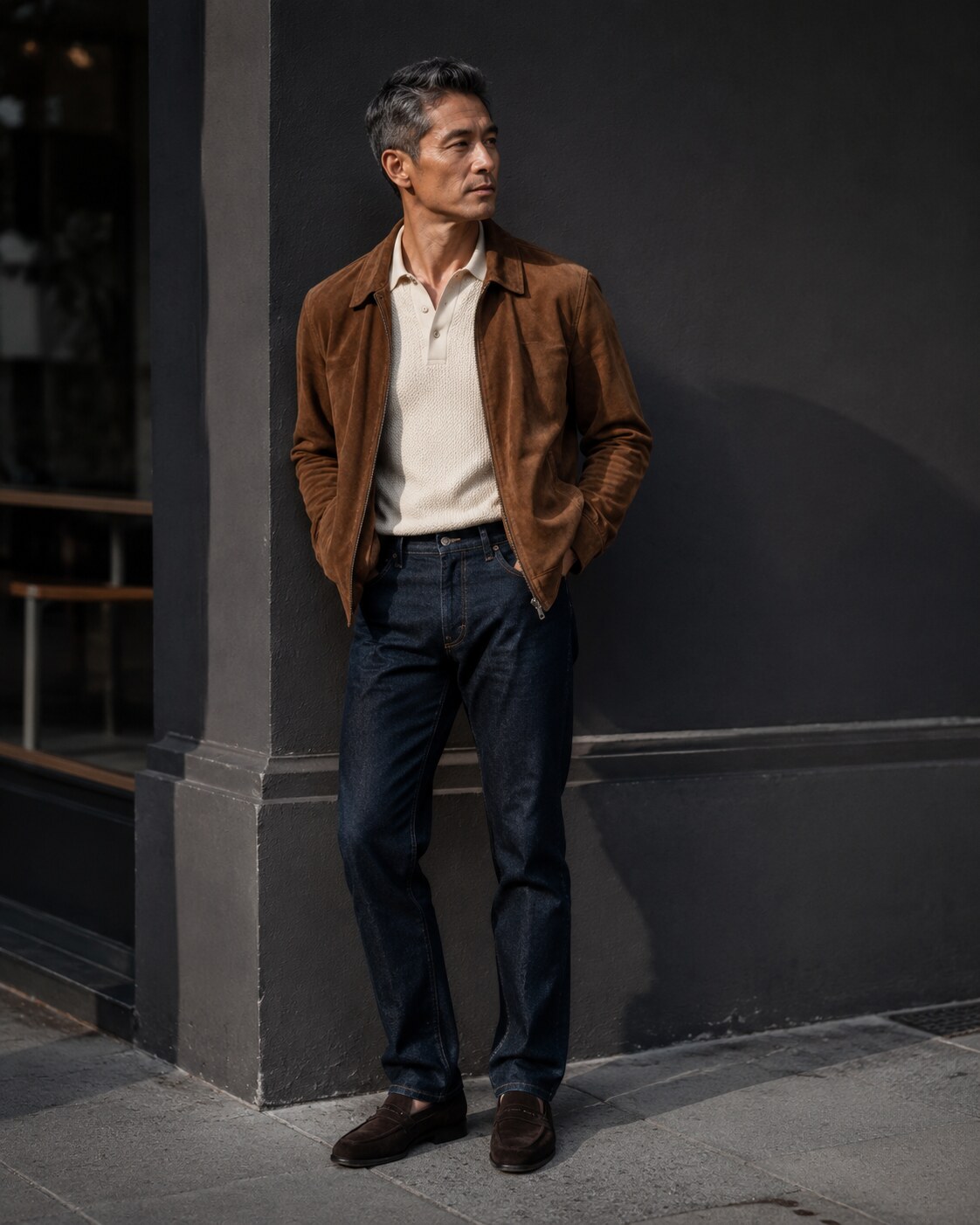
A short standing band has no folded points. Wear without a conventional necktie; useful when you want a quiet neckline beneath a casual layer.
Camp
An open, relaxed collar frames the neckline. Try it with a soft jacket or on its own; it is not intended to be closed around a business tie.
QWD schematic illustrations beneath a simplified navy jacket: shape comparisons, not exact products or construction evidence.
01
Start with the outfit around the collar
Bring your usual jacket or jumper when you try a shirt. A collar that looks elegant alone can collapse under a crew neck or stand awkwardly above a jacket. Open the neck as you intend to wear it, then look from the side as well as the front. The useful question is whether the whole neckline feels comfortable and deliberate.
02
Button-down: a relaxed frame
Buttons hold the points in position. A soft roll can bring interest beneath a cardigan, while a more compact version sits quietly under a casual jacket. You can wear a button-down with a tie, but consider the occasion and the rest of the outfit. This is a styling option, not a universal business-shirt rule.
03
Point and spread: compare the opening
Point collars bring the tips closer together; spread collars move them farther apart. Proper Cloth distinguishes these shapes in its collar range. Look at your actual knot rather than choosing by the label alone. A very large knot can crowd a small opening, while a very small knot may leave more space than you prefer. Collar height, point length and stiffness also change the result.
04
Band and camp: two different ways to relax
A band collar removes the folded points. It gives a clean, simple line under a casual jacket without inviting a conventional necktie. A camp collar opens more broadly across the upper chest and belongs to a different, looser mood. Use the existing camp-collar guide for complete outfits rather than trying to make this shape behave like a formal business shirt.
05
Check the collar with knitwear
With a crew neck, let the collar sit naturally instead of forcing both points over the rib. With a cardigan, the opening can frame the shirt more freely. Check that the neck does not feel crowded when seated. The illustrated shapes show design differences; they cannot demonstrate how a particular shirt will feel on you.
06
Make the choice before buying another shirt
Try the shirts already in your wardrobe with the layer you want to wear. A different collar may be the useful change, but so may a softer fabric or a better neck size. Do not use face-shape formulas as a substitute for trying the combination you enjoy. Choose comfort and a coherent outfit first.
SOURCES & FURTHER READINGThe references behind this guide+
QWD applies these references as a practical menswear baseline. Garment design, body proportions and intended styling can justify a different choice.