In this article+
- 01Begin with the waistband
- 02Let the waistband and outfit decide.
- 03Use a belt to finish casual structure
- 04Skip it when tailoring needs one clean line
- 05Match the scale before the colour
- 06Relate leather tones without chasing an exact match
- 07Check the length and buckle position
- 08Build a small belt capsule
01
Begin with the waistband
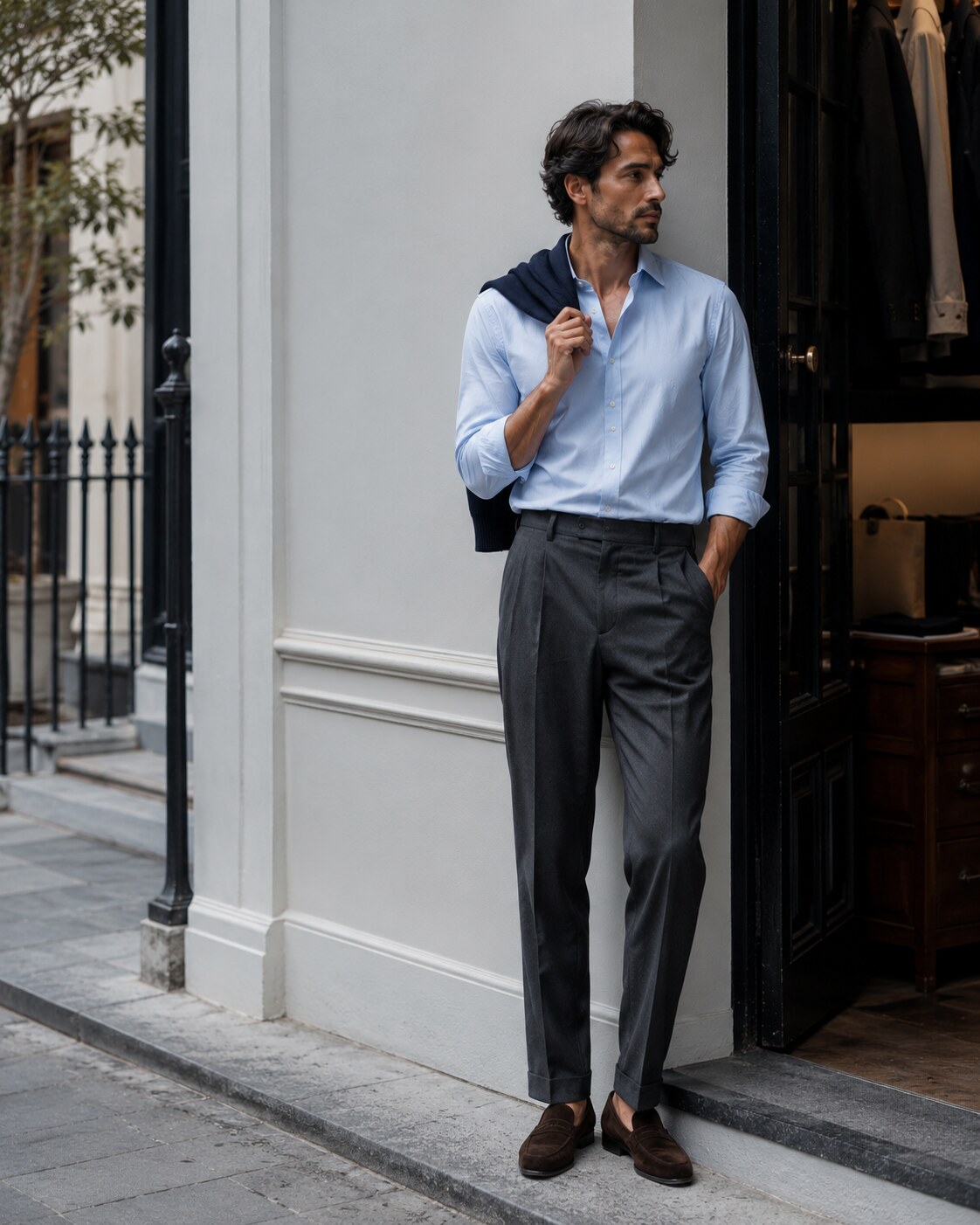
The trouser tells you which route is available. Side-adjusters, brace buttons and extended tailored waistbands are designed to stay visually clean and generally do not need a belt. Belt loops invite one, although a well-fitting casual trouser can sometimes be worn without it. Never put a belt over side-adjusters, and do not use one to hide a waistband that is substantially too large.
02
BELT OR NO BELT?
Let the waistband and outfit decide.
Fit comes first. A belt can finish the waist, but it should not be the mechanism holding a badly sized trouser together.
| Trouser | Useful route | Belt character | Avoid |
|---|---|---|---|
| Suit with side-adjusters | No belt | None | Adding a belt over adjusters |
| Suit with belt loops | Usually belt | Narrow, plain, quiet buckle | Wide casual leather or empty prominent loops |
| Chinos | Either, depending on styling | Slim-to-medium matte leather or suede | Over-tightening a loose waist |
| Denim | Usually belt when tucked | Medium width; enough weight for the cloth | A tiny formal buckle or oversized hardware |
03
Use a belt to finish casual structure
With chinos, denim and other trousers that have visible loops, a quiet belt can make the waist look resolved—especially when the shirt is tucked. It adds a horizontal boundary between top and trouser and can repeat the grounded quality of leather footwear. With an untucked layer, the belt may disappear almost entirely, so function and comfort matter more than display.
04
Skip it when tailoring needs one clean line
A suit trouser with side-adjusters or a clean waistband often looks calmer without a belt because the jacket and trouser remain one uninterrupted composition. This is particularly useful with higher rises, pleats and softer tailoring. If the suit trouser has loops, a narrow discreet belt is safer than leaving conspicuously empty loops at a formal event.
05
Match the scale before the colour
Fine tailoring usually wants a narrow, simple belt with a small buckle; heavy denim can support a broader strap and more substantial leather. The belt should not be the thickest or shiniest object in the outfit. Matte calf, suede or gently textured leather is easier to integrate than a large polished buckle or conspicuous contrast stitching.
06
Relate leather tones without chasing an exact match
Brown belt with brown shoes is a useful formal starting point, but the shades do not need to be identical. Keep them in the same broad family and similar level of formality. Black shoes usually call for black leather when the outfit is tailored. With sneakers, suede shoes or mixed casual textures, choose the belt that belongs with the trouser and overall palette rather than copying one small colour.
07
Check the length and buckle position
A belt should fasten near its middle hole and leave enough tail to pass through the first keeper without wrapping far around the body. The buckle should sit flat and remain quieter than the clothes. If tightening creates gathers all around the waistband, the trouser needs alteration or a different size; the belt is performing a repair, not a finishing job.
08
Build a small belt capsule
Most QWD wardrobes need very little: one narrow dark-brown belt for tailoring and smart casual clothes, one black belt if black shoes are worn regularly, and perhaps one textured casual belt for denim or summer trousers. Buy only after checking the actual loops, buckle scale and three complete outfits.
SOURCES & FURTHER READINGThe references behind this guide+
- Permanent Style — Trouser cuffs, belts and tabs
- Permanent Style — Why I'm wearing more belts
- Permanent Style — Belt capsule guide: the basics
- QWD guide — The 12-piece wardrobe
QWD applies these references as a practical menswear baseline. Garment design, body proportions and intended styling can justify a different choice.