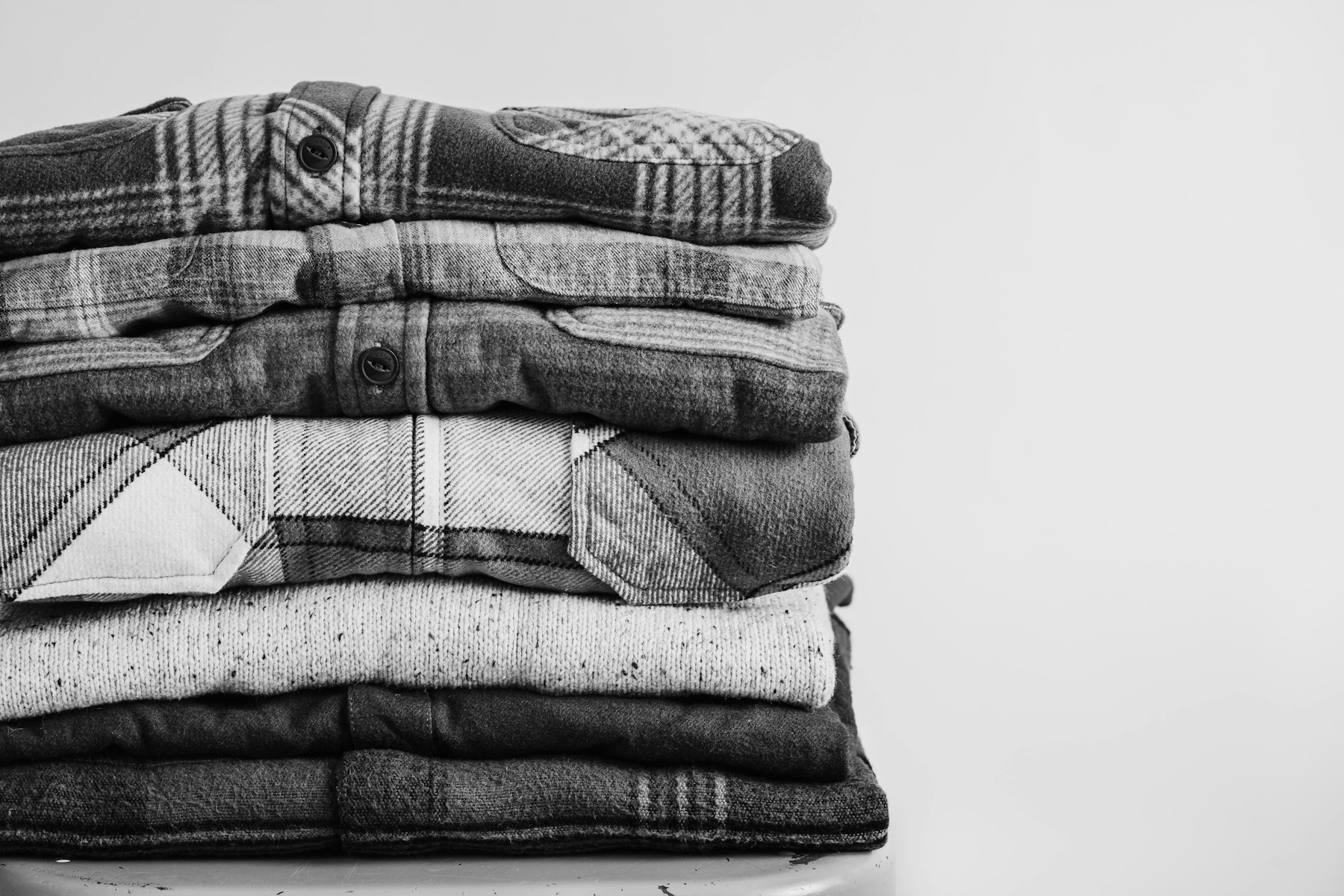
Short answerA useful twelve-piece wardrobe starts with versatile tops, trousers, layers and shoes in a restrained palette: an Oxford shirt, knit polo, quality T-shirt, merino crew, unstructured blazer, lightweight jacket, dark jeans, chinos, tailored trousers, minimal sneakers, brown leather shoes and a clean outer layer.
The twelve-piece principle
The exact product matters less than the job each piece performs. The capsule needs a casual base, a smart-casual bridge and enough structure for work, dinner and events. Navy, charcoal, white, pale blue, olive and stone combine easily because they share a quiet level of intensity.
1–4: the tops
Choose one pale-blue or white Oxford shirt, one navy or charcoal knit polo, one substantial white or ecru T-shirt and one fine merino crewneck. The Oxford adds structure; the polo bridges casual and smart; the T-shirt provides a clean base; the knit adds texture and a temperature layer.
5–7: the layers
Use an unstructured navy blazer, a clean lightweight jacket and one climate-appropriate outer layer. Avoid exaggerated padding, loud hardware and novelty trims. A layer should sharpen what sits beneath it, not become the entire outfit.
8–10: the trousers
Dark straight jeans, stone or olive chinos and charcoal tailored trousers cover most everyday settings. The common rule is a clean line: enough room through the seat and thigh, a controlled taper and little excess fabric at the ankle.
11–12: the shoes
Minimal leather sneakers and a dark-brown leather or suede shoe create the most useful formality shift. Keep both clean and choose discreet shapes. Shoes do not need to be expensive, but their condition is highly visible.
What makes the system work
Every top should work with every trouser. Most tops should sit comfortably beneath every layer. Either shoe should finish several combinations. If an item requires one particular partner to look right, it is probably not earning its place in a small wardrobe.