In this article+
01
Airflow begins with fit
A fabric cannot breathe effectively when it is pulled tightly against the body. Leave useful room through the chest, back, seat and thigh, and choose trousers with a rise that stays stable rather than sliding and gripping. Oversized clothing is not required; the goal is a controlled silhouette with air between body and cloth.
02
QWD HEAT MATRIX
Keep the structure; remove the weight.
This is clothing guidance, not heat-safety advice. Weather, sun exposure and individual health should always override the outfit.
| Setting | Top | Trouser | Layer or shoe |
|---|---|---|---|
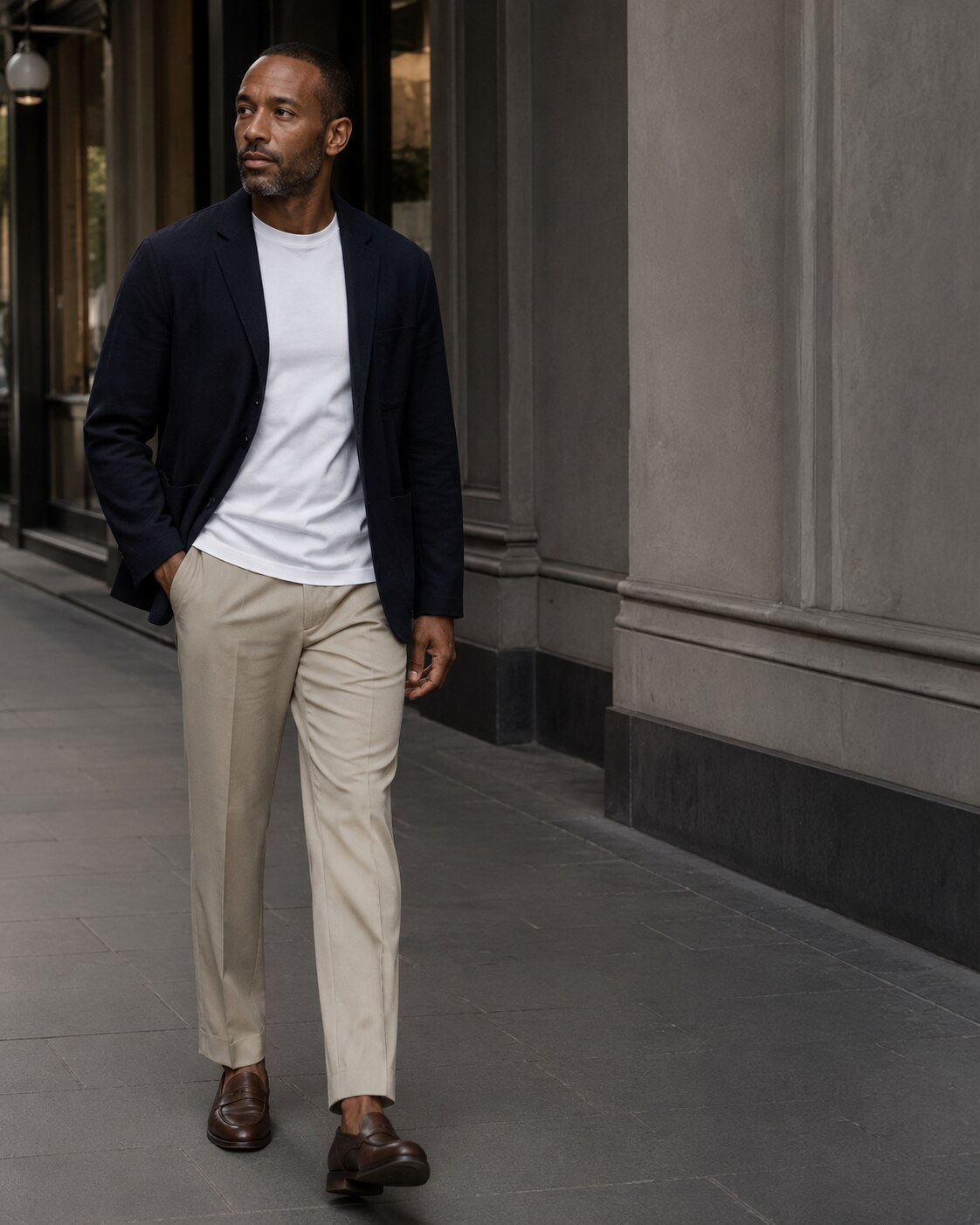
| Hot office | Pale shirt or knit polo | Open-weave wool or light cotton | Unlined jacket · loafer |
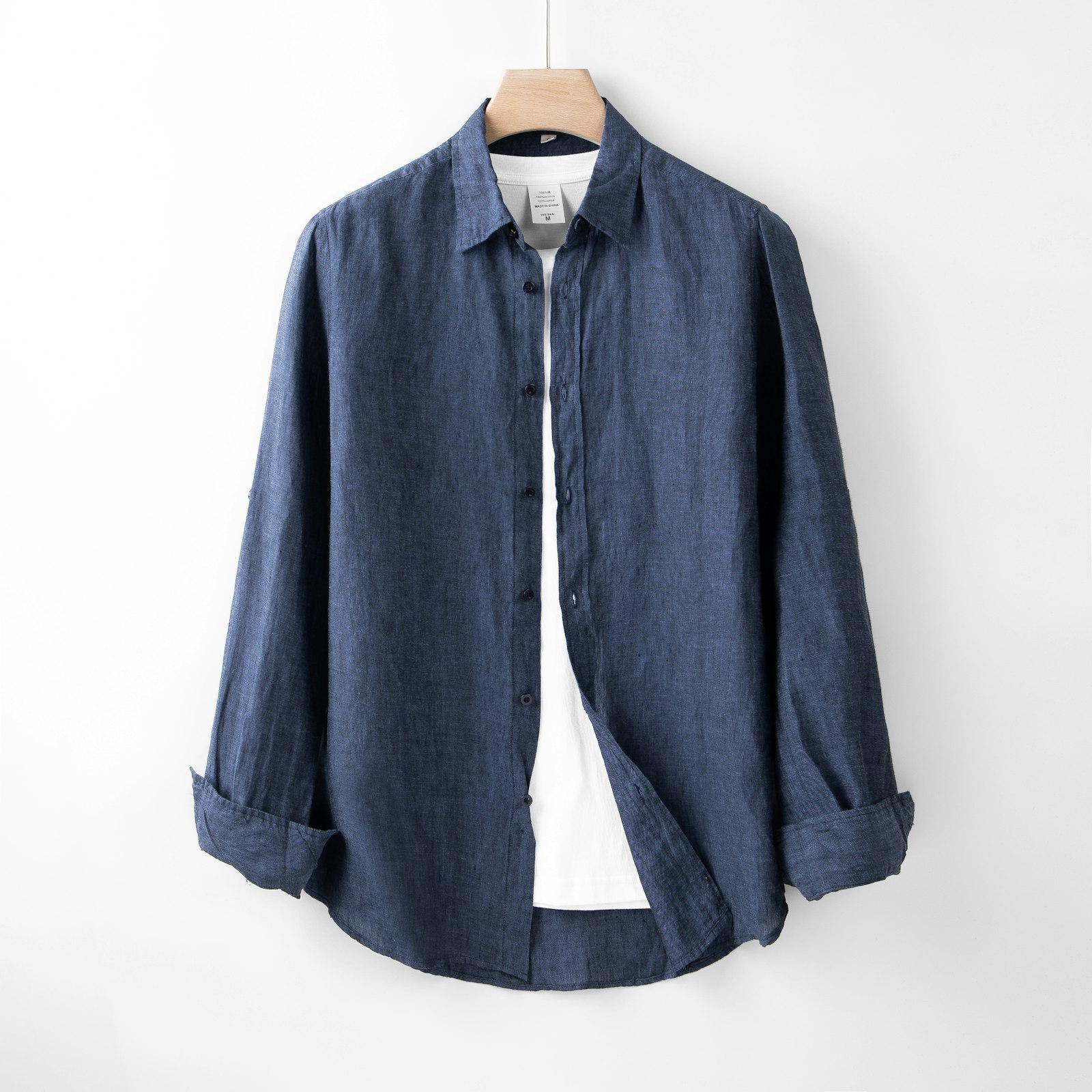
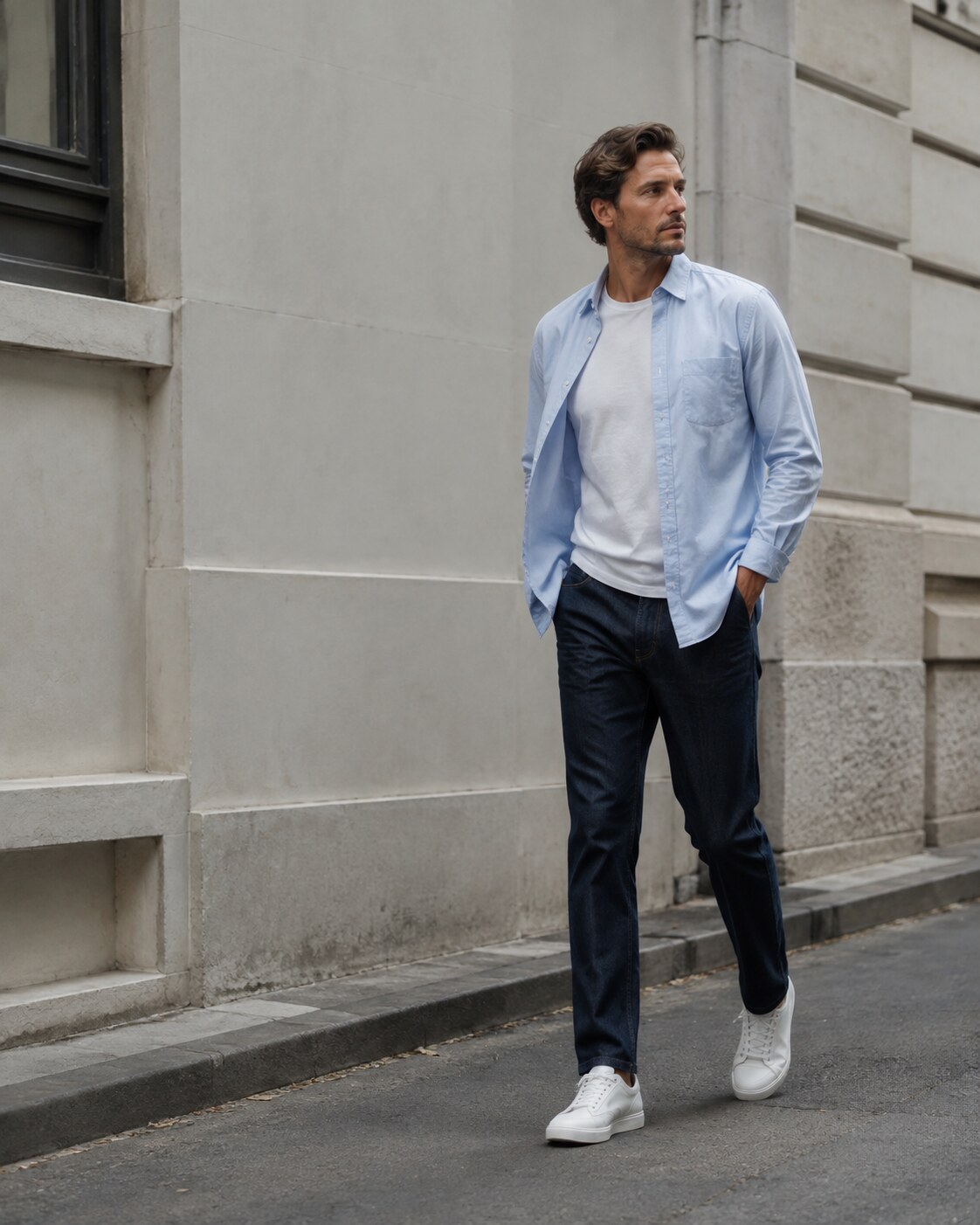
| Weekend city | Linen shirt or substantial tee | Relaxed chino or drawstring trouser | Minimal sneaker |
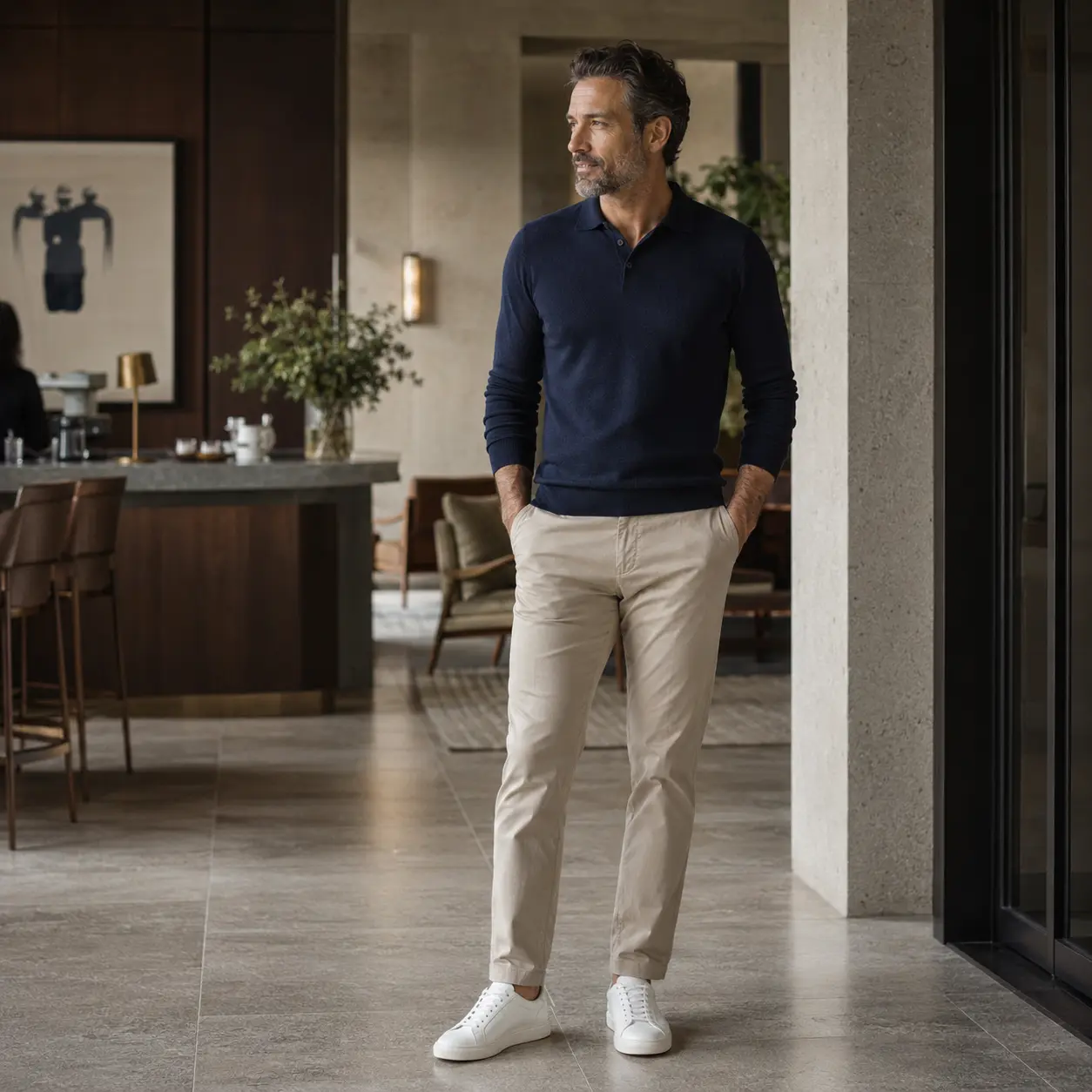
| Evening dinner | Open-collar shirt or knit polo | Light tailored trouser | Suede loafer |
| Outdoor event | Breathable long sleeve | Roomy lightweight trouser | Hat · practical shoe |
03Choose fabric by weave, weight and context+
Linen is airy and manages moisture well, but it wrinkles visibly. Lightweight cotton poplin, seersucker and open knits can work for casual and office clothing. Tropical or open-weave wool is useful for tailored trousers and jackets because it can hold a sharper line. A fibre name alone is not enough—hold the cloth to light and feel its density.
04Use lighter colour where it helps+
Stone, ecru, pale blue, soft grey and muted olive feel visually lighter and can absorb less solar heat than very dark surfaces. Keep enough contrast for the outfit to remain legible: a pale-blue shirt with stone trousers and dark-brown shoes is calm but not washed out. Navy can remain as a lightweight evening or office layer.
05Build a hot-weather work outfit+
Start with a pale long-sleeved shirt or fine knit polo, lightweight tailored trousers and loafers or simple Derbies. Add an unlined navy jacket only when the dress code requires it, then remove it once appropriate. Long sleeves can protect from sun and air conditioning; roll them neatly after the formal part of the day.
06Build a weekend or travel outfit+
Use a linen shirt, substantial but breathable T-shirt or knit polo with drawstring trousers, relaxed chinos or tailored shorts. Minimal sneakers, suede loafers or leather sandals can work depending on the setting. Avoid piling several thin layers together—the combined system can trap more heat than one well-chosen garment.
07Manage sweat without pretending it will not happen+
Choose washable layers, use an undershirt only if its extra layer improves rather than worsens comfort, and carry a handkerchief. Pale colours can reveal moisture differently, so test the fabric at home. Give shoes time to dry between wears and choose socks that manage moisture. Fragrance should remain light; heat amplifies it.
08Know when style yields to safety+
During extreme heat, follow health guidance, seek shade, hydrate and reduce unnecessary outdoor activity. Clothing advice cannot make dangerous conditions harmless. A hat, sunglasses and appropriate sun protection may matter more than maintaining a strict dress code. If a workplace uniform creates risk, raise it with the employer rather than silently enduring it.
SOURCES & FURTHER READINGThe references behind this guide+
- European Flax and Hemp Alliance — Linen in summer
- Woolmark — Wool is naturally breathable
- QWD guide — Best fabrics for men’s clothes
- QWD guide — What is business casual for men?
QWD applies these references as a practical menswear baseline. Garment design, body proportions and intended styling can justify a different choice.