In this article+
LOOK CLOSER
Change the shoes. Change the mood.
The same pale-blue shirt and charcoal trousers. These are starting points, not a substitute for the invitation’s dress code.
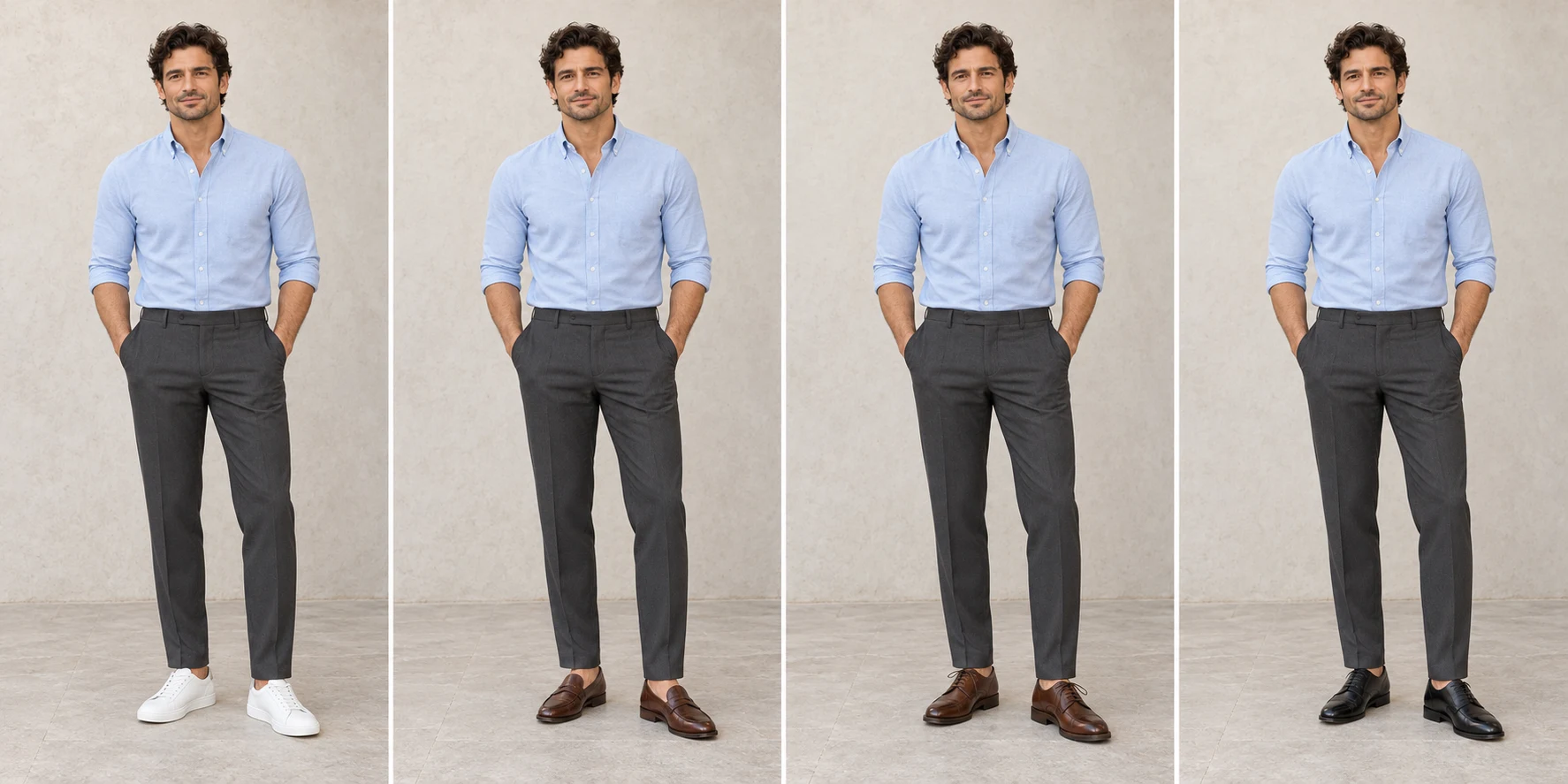
White sneakers
The most relaxed option in this set. Keep them clean; many formal rooms still call for leather shoes.
Brown loafers
Easy polish without laces. Suede, shine and shape can move a loafer toward casual or formal.
Brown Derbies
Laced and grounded. An open lacing construction is only one cue: a heavy sole can make the shoe very casual.
Black Oxfords
A more formal finish here. The rest of the outfit still needs to suit the event; changing shoes does not turn it into black tie.
AI styling illustrations. Compare the styling idea; these are not alteration results, exact products or wear tests.
01
Learn the difference you can see
Look at where the laces begin near the front of the shoe. On a Derby, the two eyelet sections sit like flaps on top. On an Oxford, they meet within a more closed construction. You do not need to remember specialist shoemaking vocabulary to compare them. Put two photographs side by side or ask the shop to show you an example, then look past the colour to that join.
02
Use construction as the starting point
Crockett & Jones defines the Oxford by its closed lacing and contrasts it with the Derby’s open arrangement. Oliver Sweeney explains the same distinction. That supports identifying the shoe, but it is not a complete buying decision. A plain polished pair with a slim sole will have a different effect from a heavily textured pair on a thick sole, even when both share the same lacing category. (Crockett & Jones — The English Oxford)
03
AT A GLANCE
Choose what works for you
QWD suggestions to help with the decision; check the actual garment or shoes.
| Your aim | Try this | Check first |
|---|---|---|
| Formal suit wardrobe | Consider a plain dark Oxford | Shape and event requirements |
| Casual tailoring | Consider a suitable Derby | Sole and trouser balance |
| Listing says brogue | Check lacing separately | Decoration is not construction |
| Fit uncertainty | Try sizes and widths | No universal shape rule |
04
Do not confuse brogues with the shape
Brogue refers to decorative perforations rather than a separate open-or-closed lacing system. You can therefore encounter brogued Oxfords and brogued Derbies. When reading a listing, separate the construction, decoration, material and sole in your mind. This makes comparisons easier: two shoes called brogues may be quite different purchases. If your aim is a quiet formal shoe, visible decoration is one more feature to assess alongside the shape.
05
Choose for the clothes you wear most
For a wardrobe built around formal suits, a plain dark Oxford is worth considering. If you mostly wear chinos, textured trousers and casual jackets, a suitable Derby may be easier to use. These are QWD starting points, not dress-code guarantees. Try the shoes with the actual trouser leg and consider the invitation. Formal evening dress has its own expectations, so do not assume any black lace-up shoe settles that question.
06
Try fit without a shortcut
Open lacing can offer adjustment, but Derby does not mean wide and Oxford does not mean narrow. The maker’s shape, size and width options still matter. Try both feet with normal socks, stand and walk, and look for pressure across the top or excessive heel movement. Do not buy an uncomfortable Oxford because it seems more correct, or a loose Derby because you have heard it is the easier fit.
07
Make the first purchase useful
Count the outfits and occasions the shoes will serve, then compare sole grip, weight and care requirements. Ask about repair options for the particular construction if that matters to you. A second pair in a nearly identical style may add less than a different level of formality or a more comfortable everyday option. Keep the decision grounded in use: the distinction helps you shop, but you do not need both names represented in your wardrobe.
SOURCES & FURTHER READINGThe references behind this guide+
QWD applies these references as a practical menswear baseline. Garment design, body proportions and intended styling can justify a different choice.